Entered
Figures3 min · 648 words
Working paper
Defense Tech CEOS Warn Pentagon Must Adapt or Face 'Existential' Risk
VCs poured a record $37.9 billion into defense tech in Q3 2026, yet Pentagon acquisition still averages over 12 years. CEOs warn of consolidation.
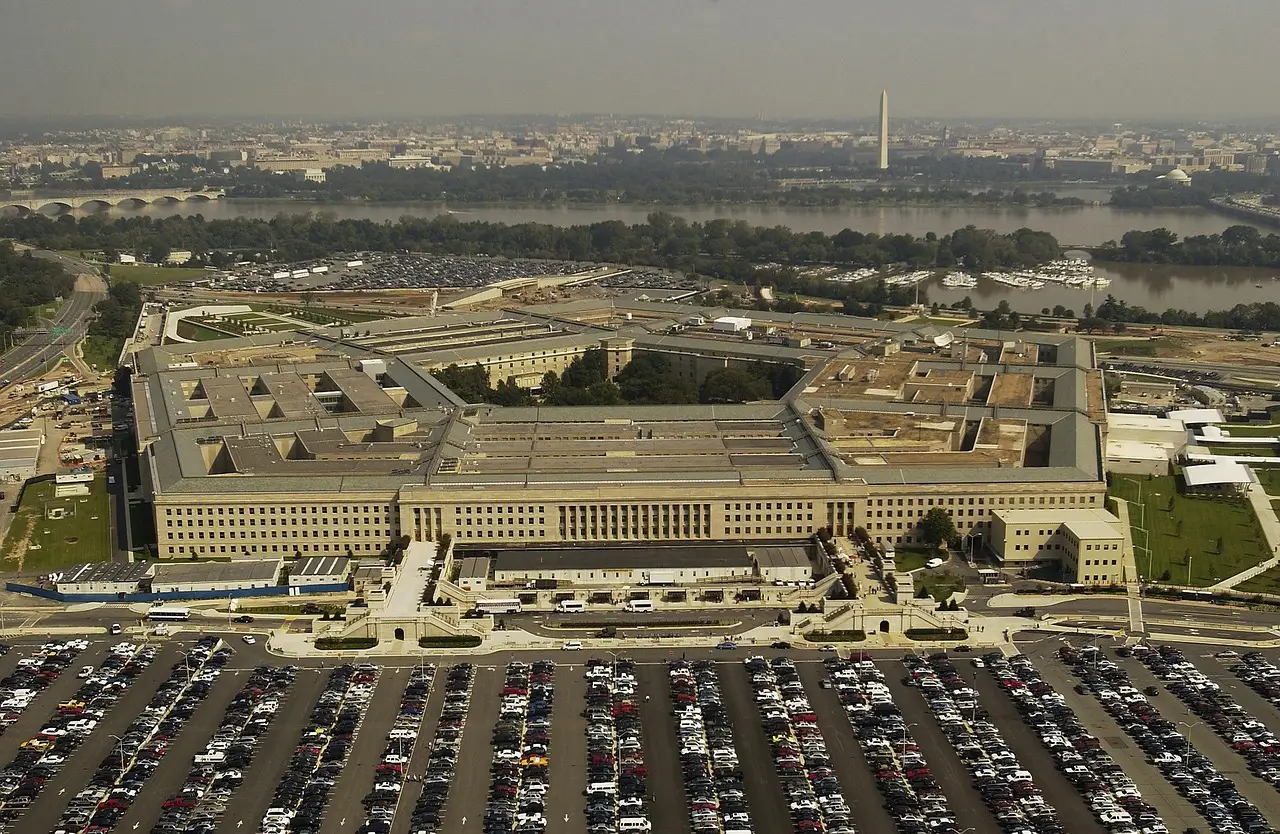
Venture capitalists deployed a record $37.9 billion into defense tech across 269 deals in Q3 2026, up 117.5% quarter over quarter, according to Pitchbook data. The money, however, is arriving faster than the Pentagon can absorb it. Two defense tech chief executives said as much on Tuesday at the Fortune 500 Innovation Forum.
"There's a growing realization that if you don't act now, it will be existential in the near future," Tyler Sweatt, CEO of defense software deployment company Second Front Systems, told Fortune's Allie Garfinkle. Sweatt, whose company is valued at $1.2 billion per Pitchbook data, predicts the funding pressure will force consolidation in "a tranche of deals" within the next six months.
The pattern has already begun. Shield AI, the autonomous weapons developer, announced on Nov. 5 that it is raising $2.5 billion to support its acquisition of radar systems company Echodyne in a transaction valued at $5.3 billion.
Why does the Pentagon move so slowly?
Sweatt described the Pentagon as an "Industrial Age organization" burdened by "big long bureaucracies" and "antiquated technology production lines." He and Shield AI CEO Gary Steele argued that lengthy approval processes and outdated systems risk keeping new technology from reaching troops quickly enough, even as AI-enabled drones transform warfare in Ukraine and Iran.
The numbers support the complaint. A Government Accountability Office report published in July found that the average time needed to deliver a capability across the Pentagon's major weapon acquisition programs rose to over 12 years. The watchdog predicted this average "will likely increase in the future."
"We're at the beginning of this journey, not the end of this journey," Steele said. "It will take time because things move slowly; the technology is not moving slowly."
How fast can a startup build a fighter jet?
Steele contrasted the Pentagon's timelines with Shield AI's autonomous fighter jet, designed to fly alongside human-piloted aircraft using the company's Hivemind software. He expects the time "from conception to first flight" to be under two years.
Lockheed Martin's F-35 offers the counterexample. It started development in 2001 and first flew in 2011, taking 23 years in total from contract award to clearance for full-rate production.
Autonomy changes the calculus, Steele argued. "We can go faster because we're not putting people's lives at risk every single day," he said. "We can think about that iterative development cycle to get very different outcomes at speeds that never could have happened before."
In separate tests last month, Shield's Hivemind software executed directions from an F-22 pilot and coordinated multiple uncrewed aircraft known as CCAs (collaborative combat aircraft).
Is the funding boom a bubble?
Venture appetite for the sector is a recent development. "Defense tech was in the same category as porn and gambling, and that's all changed," Steele said.
Yet capital does not equal capability. Sweatt noted that record funding and increased defense spending by U.S. allies still will not deliver new technology to the battlefield immediately. "It takes a minute for that tail to really reach the tooth," he said, referring to the lag between investment and battlefield implementation.
The valuations raise the stakes. Shield doubled its valuation to $28.8 billion from $12.7 billion in March. Anduril CEO Brian Schimpf, whose company is valued at $61 billion, said at the Fortune Brainstorm Tech conference in June that defense tech could be in "a bit of a bubble."
Sweatt offered a deadline for the verdict. "I think the next 24 months are probably going to confirm or deny the bubble hypothesis," he said.
For finance chiefs in the sector, the arithmetic is straightforward. Record capital, a procurement pipeline measured in decades, and a two-year window for proof. Consolidation, in this configuration, looks less like an outcome than a schedule.
Audit trail
- VC funding into defense tech hit a record $37.9 billion across 269 deals in Q3 2026, up 117.5% quarter over quarter (Pitchbook).
- GAO found average delivery time for Pentagon major weapon acquisition programs exceeds 12 years and is likely to rise.
- Shield AI announced Nov. 5 a $2.5 billion raise supporting its $5.3 billion acquisition of Echodyne, at a $28.8 billion valuation.
- Second Front Systems CEO Tyler Sweatt predicts a tranche of defense tech consolidation deals within six months.
- Lockheed Martin's F-35 took 23 years from contract award to full-rate production clearance.
via fortune.com/feed/ (Source)
More from Sophie Lindqvist
Show full bio
Market editor covering technology and product news in corporate finance and the leaders who run it at CFO Observer.
261 articles
Cross-references
- Defense Tech VC Hit a Record $37.9 Billion Last Quarter
- US Series A Funding Hits $42 Billion, Up 60%, as Deal Count Stalls
- Pentagon's $1.5 Trillion Budget Hits a Wall as Global Defense Spend Nears $8 Trillion
- Anthropic Posts $16.8 Billion Third-Quarter Revenue
- PitchBook Names BILL, Rapid7, First Advantage as Top Take-Private Candidates