RefE-690
Entered
Figures4 min · 721 words
Working paper
Devon Plans $5.3 Billion 2027 Program, 75% Aimed at the Permian
Devon Energy outlined a $5.3 billion 2027 capital program with 75% for the Permian, targeting $6 billion of excess free cash flow and a $9 billion gross debt target.
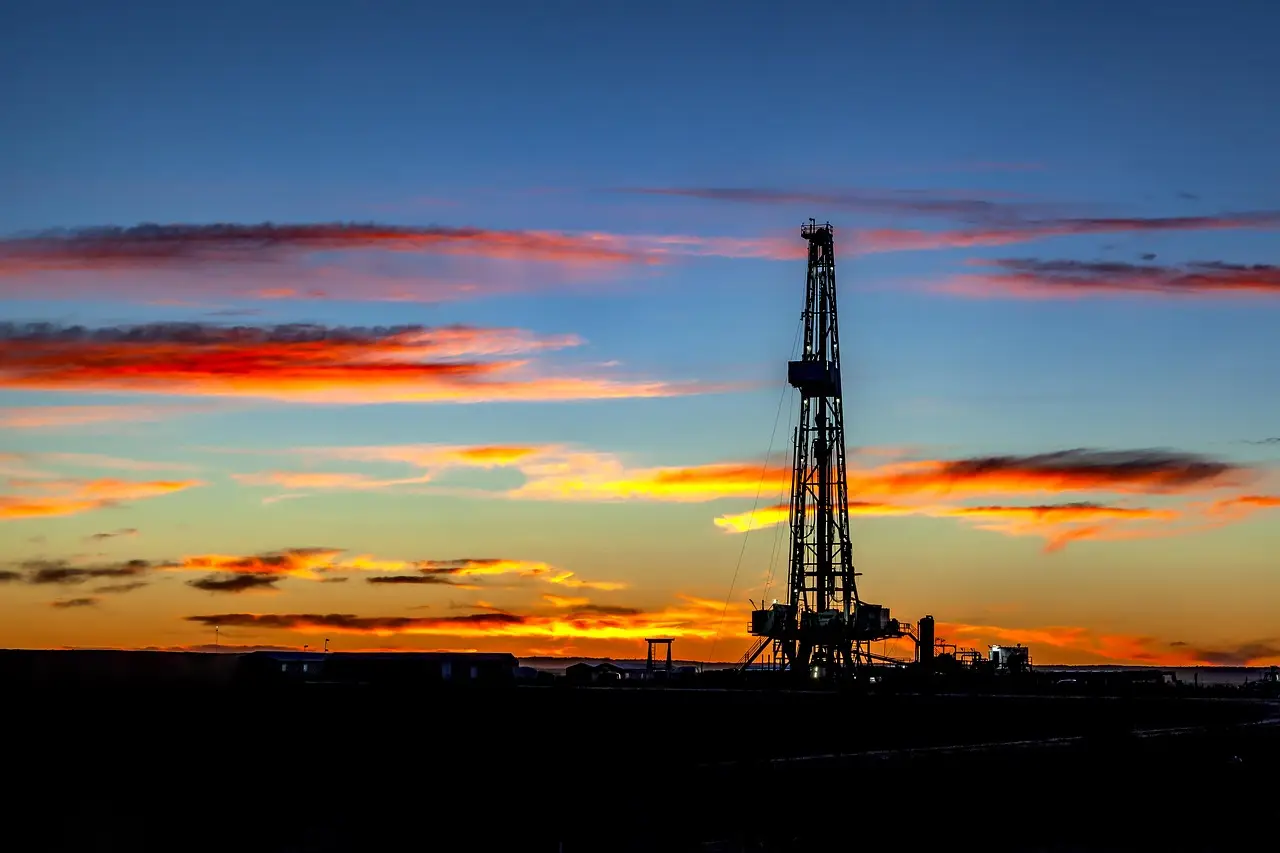
Devon Energy will spend roughly $5.3 billion in 2027, directing about 75% of that capital to the Permian Basin, after a post-merger portfolio review settled the Permian as the company's cornerstone asset. The preliminary program, outlined on the third-quarter earnings call, sits $600 million below a pro forma 2026 baseline of $5.9 billion and assumes the Eagle Ford sale closes in early 2027.
What did the quarter deliver?
Discretionary cash flow reached $3.5 billion, more than 20% above the prior period, CFO Shane Young said. Capital spending came in at $1.5 billion. That left $2 billion of free cash flow.
Oil and total production hit record highs, within guidance, though Young did not specify volumes on the call. Natural gas realizations rebounded to nearly $2 per thousand cubic feet, including a Permian average of $1.74.
Shareholder returns followed. Devon repurchased nearly 9 million shares for $414 million and paid a $0.32 per-share dividend totaling $366 million. It retired the remaining $750 million of a term loan, bringing debt reduction to $1.25 billion since the Coterra merger closed.
The takeaway: cash generation is outpacing spending, and Devon is pushing the surplus toward shareholders and the balance sheet.
How will 2027 spending break down?
The $600 million year-over-year reduction has three drivers:
- The Eagle Ford sale removes a little more than $400 million of capital.
- Synergies and efficiencies, net of modest inflation, cut another $300 million.
- Higher Permian water infrastructure spending partially offsets those savings.
The figure excludes potential land acquisitions and Devon's investment in the Solitude Pipeline System. The company expects to invest approximately $400 million in the pipeline next year and $500 million over the project's life, with nearly $100 million already spent year to date.
Where does the cash outlook land?
Based on current costs and commodity prices, Devon projects roughly $12 billion of cash flow in 2027. Add $3.5 billion of expected net Eagle Ford proceeds and potential inflows reach $15.5 billion. After capital spending, dividends, debt maturities, pipeline investment and acreage spending, Young said the company could hold $6 billion of excess free cash flow to support buybacks and liquidity.
Devon also plans to retire another $1.5 billion of long-term debt in 2027, reaching its gross debt target of roughly $9 billion. Young said the company intends to allocate up to 70% of annual free cash flow across dividends, repurchases and debt repayment, and will favor buybacks with the Eagle Ford proceeds. Fourth-quarter repurchases alone should exceed $1 billion.
In plain terms: management sees enough cash to shrink debt to target while accelerating returns.
Why sell Eagle Ford?
CEO Clay Gaspar said the market valued the asset materially above Devon's internal assessment. The sale, he argued, increases inventory life, lowers breakevens and reduces base decline. The remaining Anadarko, Marcellus and Rockies assets will play complementary roles, providing investment options and free cash flow.
"While this is the end of this chapter, this in no way means you shall never see another opportunity for us to proactively move in the shareholders' best interest," Gaspar said.
What comes next operationally?
Gaspar expects low-single-digit oil growth over the next few years and 5% to 10% annual growth in free cash flow per share. Development of recently acquired federal acreage should begin around mid-2027, with meaningful production in early 2028.
EVP of Operations Blake Sirgo said average lateral lengths should rise more than 10% in 2027, supported by 53 four-mile wells across four basins, at an all-in drilling, completions, facilities and flowback cost of around $750 per foot.
For the fourth quarter, Devon forecasts oil production of 550,000 to 560,000 barrels per day, total output of 1.66 million to 1.7 million barrels of oil equivalent per day, and capital spending of $1.29 billion to $1.395 billion. The 2027 outlook assumes roughly 525,000 barrels per day of oil and 1.6 million barrels of oil equivalent per day in total.
Asked about share performance since the merger, Gaspar said he was dissatisfied and that investors had sought strategic clarity. Management views the stock as an attractive use of cash, Young said, and expects to keep leaning into repurchases through 2027.
Audit trail
- Devon outlined a preliminary 2027 capital program of about $5.3 billion, with 75% directed to the Permian Basin.
- Q3 discretionary cash flow was $3.5 billion, up more than 20%, producing $2 billion of free cash flow.
- Devon expects up to $6 billion of excess free cash flow in 2027 and plans to retire $1.5 billion of debt to reach a ~$9 billion gross debt target.
- Fourth-quarter share repurchases are expected to exceed $1 billion.
- Q4 guidance: 550,000–560,000 bpd oil and $1.29–$1.395 billion of capital spending.
via dailypolitical.com (Source)
More from Amara Osei
Show full bio
Senior reporter covering companies, deals and strategy in corporate finance and the leaders who run it at CFO Observer.
112 articles
Cross-references
- Targa Resources sets $6 billion adjusted EBITDA floor for 2026
- Texas Pacific Land posts record Q3 as water royalties surge
- Green Plains Doubles Adjusted EBITDA to $118 Million on 45Z Credits
- Northern Oil and Gas lifts 2026 output outlook as margins recover
- Corpay Lifts 2026 Outlook as Q3 Adjusted EPS Jumps 32%