Entered
Figures4 min · 814 words
Working paper
GAO Vacancy Started Dec. 30, 2025 — And the Law Has Been Skipped
The Comptroller General post has been vacant since Dec. 30, 2025, yet the statutory selection commission has never met. A confirmation hearing is set for Nov. 19.
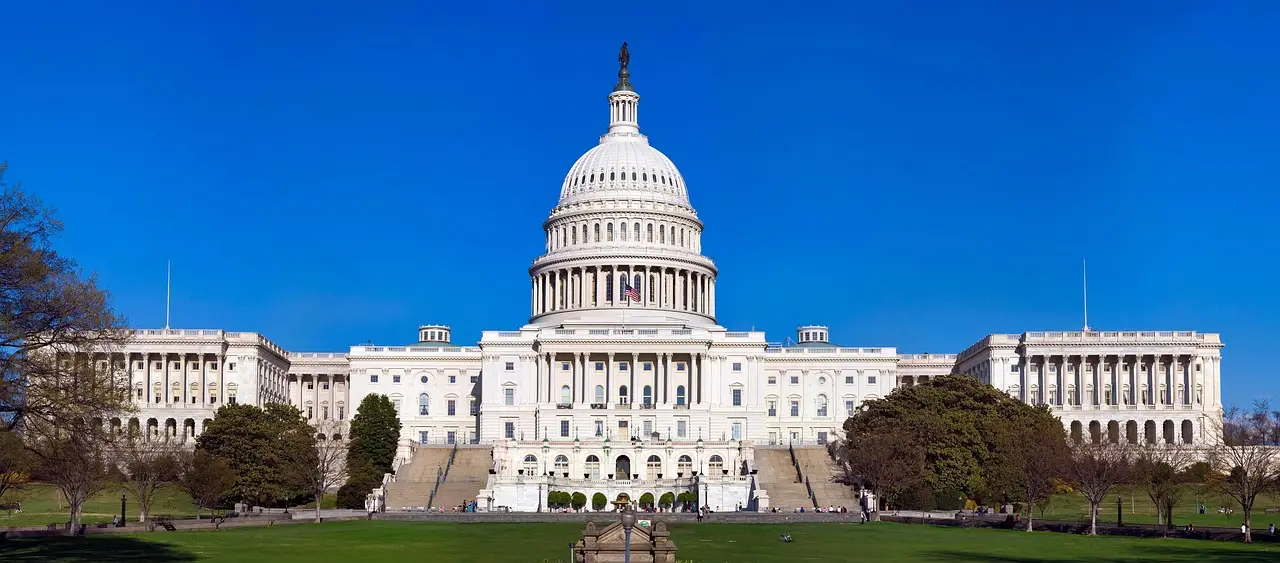
The office of Comptroller General of the United States has stood vacant since December 30, 2025, and the 10-member bipartisan commission that federal law requires to fill it has never met — not once. That number, and that absence, sit at the center of an escalating constitutional dispute over who audits the executive branch and how that auditor is chosen.
On November 16, 2026, President Trump submitted a nominee for confirmation. The move followed a sequence that two former Comptrollers General, Dave Walker and Gene Dodaro, call a break with 46 years of practice. Gene Dodaro and Dave Walker, together with coauthors, laid out the record in a commentary published November 17, 2026.
What does the law actually require?
The GAO Act of 1980 created a 10-member, bipartisan and bicameral Comptroller General Selection Commission. The Commission must jointly develop a list of at least three qualified nominees and transmit that list to the President. Every Comptroller General nominated since 1980 came from such a list.
The vacancy opened on December 30, 2025. Since that date, the Commission and its members have never convened. The authors state plainly that the statutory body "has never met" — a fact that no participant has disputed.
How did the process move without a list?
U.S. Sen. Rand Paul (R-KY), Chairman of the Senate Committee on Homeland Security and Governmental Affairs (HSGAC), recently and spontaneously requested that names be submitted to him, under a short time constraint, for recommendation to the President. Paul sits on the Selection Commission by virtue of his HSGAC chairmanship, but he is not the Commission's chairman.
Paul then inserted an empty placeholder for an unnamed Comptroller General nominee into a November 19, 2026 committee confirmation hearing schedule. Three days before that hearing, on November 16, President Trump submitted a nominee.
The authors describe both steps as unprecedented. No statutory list existed at any point in this sequence.
Can the president look beyond the commission?
Here the record requires care, and the authors concede what the law does not say. The 1980 statute does not state in so many words that the President must choose from the Commission's list. The Senate report on the bill said the President could, "in his discretion," look elsewhere, but should give the Commission's recommendations "great weight."
The authors' rebuttal is direct: you cannot weigh a list that does not exist. The law's answer to a President who wants other options, they argue, is to ask the Commission for more names — not to skip the Commission entirely.
Henry Wray, a former GAO attorney who helped develop the 1980 law, said the current process "violates both the letter and the spirit of the law."
Why the 15-year term matters
The 1980 Act also fixed a 15-year non-renewable term for the Comptroller General, with extremely difficult removal requirements — the longest term for any appointed position in the federal government. The design serves one purpose: independence. GAO is the primary agency Congress uses to oversee the executive branch under Article I of the Constitution, and the Comptroller General must remain independent from the very branch that GAO audits, investigates, and evaluates.
The precedent is long. Dave Walker was unanimously confirmed in 1998; Gene Dodaro was unanimously confirmed in 2010. Both appointments ran through the statutory commission method, which the authors say "has worked like a charm." Every one of the past eight Comptrollers General was confirmed with overwhelming bipartisan support.
What are the stakes for the audit function?
The authors set out four qualifications they consider non-negotiable for any Comptroller General:
- Highly qualified executive with relevant past experience
- Professional, objective, fact-based, non-partisan and non-ideological conduct
- Independence from the Executive Branch
- Broad bipartisan support
Each factor, they write, is critical for the Comptroller General to be credible and for the GAO to be effective. The office oversees the spending and operations of the entire federal government on behalf of Congress and the American people; an auditor appointed through a contested or extra-statistical process starts with a credibility deficit no qualification can fully repair.
What should happen next?
The authors' prescription is blunt. Because HSGAC Chairman Paul and President Trump have not followed the statutory requirements for the appointment, the November 19, 2026 confirmation hearing should be canceled, and the normal appointment process should be followed.
They do not predict the White House or the committee will comply, and they offer no fallback if the hearing proceeds. What they do establish is the arithmetic: 10 commissioners, at least three names, one list, zero meetings since the vacancy opened on December 30, 2025.
The opinion piece was published as Fortune commentary; its views are those of its authors and do not necessarily reflect Fortune's.
One commission, one list, one hearing date — and, so far, none of the three has been produced.
Audit trail
- The Comptroller General vacancy opened on December 30, 2025; the statutory 10-member selection commission has never met.
- President Trump submitted a nominee on November 16, 2026, ahead of a November 19 Senate hearing.
- The GAO Act of 1980 requires a bipartisan commission to send the President a list of at least three nominees.
- Every Comptroller General since 1980 — eight in total — came from a commission list and was confirmed with bipartisan support.
- The 15-year non-renewable term is the longest for any appointed federal position.
via fortune.com/feed/ (Source)
More from Tom Whitfield
Show full bio
News editor covering companies, deals and strategy in corporate finance and the leaders who run it at CFO Observer.
286 articles