RefE-037
Entered
Figures3 min · 699 words
Working paper
Genco Posts Highest Charter Rates Since 2022, Record $1.05 Dividend
Genco's fleetwide TCE rate rose 73% to $27,539 per day, driving adjusted EBITDA up more than 200% and a record $1.05 quarterly dividend, with Q4 payout seen above $1.
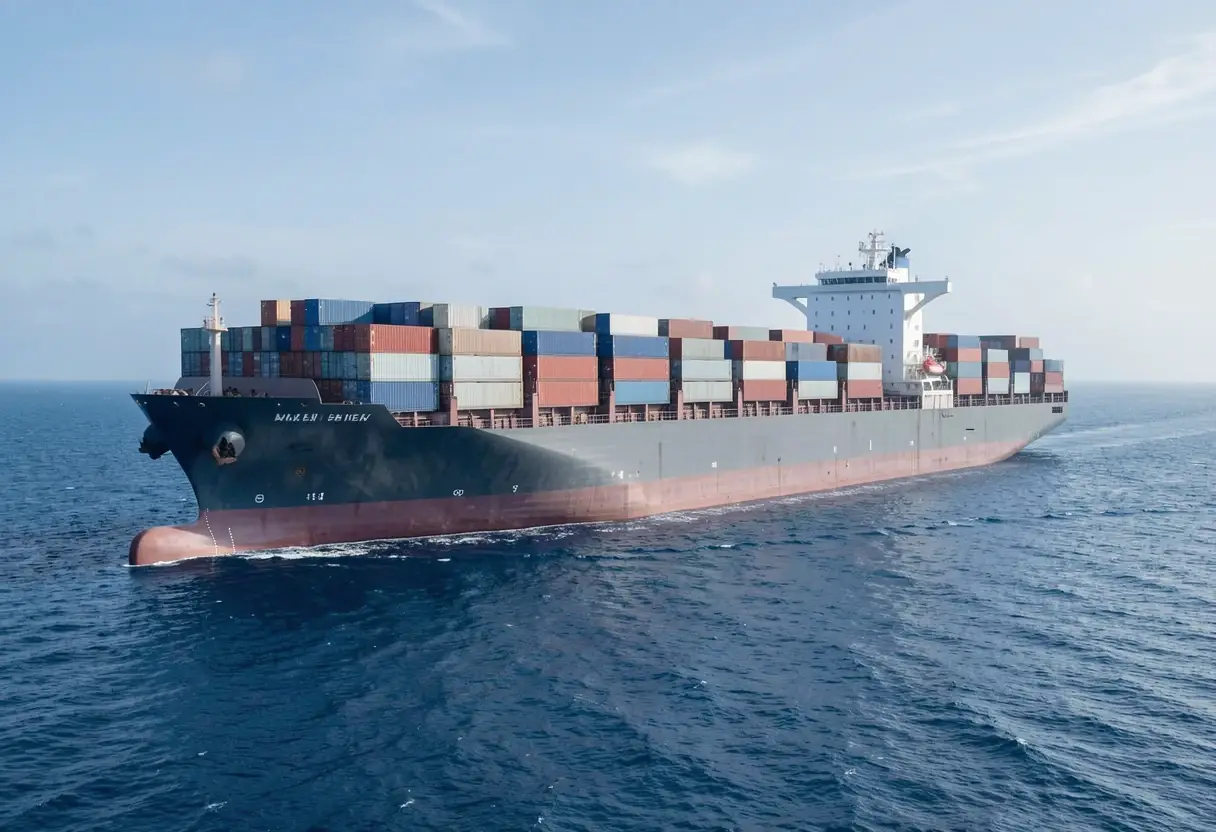
Genco Shipping & Trading (NYSE:GNK) reported a fleetwide time charter equivalent rate of $27,539 per day for the third quarter, up 73% year over year and its highest since 2022. The dry bulk operator converted that rate strength into a record dividend of $1.05 per share, a 31% increase from the second quarter and 600% above the year-earlier payout.
The New York-based company, founded in 1997, posted net income of $38 million, or $0.85 per diluted share, and adjusted EBITDA of $68.1 million, up more than 200% from a year earlier. Adjusted net income reached $39.2 million, or $0.88 per diluted share. Chief Financial Officer Peter Allen delivered the figures on the earnings call.
"It was the highest quarterly dividend in the company's more than 20-year history," Chairman and Chief Executive John Wobensmith said. Genco's dividend policy distributes operating cash flow less a voluntary reserve; for the third quarter, that calculation used $66 million of operating cash flow and a $19.5 million reserve, Allen said.
How strong is the fourth quarter?
Management projected a fourth-quarter dividend above $1 per share, based on fixtures secured to date and the current forward freight agreement curve (FFA, a paper market used to hedge future shipping rates). Wobensmith said the projected full-year dividend would exceed $3.20 per share.
The forward book supports that guidance. Allen said 66% of Genco's owned available days in the fourth quarter had been fixed at approximately $30,100 per day. That sits well above the anticipated cash flow break-even rate of roughly $10,500 per vessel per day, excluding dry-docking-related capital expenditures. Fleet utilization exceeded 98%, while the cost structure remained similar to the year-earlier period.
Nine-month adjusted EBITDA reached $161.1 million, roughly 270% higher than a year earlier and already above the full-year 2025 level. The first three quarters, in other words, have out-earned the whole of last year.
What is happening on the balance sheet?
Genco took delivery of the Genco Volunteer, a 2019-built Capesize (the largest class of dry bulk carrier), in mid-August and deployed it in the spot market. Wobensmith said the vessel was earning a meaningful premium to the Baltic Capesize Index. The fleet now counts 44 vessels: 20 Capesize and Newcastlemax ships and 24 Ultramax and Supramax vessels.
At September 30, Genco held $95 million in cash against $380 million in debt, with $300 million of undrawn revolving credit availability. Allen said the company drew $50 million during the quarter to fund the balance of the vessel acquisition, and could adjust cash and debt balances in the fourth quarter to manage interest expense. It faces no mandatory debt amortization at present.
Asked about further purchases, Wobensmith said Genco would continue renewing its fleet, retained a preference for larger ships, and valued midsize vessels for their steadier earnings. Earlier in the year the company sold two older Supramax vessels and redeployed the proceeds into a modern Capesize, he said.
What is driving the dry bulk market?
Michael Orr, vice president of finance, said the Baltic Capesize 180 Index averaged more than $41,000 per day in the third quarter, its highest quarterly level since 2021. He attributed the strength to solid iron ore trade, growth in bauxite exports and a resurgence in coal trade, with longer routes adding pressure on vessel capacity.
China's year-to-date iron ore imports had increased 4%, Orr said. Responding to an analyst's question on lower Chinese steel production, he noted that reduced domestic iron ore output had pushed the country toward greater reliance on seaborne imports, including higher-iron-content material from Brazil, Australia and Guinea.
Wobensmith cited growth in bauxite shipments and the earlier-than-anticipated ramp-up of Guinea's Simandou iron ore project as supports for Capesize rates, alongside a low supply backdrop. Orr added a caution that freight market volatility was likely to persist.
Genco transports iron ore, grain, coal and other bulk cargoes across international trade routes. For now, the commodity cycle is doing the work; the dividend formula, mechanically, is doing the rest.
Audit trail
- Fleetwide TCE rate of $27,539 per day in Q3, up 73% year over year, the highest since 2022.
- Record quarterly dividend of $1.05 per share, up 31% from Q2 and 600% from a year earlier.
- Adjusted EBITDA of $68.1 million in Q3, up more than 200%; nine-month figure of $161.1 million already exceeds full-year 2025.
- 66% of Q4 owned available days fixed at about $30,100 per day versus a break-even near $10,500.
- Baltic Capesize 180 Index averaged above $41,000 per day in Q3, its highest quarter since 2021.
via dailypolitical.com (Source)
More from Sophie Lindqvist
Show full bio
Market editor covering technology and product news in corporate finance and the leaders who run it at CFO Observer.
92 articles
Cross-references
- Visa Posts 13% Revenue Rise and Lifts Dividend 16%
- News Corp Lifts Q1 Revenue 6% to US$2.28 Billion as Net Income Jumps 43%
- Tenaris Lifts Nine-Month Profit 4.3% While Operating Income Slips
- NYT Adds 420,000 Digital Subscribers in Q3, Beating Estimates
- EOG Raises Dividend 8%, Posts $2.2 Billion Free Cash Flow in Q3