Entered
Figures4 min · 895 words
Working paper
Memory shortage may outlast 2027 as device costs rise
Team Group expects no memory-chip supply balance before late 2028, with DDR5 contract prices more than fivefold higher and device makers facing higher costs.
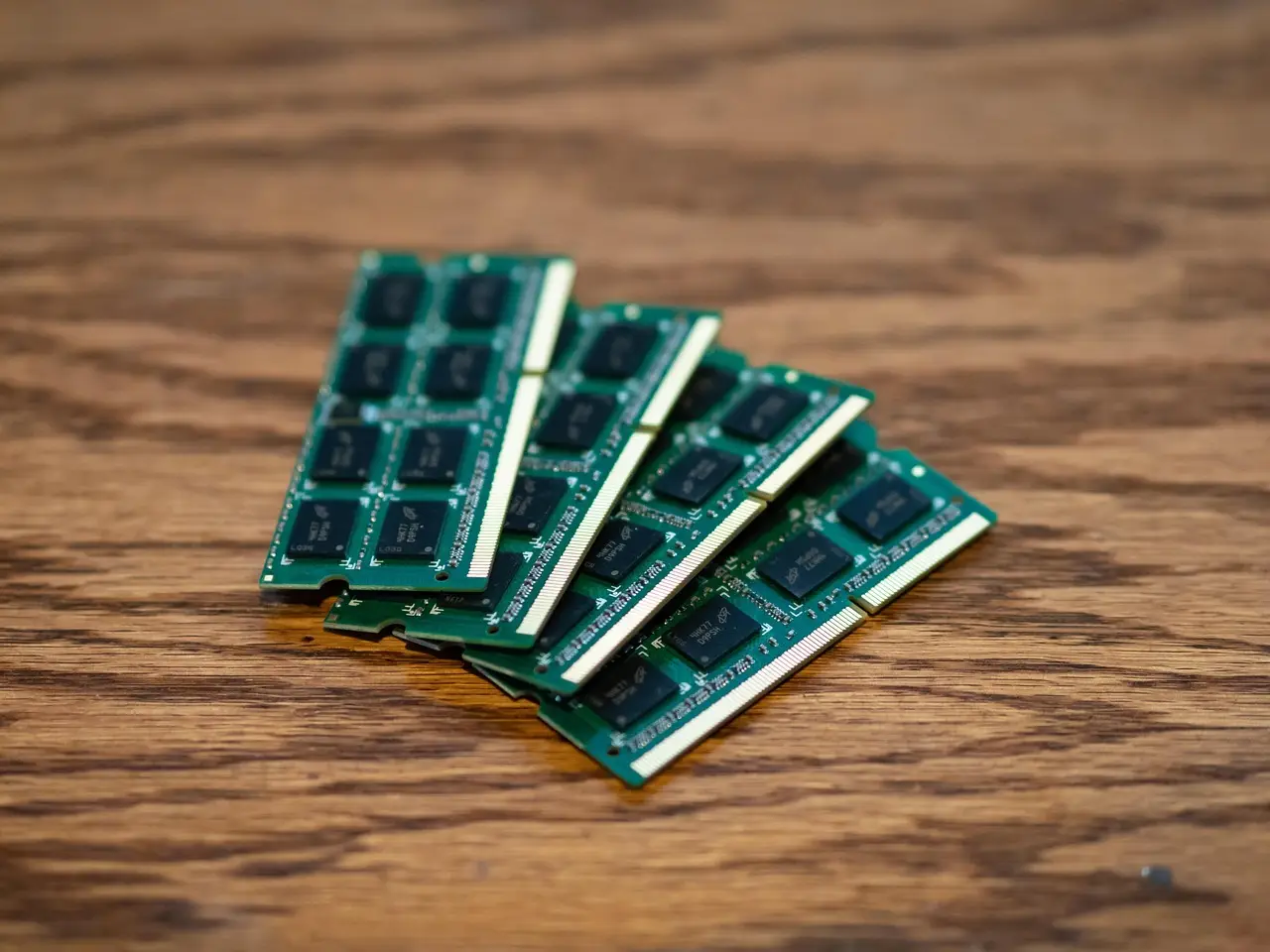
At least the second half of 2028 is the earliest point at which global memory-chip supply and demand could balance, Team Group CEO Gerry Chen (Chen Ching-wen) said on Nov. 2, 2026. The Taiwanese manufacturer expects the most severe stretch to run through the end of the second quarter of 2027 and sees no downward price trend in 2027.
Speaking on Team Group’s third-quarter earnings call, Chen warned that scarcity could become so severe that “even money can’t buy goods.” His warning offers no quantified downside case, so the price path remains his forecast rather than a settled outcome.
Why is AI squeezing every device category?
Three leading suppliers—Samsung, SK Hynix and Micron—have shifted capacity toward high-bandwidth memory used in AI chips, leaving less conventional memory for consumer devices. Chen said AI servers and enterprise applications are taking most DRAM output. DRAM and NAND flash also serve PCs, smartphones and cars.
AI buyers are winning the bidding war, leaving device makers to choose among higher prices, thinner margins and fewer units. A Stateline analysis described U.S. data centers as the largest financial bet in the country’s history.
Business-to-business sales made up 64.6% of Team Group’s revenue in the first three quarters of 2026, up from 24.6% a year earlier. Chen attributed the change to market demand rather than a deliberate strategic shift.
Takeaway: AI infrastructure is absorbing available DRAM and setting the terms for device makers.
How much have memory prices already risen?
A 16-gigabit DDR5 contract price rose from $8.70 in October 2025 to $48 in September 2026, according to figures cited on Team Group’s earnings call. The increase was more than fivefold in one year.
Third-quarter revenue reached a record NT$10.14 billion (about $312 million), up nearly 34% from the prior quarter. Net profit reached NT$3.62 billion (about $111 million), and gross margin climbed to 49.3% from 42.8% in the second quarter.
Business-to-business sales accounted for 64.6% of revenue in the first three quarters of 2026, compared with 24.6% a year earlier. Chen said customers’ demand, rather than a strategy change, drove the mix.
Apple reportedly raised the starting prices of its iPhone 18 Pro models by $100 and then cut component orders. IDC expects global smartphone shipments to fall 16.7% in 2026. Consumers will likely absorb the cost through pricier PCs and phones, or machines that ship with less memory at the same price.
Takeaway: Suppliers are converting scarcity into margin, while device makers absorb the bill through prices, margins or capacity.
Can contracts still guarantee supply?
A 30% to 50% gap separates spot and contract prices. “We have contracts but can’t get enough volume, so we have to go to the spot market and pay a premium to grab supply,” Chen said. The gap shows why signed contracts no longer guarantee enough volume.
Team Group’s new plant in New Taipei City is slated to begin production in the second quarter of 2027. In October 2026, SK Hynix said the shortage would last until 2030, with long-term agreements already covering more than half of its capacity for 2027 and 2028.
Harvard Business School professor Willy Shih expects new fabs to reach volume production only in late 2027 or 2028. He has warned that memory booms have always ended once that supply arrives.
Together, Chen’s late-2028 balancing view and SK Hynix’s 2030 shortage view leave buyers without a single end date.
Takeaway: The stated capacity timetable cannot settle 2027 pricing, and the shortage’s end date remains contested.
Could the Nvidia probe disrupt supply?
On Nov. 8, 2026, Nvidia’s board said it would open an independent probe into CEO Jensen Huang’s affair with Megaspeed executive Alice Huang, who is suspected of spying for China and is not related to him. President Trump subsequently said the FBI was looking into the matter.
The scandal has not directly touched memory supply so far. Nvidia, No. 16 on the 2026 Fortune 500, relies on Samsung and SK Hynix for advanced memory in its AI accelerators. The link to supply runs through export policy, not the personal affair itself.
If Washington tightens AI-chip controls on China, Korean memory makers could face stricter end-user checks, higher compliance costs and shipment delays.
Even then, the effect on the broader shortage may be limited. South Korea’s government expects deliveries under existing contracts to continue without disruption. Hanwha Investment & Securities analyst Park Se-yeon cautioned against tying Huang’s personal controversy directly to Korean chipmakers’ outlook.
Takeaway: Export controls could add friction, but the personal scandal has not become a physical supply shock.
What signals arrive next?
Nvidia reports third-quarter earnings on Nov. 17, 2026, and three House committee chairs have requested a closed-door briefing on the case for Nov. 18. Those dates may clarify policy exposure, but they will not change the fab schedule that determines physical supply.
Takeaway: Governance dates may shift policy exposure; new fabs determine the physical supply timeline.
For buyers, the near-term risk remains clear: Chen expects elevated prices and spot-market exposure to persist while volume is scarce, and price pressure cannot ease reliably when there is nothing left to buy.
Audit trail
- Team Group expects the worst shortage phase through Q2 2027 and no supply balance before H2 2028.
- A 16-gigabit DDR5 contract price rose from $8.70 in October 2025 to $48 in September 2026.
- Q3 revenue reached NT$10.14 billion, up nearly 34% sequentially, and gross margin rose to 49.3%.
- Business-to-business sales rose to 64.6% of first-three-quarter revenue from 24.6% a year earlier.
- SK Hynix expects the shortage to last until 2030, with contracts covering more than half of 2027-2028 capacity.
via fortune.com/feed/ (Source)
More from Tom Whitfield
Show full bio
News editor covering companies, deals and strategy in corporate finance and the leaders who run it at CFO Observer.
286 articles