RefE-226
Entered
Figures5 min · 930 words
Working paper
Nvidia Loses Jensen Huang: The $60 Billion Question for AI
Nvidia fell 6.3% after Jensen Huang's abrupt exit as CEO. With Anthropic seeking $60 billion next week, the AI industry faces its biggest stress test yet.
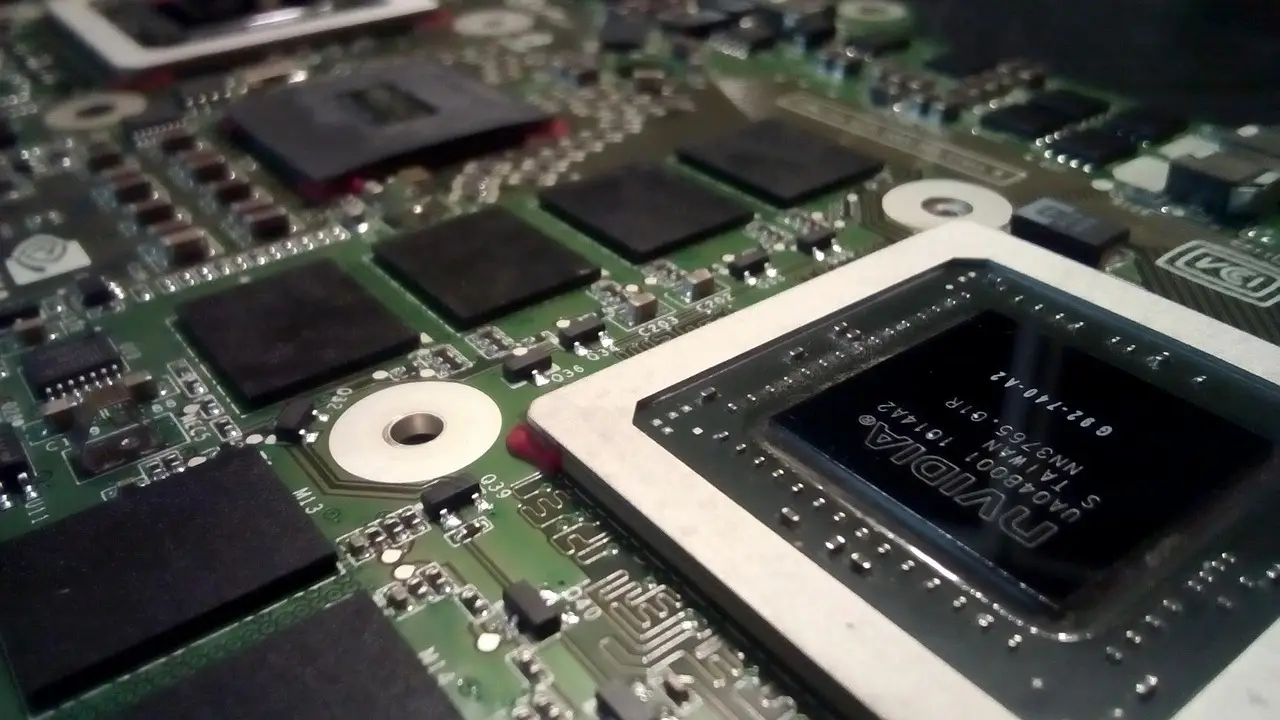
Nvidia shares fell 6.3% in midday trading Thursday after Jensen Huang's abrupt resignation as CEO — an exit that leaves one of the world's most valuable companies without the leader who steered it for 33 years and transformed a video-game graphics chip maker into the engine of the AI boom.
The market kept its composure beyond that. The Nasdaq slipped only 95 points, and the broader reaction stayed muted. But with AI and datacenter spending so central to the U.S. economy, analysts say the potential fallout is hard to overstate.
"NVIDIA's leadership crisis is a stress test for the AI boom," Stephanie Balaouras, Forrester's VP and group research director, told Fortune.
How much does Nvidia's money machine matter?
Nvidia's importance goes well beyond its own P&L. Beyond making the GPU chips (the processors that train and run AI systems like ChatGPT and Claude), the company has become the AI industry's "central bank," financing scores of other players. Huang also served as AI's senior statesman on everything from regulation to industrial policy.
"Obviously Nvidia is more than Jensen Huang, but he kind of championed a whole range of investments," a VC investor focused on early-stage companies told Fortune.
"There is a question around whether the pace of investment in AI and the size of the amounts of capital going into companies can be continued. Because by any stretch of the imagination, it's been quite extreme," the investor said.
The most exposed group: the smaller "neo-cloud" companies (firms that buy Nvidia chips in bulk and rent out the computing power), many financed directly by Nvidia. Jay Goldberg, an analyst at Seaport Research Partners and one of the few on Wall Street with a sell rating on Nvidia, explained Huang's logic: "He'd rather have 300 small customers who are dependent on him than three massive ones who you can't negotiate with."
With CFO Coleen Kress now serving as interim CEO, that posture could shift. According to The Information, Kress occasionally pushed back against Huang's deals, including a backstop of $250 billion in credit for an OpenAI datacenter project.
"The idea that they could count on Nvidia for future financing is unlikely," one venture capital partner invested in numerous AI startups said of the "Nvidia money train." The market agreed: CoreWeave dropped 7.5% Thursday, while Nebius Group — which also issued a lighter-than-expected sales forecast — fell 18%.
Investors will likely also re-examine "Jensen math," the figures Huang used to justify the complex web of investments, says Jason Schloetzer, an associate professor at Georgetown University's McDonough School of Business. That re-checking starts with the biggest event on the calendar.
What happens to Anthropic's $60 billion IPO?
Anthropic's widely anticipated initial public offering lands November 18. The five-year-old company seeks to raise upwards of $60 billion at a valuation that could exceed $1.4 trillion, and it — along with OpenAI's IPO expected in 2027 — is a make-or-break proxy for the health of the AI business.
"If the Anthropic IPO doesn't go well and if the OpenAI IPO [down the line] doesn't go well, there's a question of: Is there a path to profitability for any players in the AI space?" one startup founder told Fortune.
Karl Alomar, a partner at venture firm M1, argued the offering stands on its own: "From where I stand, Anthropic is still in as good, as strong and as good a position as it was before this news came out."
"I'm not sure it'll have a massive impact on them. Anthropic's numbers are fantastic, and they've clearly shown that they have excess capacity for what they need," he said.
Anthropic's S-1 filing shows roughly $900 billion in compute spending commitments over the coming decades, tied closely to cloud providers like Alphabet, Amazon and Microsoft — giants with the balance sheets to ride out the turbulence.
Will Washington tighten the screws?
Huang's downfall — tied to an affair with a woman alleged to be a Chinese spy — destroys his credibility on regulatory issues, and it comes just after midterm elections in which voters overwhelmingly opposed datacenter construction in their communities.
"This guarantees new export controls," said Ed Mills, policy analyst at Raymond James. "It was extremely likely before the scandal and this is the accelerant to push it over the finish line." Three bills proposing new export controls on AI chips and advanced semiconductor equipment are currently attached to the defense authorization bill awaiting passage on Capitol Hill.
Lawmakers could also pursue licensing requirements on open-source AI models, which Huang had opposed. Brad Carson, former Democratic Congressman and now president of Americans for Responsible Innovation, called such rules unlikely, citing congressional support for open-source AI and the technical difficulty of drafting effective ones.
The policy push unfolds against a widening investigative effort, with Nvidia's relationships with companies such as Megaspeed and Super Micro under the microscope.
"What's happened at Nvidia is for Nvidia to address," said Tony Ball, CEO of digital security company Entrust. "But in terms of the way AI is going to continue to add value to organizations and productivity, this was an inevitable structural challenge, and governance and policy issue that the world was going to have to wrestle to the ground."
Whether Huang was merely AI's most famous champion — or the Jenga piece holding the tower up — is now the market's most important question.
Audit trail
- Nvidia shares fell 6.3% Thursday after Jensen Huang's abrupt resignation as CEO after 33 years.
- Anthropic seeks to raise over $60 billion in its IPO on November 18, at a valuation above $1.4 trillion.
- CFO Coleen Kress, now interim CEO, previously pushed back on a $250 billion credit backstop for OpenAI datacenters.
- CoreWeave fell 7.5% and Nebius Group fell 18% on Thursday.
- Three export-control bills on AI chips are attached to the defense authorization bill awaiting passage.
via fortune.com/feed/ (Source)
More from Grace Kim
Show full bio
Staff writer covering people, launches and day-to-day practice in corporate finance and the leaders who run it at CFO Observer.
209 articles
Cross-references
- Nvidia's $125 Billion Backstop Loses Value After Huang Exit
- Nvidia’s $189 Billion AI Push Faces Its First Test Without Jensen Huang
- Nvidia's $230 Billion Wipeout: The Finance Desk View of Key Man Risk
- Nvidia Moves to Oust CEO Jensen Huang After Spy-Linked Affair
- Nvidia’s 34% Slide Cuts Its P/E to 20, but the Risk Is Not Gone