RefE-885
Entered
Figures4 min · 751 words
Working paper
Senseonics Revenue Jumps 140% to $19.6 Million, Raises 2026 Outlook Again
Senseonics lifted Q3 revenue 140% to $19.6 million, raised its 2026 outlook to $68-70 million, and forecast a $100 million 2027 despite a wider $32.7 million net loss.
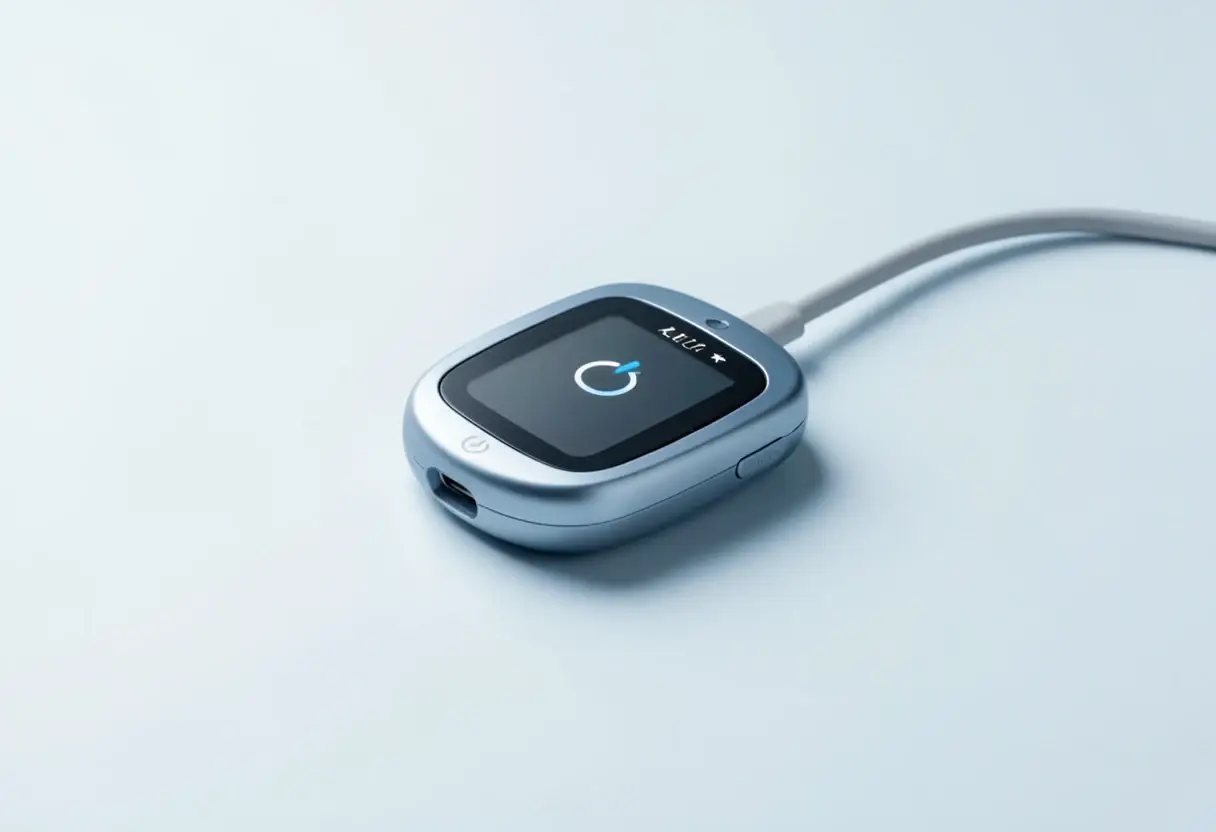
Senseonics Holdings (NASDAQ:SENS) grew third-quarter revenue approximately 140% to $19.6 million from $8.1 million a year earlier, and raised its full-year outlook for the third time this year. The company now expects 2026 revenue of $68 million to $70 million, up from its previous forecast of $62 million to $66 million. It was the second consecutive quarterly revenue record.
U.S. sales climbed roughly 160% to $16.8 million, while revenue outside the U.S. rose about 65% to $2.8 million, the company said on its earnings call. The driver was record new patient starts for Eversense 365, a continuous glucose monitor built around a yearlong sensor and a removable transmitter.
What is pulling patients in?
Chief Commercial Officer Brian Hansen said approximately nine out of 10 new insertions involved patients switching from a competing sensor. That is not organic market creation; it is conquest. Direct-to-consumer advertising remained the largest source of new patient starts, and the number of active prescribers rose more than 90% year over year. The majority of direct-to-consumer conversion metrics improved during the quarter.
The EON Care insertion network (Senseonics' channel of trained clinics placing the implantable sensor) surpassed its year-end goal of 100 inserters during the quarter and should reach approximately 120 by year-end. EON accounted for more than 40% of U.S. Eversense insertions in the third quarter.
Retention figures deserve their own ledger. Chief Executive Officer Tim Goodnow said roughly 94% of patients use their sensor for its full term. Historically, about 75% move from a first sensor to a second, about 85% from a second to a third, and retention runs well into the 90% range after the third sensor.
What about the pump pipeline?
Senseonics expects the commercial launch of its integration with Beta Bionics' iLet Bionic Pancreas (an automated insulin delivery system) within weeks, with the first patients possible before year-end. An existing integration with Sequel's twiist pump is already in place, and management expects the added partnership to support 2027 growth.
Goodnow said Senseonics is in discussions with other major pump makers, though additional agreements are not ready for announcement. He expects those partnerships in the 2028 period.
The company began human testing on Oct. 26 of Freedom, a system designed to deliver continuous glucose monitoring without an on-body component. The early feasibility study evaluates safety and device function, including direct Bluetooth communication, to inform a pivotal study expected to begin in 2027. Senseonics targets a potential 2028 launch.
Margins improve while the loss widens
Gross profit increased to $12.1 million, approximately 62% of revenue, from $3.5 million, or 43%, a year earlier. Chief Financial Officer Rick Sullivan attributed the improvement partly to a higher share of bundled-pay sales (single-price packages covering sensor, transmitter and support), initial European sales of Eversense 365, and the move to in-house commercial operations.
The company raised its full-year gross margin outlook to more than 60%. Sullivan expects fourth-quarter margin near third-quarter levels, modest improvement in 2027, and a gross margin above 70% for Freedom.
The net loss nonetheless widened to $32.7 million, or $0.50 per share, from $19.5 million, or $0.43 per share, a year earlier. Research and development expenses rose to $11.7 million from $7.8 million. Selling, general and administrative expenses increased to $32.3 million from $15.3 million.
What does the cash picture look like?
Senseonics expects full-year operating expenses slightly above the high end of its previous $150 million to $160 million range, and cash utilization of approximately $120 million, at the high end of its prior forecast. Cash equivalents, restricted cash and short-term investments totaled $126.6 million as of Sept. 30. The arithmetic is not subtle.
Based on the current plan, Sullivan said the company expects to reach cash flow breakeven shortly after Freedom's launch, with the product's planned margin profile serving as a major catalyst. Formal 2027 guidance arrives at the beginning of next year, but Sullivan offered one number early: "We will certainly be a $100 million company next year."
Senseonics also cut its estimate for Europe's share of 2026 revenue to approximately 15% from 20%. Hansen said the European commercial transition and the Eversense 365 launch there took longer than expected, while U.S. growth simply outpaced everything else. A company can grow 140% and still find its geography homework unfinished.
Audit trail
- Q3 revenue rose approximately 140% to $19.6 million from $8.1 million a year earlier.
- Full-year 2026 revenue guidance raised to $68-70 million from $62-66 million, the third raise this year.
- Net loss widened to $32.7 million, or $0.50 per share, from $19.5 million, or $0.43 per share.
- Gross margin reached about 62% versus 43% a year ago; full-year outlook raised to above 60%.
- CFO Rick Sullivan said: 'We will certainly be a $100 million company next year.'
via dailypolitical.com (Source)
More from Sophie Lindqvist
Show full bio
Market editor covering technology and product news in corporate finance and the leaders who run it at CFO Observer.
92 articles
Cross-references
- Edwards Lifesciences Lifts 2026 Outlook After 11.2% Sales Jump
- 10x Genomics Lifts 2026 Revenue Guidance to $625-635 Million
- Medtronic posts highest annual revenue growth in a decade
- Waters Posts $1.767 Billion Q3 Revenue, Lifts 2026 Outlook
- Geron Posts $1.4 Million Profit as RYTELO Revenue Hits $60.1 Million