RefE-610
Entered
Figures5 min · 920 words
Working paper
Serve Robotics raises 2026 revenue outlook to $12 million
Serve Robotics raised 2026 revenue guidance to $12 million after quarterly sales reached $2.8 million, but a $59.2 million net loss underscored the cost of expansion.
By Marcus Bennett
Serve Robotics (NASDAQ: SERV) raised its 2026 revenue guidance to $12 million from $9 million-$10 million. CFO Brian Read said the new outlook implied approximately $3 million of fourth-quarter revenue. Third-quarter revenue reached $2.8 million, more than quadrupling from roughly $700,000 a year earlier, as delivery partnerships expanded, fleet operating costs fell and the company launched services for other robotics businesses.
Serve reported a $7.6 million gross loss and a gross margin (gross profit as a percentage of revenue) of negative 266%. Its net loss was $59.2 million, or 68 cents per share; the non-GAAP (company-adjusted) net loss was $44.6 million, or 51 cents per share. Revenue growth therefore remains well below the cost base required to operate and expand the fleet.
What did the delivery network change?
Daily deliveries through DoorDash and Grubhub more than tripled from the end of the second quarter to the end of the third, co-founder and CEO Ali Kashani said. Their share of total deliveries more than doubled, while the number of merchants on those platforms grew more than 2.5 times. Newer platforms therefore became larger contributors to daily deliveries.
Fleet services revenue rose about $300,000 from the prior quarter even as Uber volume declined, Read said. Software services revenue fell after a customer contract ended in the second quarter, and Kashani expects software revenue to remain volatile between quarters.
The Uber relationship continues, with the existing contract running through part of the first quarter next year, according to Kashani's understanding. “The company will continue to evaluate the relationship,” he said. Serve's Uber contract remains in place near term, but its future contribution is unsettled.
What drove better fleet economics?
Serve's fleet margin (revenue less direct fleet costs) improved by more than 100 percentage points from the second quarter, while total cost of revenue fell 14%, Read said. He credited lower remote-operations costs per delivery, nearly $1 million in procurement, repair and maintenance savings, and a deployment redesign that cut daily external deployment costs by 75%.
The savings lowered the direct cost burden of each delivery and created room for wider deployment. Kashani said the robots ran 13% faster than in the second quarter and traveled 7% more miles per delivery. The 99.9% delivery completion rate held unchanged from the prior quarter, leaving no reported reliability decline alongside those productivity gains.
Where is Serve expanding?
Serve recently began operating in Gold Coast, Australia, its first international market, through an exclusive partnership with DoorDash. Griffith University hosts the company's local operations team. Serve is also working with the province on a potential Vancouver launch after the city council approved a pilot proposal earlier this year.
The company is investing in small “micro depots” for robot charging, staging and maintenance. Kashani said early deployments should launch cities at one-fifth the cost and “in a fraction of the time required by its legacy deployment format.” The format targets a lower initial rollout burden in each market.
What does Physical AI add?
Serve announced Serve Physical AI Services for other robotics companies, initially covering fleet connectivity, real-world data for foundation models (large AI systems) and data-curation infrastructure. Construction robotics company Bedrock Robotics is a launch customer for Serve Link, the connectivity service.
Kashani said customer and prospective-customer interest spans construction, mining and defense. Serve Link generally generates recurring revenue per device or seat, but the company disclosed no specific gross margin, leaving the service's earnings contribution unquantified.
Read said the services require no additional robot builds and do not compete with delivery or healthcare operations for fleet capacity. The arrangement extends Serve's operating infrastructure into adjacent markets without requiring another delivery fleet.
How is healthcare changing?
Serve's fleet includes 2,000 robots across 40 cities and 27 hospitals, Kashani said. Its Moxi hospital robots move supplies and materials, and the company signed multiyear extensions with 12 existing hospital clients this year; two expanded their robot fleets.
Kashani described 2026 as an investment year for Moxi following its acquisition. Serve is rolling out Moxi 2.0 hardware and hopes to upgrade existing client fleets and place new robots in additional hospitals. The extensions retain hospital clients while the hardware rollout expands the service offering.
What does the balance sheet fund?
Serve ended the quarter with more than $198 million in cash and marketable securities. It expects approximately $150 million of full-year non-GAAP operating expenses, $20 million below its start-of-year expectation. Serve maintained capital-spending guidance of $15 million-$17 million.
Non-GAAP operating expenses fell to $39.2 million in the third quarter, down $1.2 million from the prior quarter and marking the first quarterly decline this year. Read said Serve will maintain spending discipline into 2027 while investing in autonomy and software. The cash position gives the company room to fund deployments and product development, though expenses remain substantial.
What business is Serve building?
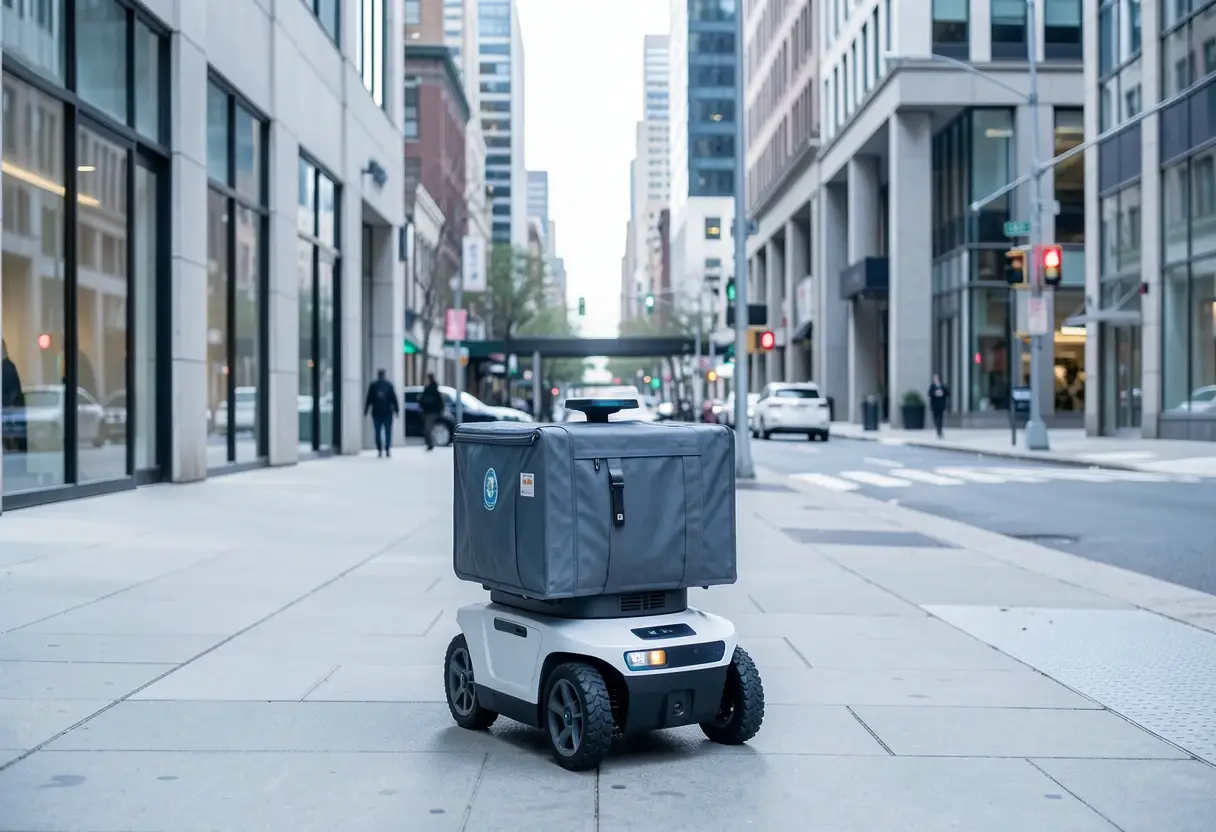
Serve develops autonomous, electric sidewalk delivery robots for short-distance transport. Cameras, sensors, artificial intelligence and remote human assistance help the robots navigate sidewalks, cross streets and interact with customers carrying restaurant meals, groceries and other local orders.
Its services primarily target on-demand delivery platforms, restaurants and retailers. Serve has deployed its robots for commercial deliveries in the United States, including the Los Angeles area, and has worked with partners such as Uber Eats to support local delivery operations.
Audit trail
- $2.8 million in third-quarter revenue versus roughly $700,000 a year earlier, alongside a $59.2 million net loss.
- 2026 revenue guidance rose to $12 million from $9 million-$10 million, implying about $3 million in fourth-quarter revenue.
- DoorDash and Grubhub deliveries more than tripled during the third quarter, while merchant counts grew more than 2.5 times.
- Fleet margin improved by more than 100 percentage points from the second quarter, and daily external deployment costs fell 75%.
- Serve held more than $198 million in cash and marketable securities, with $15 million-$17 million of planned capital spending.
via dailypolitical.com (Source)
More from Marcus Bennett
Show full bio
Correspondent covering people, launches and day-to-day practice in corporate finance and the leaders who run it at CFO Observer.
79 articles
Cross-references
- NetScout Q2: Revenue Up 1.4%, Margins Expand, Guidance Holds
- GM Grew Revenue While Selling Fewer Cars — Pricing Still Beats Volume
- Uber revenue beats, but mobility and delivery miss in Q3
- MACOM's Q4 Revenue Jumps 62.7% to $424.8M on Data Center Demand
- El Al posts record $1.27B revenue as Q3 net profit falls 14%