RefE-841
Entered
Figures4 min · 894 words
Working paper
SOLV Energy raises 2026 outlook as backlog reaches $9.2 billion
SOLV Energy raised its 2026 revenue and EBITDA outlook after third-quarter revenue reached $1.24 billion, while backlog climbed to a record $9.2 billion. A $45 million ASB deal followed.
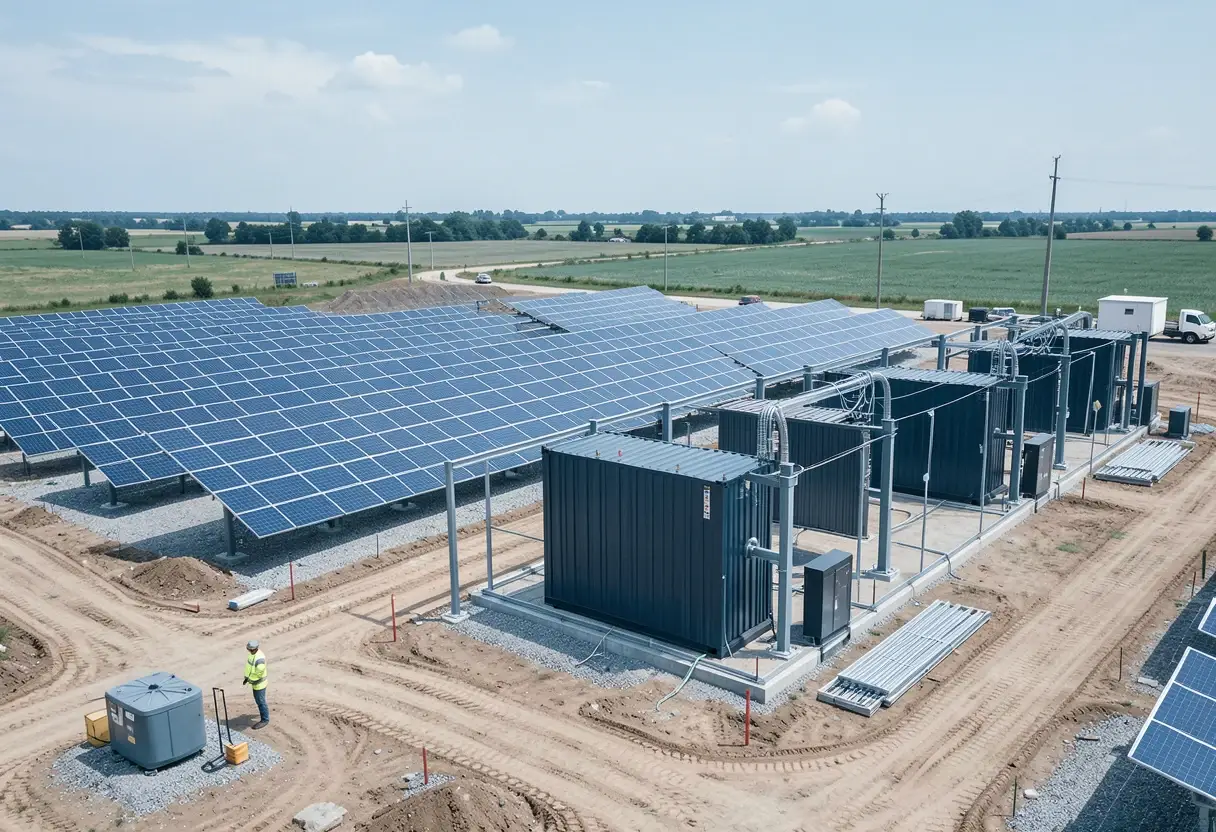
SOLV Energy (NASDAQ: MWH) ended the third quarter with a record $9.2 billion backlog and raised 2026 revenue guidance to $4.03 billion-$4.12 billion. Quarterly revenue reached a record $1.24 billion, up 65% year over year, while adjusted EBITDA reached $173 million.
How strong were the results?
Nine-month revenue increased 69% to $2.87 billion, and adjusted EBITDA rose 58% to $383 million. CEO George Hershman credited project and service execution, saying SOLV had performed more work during the quarter than at any point in its history.
Hershman linked demand to digital infrastructure, domestic manufacturing and electrification, which are creating opportunities for solar and storage providers. Management described demand as strong despite unresolved policy questions and project-cost concerns.
Third-quarter adjusted gross profit was $215 million, a 17.3% margin; adjusted EBITDA margin was 13.9%. CFO Chad Plotkin said 2025 benefited from favorable late-stage project performance, contingency releases and a repair project with above-average margins.
SOLV also changed the presentation of certain incentive compensation for 2026, moving it from selling, general and administrative expenses into cost of revenue. The shift changes expense classification and complicates direct comparisons.
Takeaway: Execution drove the quarter, but favorable project items and a compensation reclassification limit how cleanly the result signals the 2026 margin path.
What does the higher outlook assume?
The raised 2026 guidance calls for revenue of $4.03 billion-$4.12 billion, adjusted gross profit of $660 million-$690 million, and adjusted EBITDA of $525 million-$540 million. Plotkin said the revision reflected year-to-date performance and fourth-quarter expectations.
Third-quarter backlog included about $3.1 billion for projects with a battery energy storage component. SOLV excluded verbal awards and business-development work that had not reached a contracted or limited notice-to-proceed stage.
Hershman said backlog contained more than 5 gigawatts of projects larger than 600 megawatts, including the largest single award at 1.2 gigawatts. He described all backlog as safe harbored, while the pipeline extended through 2030.
For 2027, Plotkin said SOLV would issue formal guidance on its year-end call. Based on backlog and business-development activity, he said the company was positioned for “meaningful growth,” while project timing remained under review.
Takeaway: The backlog supplies visible work, but management has not yet translated it into formal 2027 guidance.
What does the ASB acquisition add?
On October 30, SOLV acquired Texas-based ASB Energy Services for approximately $45 million, excluding customary closing adjustments. The consideration included cash and Class A common stock.
ASB specializes in high-voltage substations, civil construction and battery-storage infrastructure. The deal lets SOLV perform more work internally, particularly substation construction, testing and commissioning.
ASB also performs some substation work for data centers, though Hershman described that exposure as limited. Plotkin said SOLV would keep assessing acquisitions within its existing services ecosystem.
Hershman said SOLV is also examining opportunities in additional power generation, including a potential combination of solar, storage and gas firming if the right opportunity appears. No transaction or timetable was disclosed.
Takeaway: ASB adds electrical and storage capability, while gas firming remains an option rather than a committed project.
Can policy and costs derail the pipeline?
Hershman said customer projects were moving forward and that SOLV saw no significant delays or cancellations associated with perceived market challenges. He characterized Section 232 as more a pricing issue than a capacity issue and saw no slowdown in backlog.
An analyst noted that engineering, procurement and construction prices had risen 5%-10% year over year. Hershman said equipment and commodity cost increases were “largely in line” with that range, while individual percentages could vary.
SOLV is mitigating those increases through efficiencies and purchasing scale. Hershman also said discussion had increased around a potential extension of the solar investment tax credit following the election.
Even without an extension, he expected the business to grow because of the cost and speed of deploying solar and storage. That claim depends on solar and storage retaining their cost and speed advantages.
Takeaway: Management treats policy as a planning and pricing variable, not yet as evidence of a contracting slowdown.
What can the balance sheet fund?
SOLV ended the quarter with $609 million in total liquidity: $422 million in cash and $187 million available under its credit facility. Plotkin said the company had no long-term debt.
Management is prioritizing capital allocation toward growth while continuing to review its options with the board. The liquidity can support expansion, but no specific allocation was announced.
Takeaway: The balance sheet can fund expansion, but the board review leaves the use of that capacity open.
What business does SOLV operate?
SOLV Energy is a U.S. renewable-energy contractor that develops, builds and maintains utility-scale solar and battery-storage projects. Its services cover engineering, procurement and construction, operations and maintenance, and related electrical infrastructure for U.S. customers from construction through ongoing operation.
The company traces its roots to Swinerton Renewable Energy and became an independent company under the SOLV Energy name in 2021. Record volume, broader storage exposure and higher-voltage capability now sit against two unresolved tests: project timing and the repeatability of 2025 project margins.
SOLV has more contracted work and more execution capability; the next proof point is whether the higher 2026 outlook survives project timing and normalizing margins.
Audit trail
- Third-quarter revenue rose 65% year over year to $1.24 billion; adjusted EBITDA reached $173 million.
- Nine-month revenue rose 69% to $2.87 billion, while adjusted EBITDA increased 58% to $383 million.
- 2026 revenue guidance is $4.03 billion-$4.12 billion; adjusted EBITDA guidance is $525 million-$540 million.
- Quarter-end backlog reached $9.2 billion, including about $3.1 billion of projects with battery storage.
- SOLV acquired ASB Energy Services on October 30 for approximately $45 million.
via dailypolitical.com (Source)
More from Tom Whitfield
Show full bio
News editor covering companies, deals and strategy in corporate finance and the leaders who run it at CFO Observer.
214 articles