Entered
Figures4 min · 761 words
Working paper
Transformer shortage could stall the $1 trillion U.S. grid fix
A Johns Hopkins study says transformer and converter shortages could begin in 2027 and become acute by 2030, threatening the $1 trillion U.S. grid upgrade amid surging data-center demand.
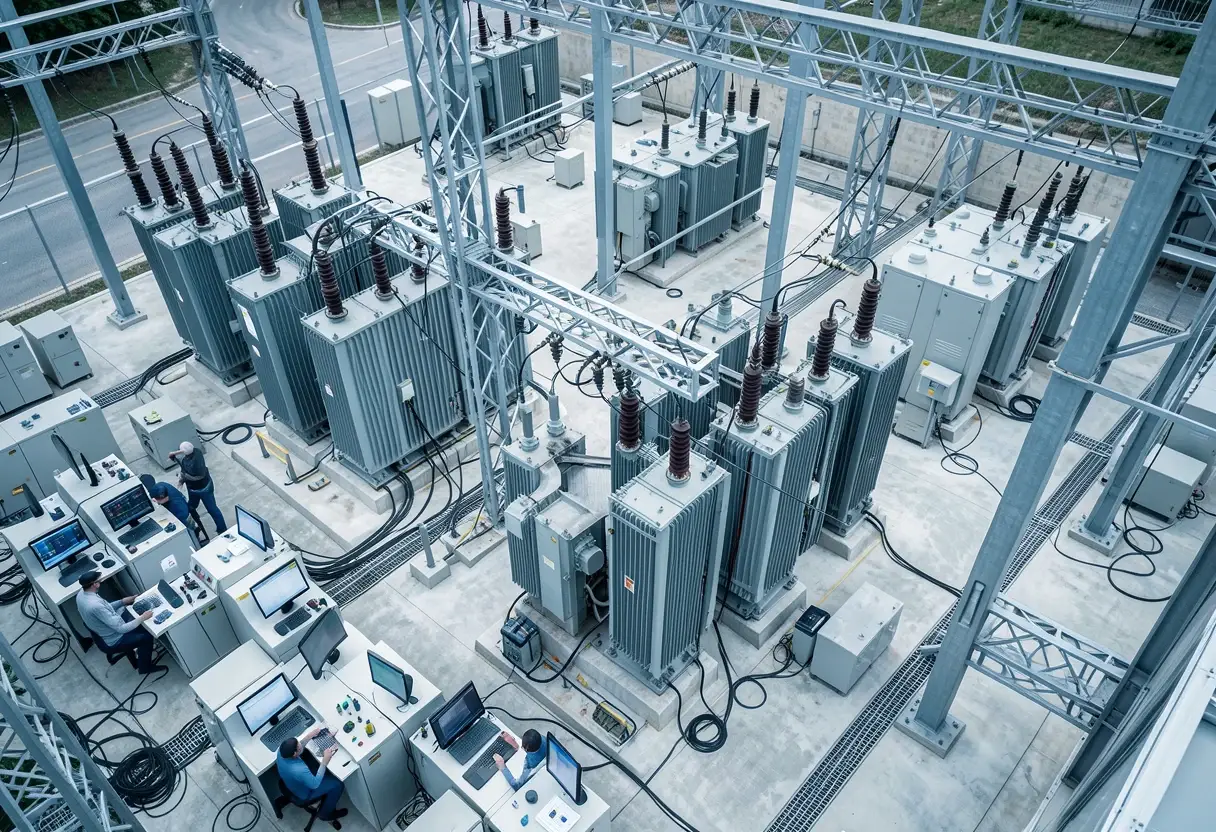
The United States needs about $1 trillion in grid investment through 2035, while a Johns Hopkins University study says transformer and converter shortages could begin as early as 2027 and become acute by 2030.
JPMorgan Chase supplied the investment estimate. Researchers Yury Dvorkin, a Johns Hopkins associate professor, and PhD candidate Boyu Yao found that the equipment connects new power plants and data centers to the grid. Their study appeared in Cell Reports Sustainability.
The findings followed a week of technology failures that grounded flights, delayed bank transactions and disrupted email for millions of Americans. The grid has its own vulnerability, one built from copper and steel.
Dvorkin said: “This type of equipment was taken for granted but without it, you can build a data center or a power plant but it won’t be powered because you cannot connect it to the grid.”
He added: “When the demand for electricity started to grow faster than expected, it started to amplify all the cracks in the industry.”
What is driving the shortage?
U.S. power use historically grew about 1% to 2% a year. The study projects a 21% increase by 2030 as AI data centers, electric vehicles and broader electrification add demand.
Data centers could account for as much as two-thirds of the expected equipment shortfall. Over the longer run, the National Electrical Manufacturers Association projects U.S. electricity demand will grow more than 50% by 2050.
Columbia Business School says more than 70% of U.S. transmission lines are over 20 years old. Utilities also need years to build and connect the grid capacity AI developers want now.
Demand is rising faster than the hardware and infrastructure behind it.
Which materials run out first?
Transformers and other grid hardware use copper, steel, nickel, aluminum and manganese. The researchers say the United States could run short of all five over the next four years.
- Copper comes first, potentially as early as 2027. The deficit could extend beyond the grid to data-center equipment, wind-power converters and electric-vehicle charging infrastructure.
- Steel and nickel follow, and sourcing them could become nearly impossible by 2030.
Copper is the first materials bottleneck, while steel and nickel form the next major constraint.
How large could the shortage become?
Under sustained high demand, the United States could fall almost 15% short on transformers and 30% short on other critical grid equipment over the next four years.
Add a trade disruption modeled as an up-to-70% drop in materials from unstable trading partners, and the transformer gap widens to about 25%. The shortage of other equipment reaches 36%.
Even with modest demand growth, the country would remain about 16% short on other grid-supporting equipment, although transformer supply would hold.
Trade shocks could turn a narrow transformer deficit into a broad equipment bottleneck.
Can spending and manufacturing catch up?
In September, the Department of Energy committed $1.9 billion to 31 projects designed to squeeze more power from existing lines and lower costs. That sum covers only a fraction of JPMorgan Chase’s $1 trillion estimate.
Much of the grid is aging out, so old transformers need refurbishment or replacement. Those jobs compete with new projects for the same scarce supply, while rising upkeep costs already appear in Americans’ utility bills.
For businesses and households, the near-term result is likely higher electricity bills and more frequent outages.
Transformers are custom-built, and lead times have quadrupled in four years, from about six months to more than two years. Large power transformers also depend on grain-oriented electrical steel, a magnetically engineered material that only one U.S. mill produces.
New spending helps, but it cannot outrun replacement demand or scarce supply.
What could stretch supply?
The researchers propose three ways to extend existing capacity:
- Install low-cost sensors that monitor transformer loads in real time.
- Recycle materials from retired transformer units.
- Standardize designs so one transformer can replace another.
Those measures could extend supply, but they do not erase the immediate production queue.
Who gets a transformer first?
Until supply catches up, access will come down to money.
Dvorkin said: “Utilities will compete for transformers with the data center industry. Transformers will first be delivered to whoever can pay the highest premium. Will it be a mom-and-pop utility or a big data center corporation?”
The contest puts utilities under pressure as data-center developers compete for earlier delivery and higher prices decide priority.
The near-term squeeze reaches customers through both the price of power and the reliability of service.
Audit trail
- JPMorgan Chase estimates the U.S. grid needs about $1 trillion in investment through 2035.
- A Johns Hopkins study says transformer and converter shortages could begin in 2027 and become acute by 2030.
- U.S. power demand is projected to rise 21% by 2030, with data centers accounting for up to two-thirds of the equipment shortfall.
- Under high demand and a modeled 70% trade-material drop, transformer shortages widen to 25% and other grid-equipment shortages to 36%.
- Large power-transformer lead times have quadrupled in four years, from about six months to more than two years.
via fortune.com/feed/ (Source)
More from Grace Kim
Show full bio
Staff writer covering people, launches and day-to-day practice in corporate finance and the leaders who run it at CFO Observer.
301 articles
Cross-references
- Data center power demand outgrows grid capacity tenfold
- Data Centers Face 189 GW of Gas and a $140/MWh Cost Test
- Voters Rejected 52 of 53 Data Center Ballot Measures — Mississippi's Governor Says Messaging Is the Problem
- Vertiv CEO: pipeline growth accelerates as 800-volt DC timeline firms
- Hyperscalers Face Data-Center Backlash and Calls for Rules