Entered
Figures4 min · 850 words
Working paper
Wholesale Power Up 267%, and 40 of 41 Ballot Measures Against Data Centers
Wholesale power near data centers rose 267% in five years, and voters rejected 40 of 41 local ballot measures. Democrats must now govern an AI wave they campaigned against.
By Tom Whitfield
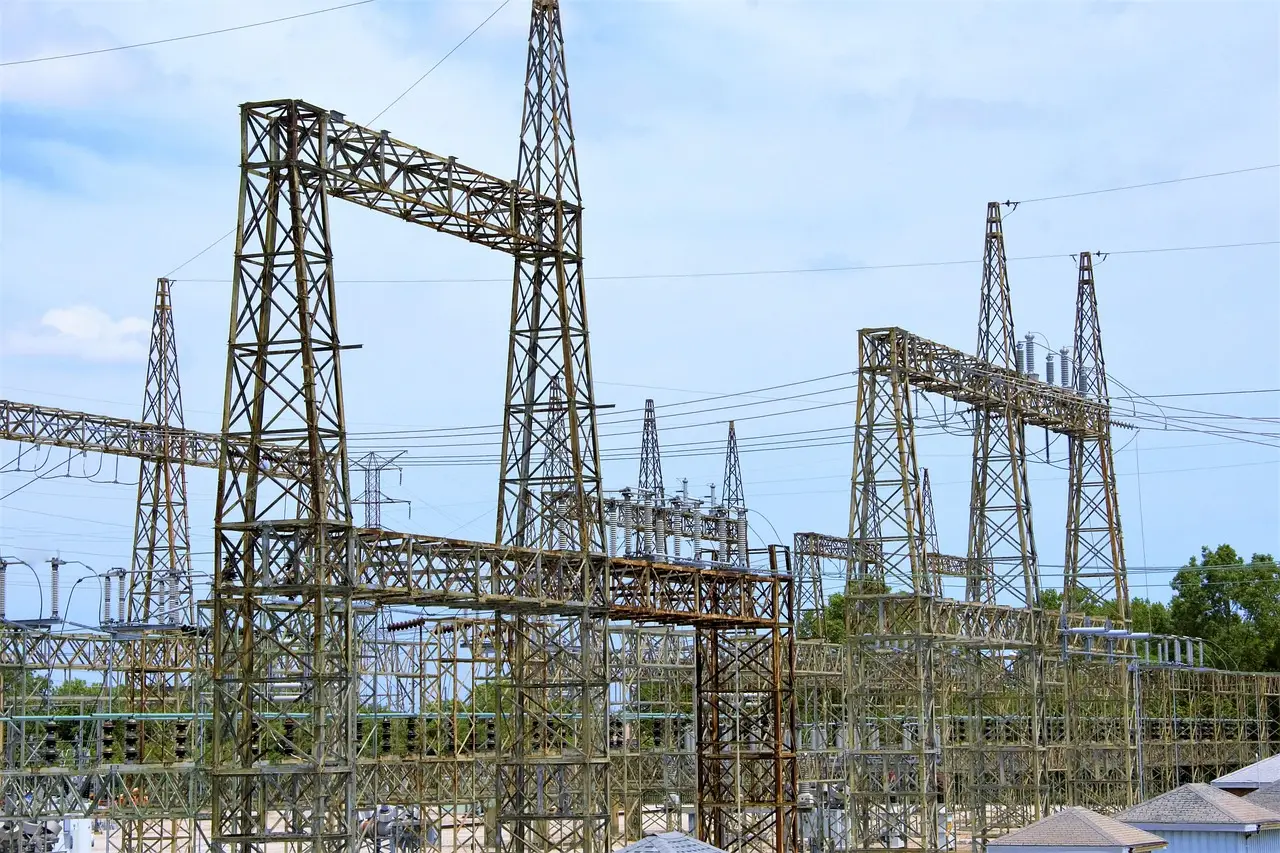
Wholesale electricity prices near some data centers have risen as much as 267% in five years, according to a Bloomberg analysis, and the operators pay only about 38% of the infrastructure costs tied to their growth, Cornell researchers estimate. Those two numbers, not abstract fears about artificial intelligence, explain why voters rejected 40 of 41 local data center measures on midterm ballots across 10 states in November. They also explain the trap Democrats now occupy.
The party won both houses of Congress partly by attacking the AI build-out. Sherrod Brown reclaimed his Senate seat after branding his Ohio opponent "the face of data centers." Abdul El-Sayed, Michigan's next senator, was blunter: "People really effing hate data centers." A March Gallup poll found 71% of Americans opposed a data center in their area, against 53% who opposed a nuclear plant. Some Republicans, hearing the same complaints, have distanced themselves from the president's pro-AI rhetoric; hostility to uncontrolled data center growth may be a rare bipartisan stance.
Yet the anger cuts both ways. ING estimates AI-related investment now drives 37% of U.S. GDP growth. The four largest cloud companies expect to spend $720 billion to $740 billion on capital projects in 2026. Choke that flow and the slowdown belongs to whoever pulled the lever. The question, then, is what Democrats can actually do with President Trump holding the veto pen.
Ban them — at least temporarily?
Some lawmakers want moratoriums. New York Governor Kathy Hochul, a Democrat, froze permits for new hyperscale data centers for up to a year; Texas Governor Greg Abbott, a Republican, halted new grid connections pending an audit. After the midterms, Representative Yassamin Ansari of Arizona posted: "Democratic agenda on day 1 needs to be a pause on advanced AI development." Senator Bernie Sanders prefers "democratic oversight" to an outright ban.
The catch: unions, especially the building trades, see data centers as a jobs bonanza. And even where moratoriums take hold, blocked projects tend to relocate to friendlier jurisdictions. The net effect may be close to zero.
Investigate and legislate — or perform?
In Washington, the opposition's leverage runs mostly through oversight: hearings, subpoenas, confirmations and the budget. Representative Greg Casar, who chairs the Progressive Caucus, wants AI CEOs hauled in "to testify under oath." Senator Ed Markey of Massachusetts warned executives to "plant new forests for all of the subpoenas we'll be printing."
Subpoenas move slowly, and televised grillings risk reading as theater. Voters asked for lower power bills, not viral clips.
Legislation faces a veto, though some bills carry bipartisan sponsors in both chambers:
- The Create AI Act would make permanent a National Science Foundation program lending computing power and data to researchers who cannot afford their own — a public counterweight to the companies that control most AI infrastructure.
- The AI Whistleblower Protection Act would shield workers who report AI risks.
- The AI LEAD Act would create a federal right to sue over harmful AI products.
One quieter lever sits with state utility regulators, who decide who pays for the power. Regulators can force data centers to cover the grid upgrades they trigger, and some states already do. A president cannot veto a state rate decision, and it targets precisely what voters are angry about. This may be the party's best practical route.
Refriend Silicon Valley — at what price?
The carrot may work better than the stick. Silicon Valley was once a Democratic stronghold, but the relationship soured as tech leaders chafed at regulation they said stifled innovation. Since 2024, many have courted Trump as allies and donors; Elon Musk reportedly spent almost $500 million supporting Republican candidates in the midterms.
The industry also funds both sides of the regulatory argument. Leading the Future, a super PAC network backed by Andreessen Horowitz's founders and OpenAI president Greg Brockman, wants lighter-touch rules. Public First, whose donors include Anthropic, backs stronger safeguards. Whether Democrats can extract accountability from executives accustomed to a free hand remains unproven.
Companies, meanwhile, have made conciliatory moves — all voluntary. Microsoft pledged in January to cover its own power costs. Meta and Amazon followed with billion-dollar community funds in August and October. Two days after the election, OpenAI rebranded its data centers as "compute campuses." One route for lawmakers: write those pledges into state law and utility contracts, where the veto pen cannot reach.
Follow the money
Over all of this hangs the arithmetic of exposure. The Magnificent Seven make up roughly a third of the S&P 500 — and therefore about a third of a typical index fund. Push too hard, and Democrats own an economic slowdown. Push too little, and they lose the voters who just elected them.
The source article notes, correctly, that the midterms were not won or lost on AI alone. What it does not resolve is which lever the party will actually pull first. Every promise of relief so far is either voluntary, vetoable or slow.
In plain words: the numbers that elected these legislators are the same numbers the economy now depends on.
Audit trail
- Wholesale electricity prices near some data centers rose as much as 267% over five years, per Bloomberg.
- Data center operators pay only about 38% of infrastructure costs linked to their growth, Cornell researchers found.
- Voters rejected 40 of 41 local data center measures on 2026 midterm ballots in 10 states.
- The four largest cloud companies plan $720–740 billion in 2026 capital projects; ING ties 37% of U.S. GDP growth to AI investment.
- Microsoft pledged in January to cover its own power costs; Meta and Amazon launched billion-dollar community funds in August and October.
via fortune.com/feed/ (Source)
More from Tom Whitfield
Show full bio
News editor covering companies, deals and strategy in corporate finance and the leaders who run it at CFO Observer.
286 articles
Cross-references
- Voters Rejected 52 of 53 Data Center Ballot Measures — Mississippi's Governor Says Messaging Is the Problem
- Data Centers Face 189 GW of Gas and a $140/MWh Cost Test
- Data center power demand outgrows grid capacity tenfold
- Hyperscalers Face Data-Center Backlash and Calls for Rules
- SpaceX’s $74 Billion AI Build Faces a 6,000 MW Grid Test