Entered
Figures4 min · 816 words
Working paper
AI funding falls to $103.3 billion as debt issuance nears $570 billion
Global AI funding fell from $239.1 billion in Q1 2026 to $103.3 billion in Q3 as Nvidia lost nearly $2 trillion and CoreWeave bonds yielded more than 16%.
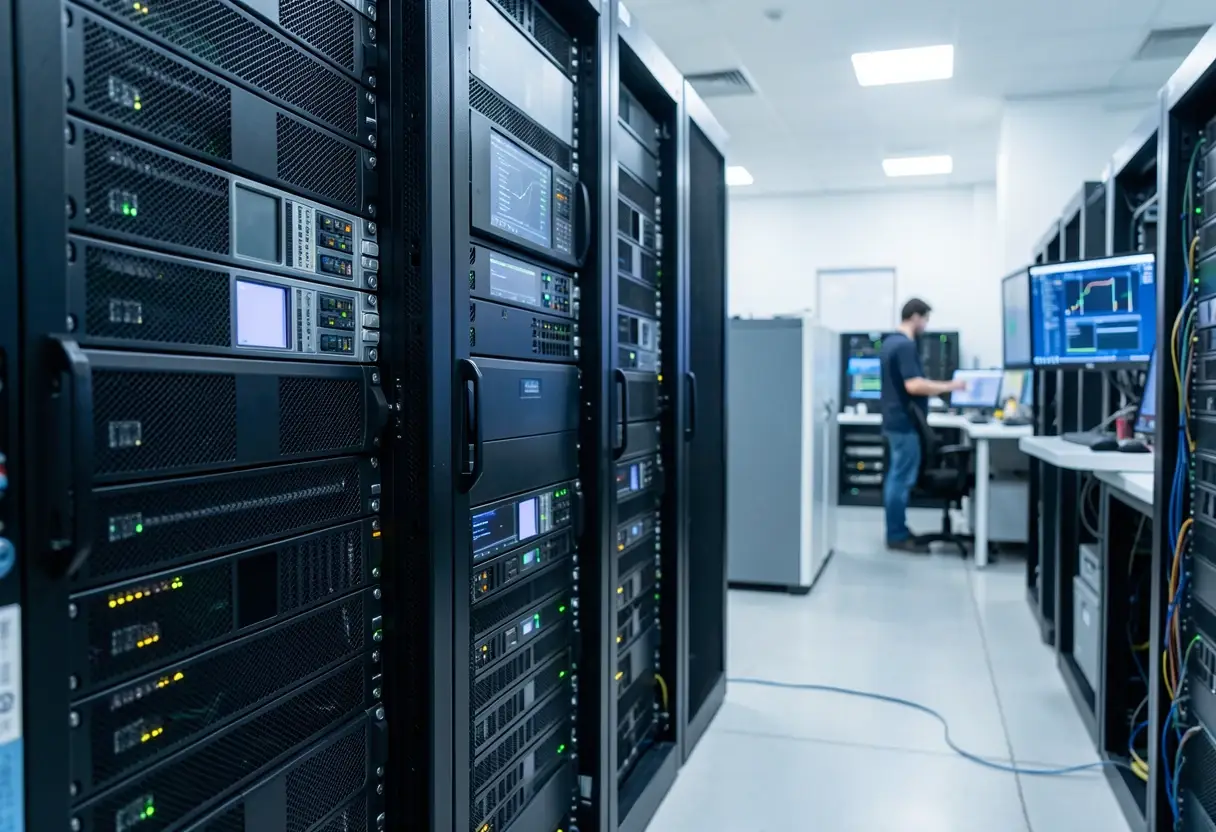
Global artificial intelligence (AI) funding fell to $103.3 billion in Q3 2026 from $239.1 billion in Q1, leaving the sector’s financing cycle at its first serious stress test. Q2 funding stood at $153.1 billion. Whether Q3 marked the bottom remains unresolved, and Nvidia’s central position in the capital chain may determine whether funding stabilizes.
Technology can still advance as unlimited spending and unquestioned valuations end, but investors now need revenue to service the debt attached to computing capacity.
What does Nvidia’s $2 trillion loss change?
Nvidia has lost nearly $2 trillion in market value since its October 6 record. More than 30% of the value that made it the world’s most valuable company disappeared in under six weeks.
On November 12, Jensen Huang resigned after 33 years. Nvidia’s chief financial officer (CFO) serves as interim chief executive (CEO), and Congress has called Huang to testify. The company now faces leadership succession and national-security exposure at the same time.
Recent earnings reports may have eased the immediate pressure, but they do not resolve those questions. Strong technology cannot justify every valuation, and management must steward the company and its mission.
Why does circular financing matter?
Bloomberg’s chart places Nvidia at the center of a global financing network involving Microsoft, Google, Amazon, OpenAI, Anthropic, Oracle and CoreWeave. Billions move among them through equity stakes, chip purchases, cloud contracts and guarantees.
- Chipmakers invest in AI companies, which buy their chips.
- Cloud providers invest in AI developers, which commit billions back to cloud services.
- Lenders finance data centers against those customer commitments.
Nvidia has guaranteed up to $105 billion in lease obligations on an Ohio data-center campus built for OpenAI, which is also Nvidia’s customer. These obligations represent contracted payments for the site’s capacity.
The loop can power genuine growth, but it can make independent demand appear stronger than it is. When suppliers finance their customers and both valuations depend on the same revenue, one default can travel quickly.
Marcus Bennett warns: “Calling the whole system a Ponzi scheme would be irresponsible, but calling it safe would be worse.” The central question is how much demand is organic, meaning spending not supported by supplier financing.
What has the credit market priced in?
Morgan Stanley projects nearly $570 billion in global AI-related debt issuance in 2026, more than double last year’s total. Issuers had sold nearly $236 billion by the end of May. Someone must ultimately pay for that capacity.
In October, the yield, or interest return, on CoreWeave’s 2031 bonds passed 16%, a level that traditionally signals distress. Reuters put the probability of default within five years at nearly 63%, despite an Nvidia agreement to buy CoreWeave’s unsold capacity through 2032.
Lenders now demand higher yields and tighter covenants, which are contractual limits designed to protect lenders. Credit investors have begun separating financial strength from AI enthusiasm. The key credit question is which borrower absorbs losses if customer commitments fail.
Which data-center projects will survive?
Nvidia remains highly profitable, while Microsoft, Google and Amazon retain exceptionally strong balance sheets. Debt-heavy neoclouds, or specialist cloud providers, and data-center developers face power shortages, construction delays, rising borrowing costs and local opposition.
Developers have committed billions to AI campuses before proving demand and profitability. Data centers will remain, but speculative projects face growing pressure.
Bennett expects a wave of distressed and underused projects between 2028 and 2031. Surviving operators should combine cheap power with creditworthy customers on long-term contracts.
Marcus Bennett’s operating test is blunt: “A gigawatt announced is not a dollar earned.” Announced capacity, therefore, carries less weight than contracted revenue from creditworthy tenants.
How will regulation determine who scales?
The EU AI Act has already begun reshaping compliance. Individual US states are drafting and passing different legislation, and Washington will press harder after the recent midterm elections on safety, energy costs, competition and national security.
The build-first, questions-later approach no longer works. Regulation will determine which companies can scale and which cannot.
Is this a debt crisis yet?
Current conditions fall short of a debt crisis, but they mark the first serious stress test of the financial system behind AI. The risk is that financing assumptions break before the technology produces its expected economic returns.
The late-1990s fiber buildout created real technological progress while destroying vast amounts of investor capital. The internet survived, but many companies that financed it did not.
AI is real, and demand for compute stays large. Its long-run impact on economies and industries can still justify optimism, but the financial engineering supporting it warrants more caution.
Survivors should generate sustainable returns on invested capital, not merely announce accelerator counts or gigawatts. As the test continues, the most interconnected players may find their largest customers and largest creditors occupying the same circle.
Audit trail
- Global AI funding fell from $239.1 billion in Q1 2026 to $153.1 billion in Q2 and $103.3 billion in Q3.
- Nvidia lost nearly $2 trillion after its October 6 record, erasing more than 30% in under six weeks.
- Nvidia has guaranteed up to $105 billion in lease obligations on an Ohio data-center campus built for OpenAI.
- Morgan Stanley projects nearly $570 billion of global AI-related debt issuance in 2026, more than double last year.
- CoreWeave’s 2031 bonds yielded above 16% in October; Reuters put five-year default odds at nearly 63%.
via fortune.com/feed/ (Source)
More from Marcus Bennett
Show full bio
Correspondent covering people, launches and day-to-day practice in corporate finance and the leaders who run it at CFO Observer.
277 articles
Cross-references
- Nvidia’s $58.1B equity book risks double exposure if AI slows
- Nvidia earnings surge as Huang’s dealmaking legacy faces a test
- Nvidia Loses Jensen Huang: The $60 Billion Question for AI
- Nvidia’s $189 Billion AI Push Faces Its First Test Without Jensen Huang
- Jensen Huang Resigns: Nvidia's $5.7 Trillion Era Ends in Scandal