Entered
Figures5 min · 905 words
Working paper
China Made 7 Million Cars in Q1 2026 — Nearly Double the EU and UK Combined
China produced over 7 million cars in Q1 2026, nearly double the EU and UK combined. A quarter-century after WTO entry, the wolf-and-lamb story has fully reversed.
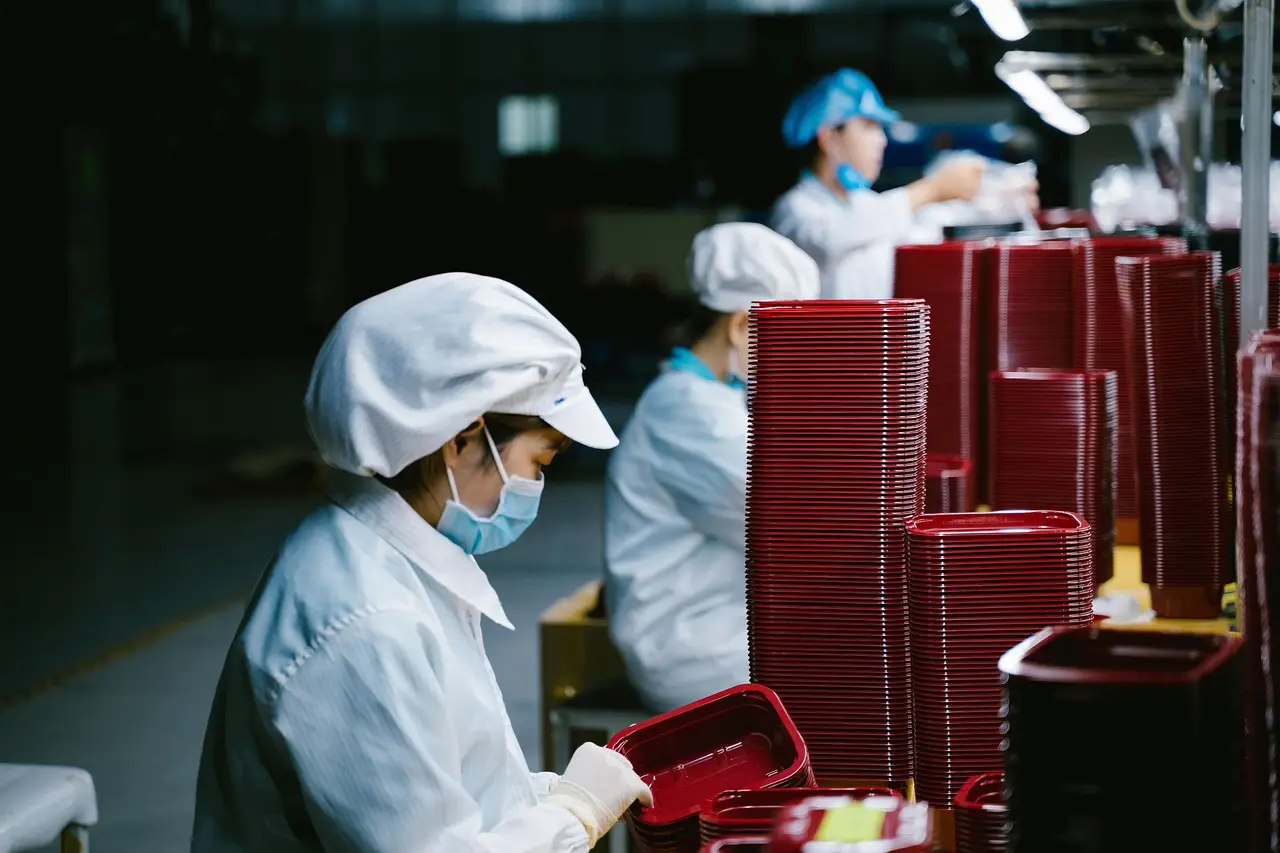
China built more than 7 million cars in the first quarter of 2026, according to the International Organization of Motor Vehicle Manufacturers. That's almost twice the combined output of every EU country plus the U.K. (3.7 million), and far ahead of the 2.6 million produced in the U.S.
The milestone lands a quarter-century after China joined the World Trade Organization in 2001 — a moment when the industry's circulating warning was lang lai le: "the wolf is coming." The wolf, Western automakers, was technically already inside the gates; China had run joint ventures with General Motors and Volkswagen since the 1980s. WTO entry meant giving up the 100% tariffs and import quotas that had shielded the domestic industry.
"There's been a complete reversal," Eric Thun, professor of Chinese business studies at Oxford, told Fortune. The reversal now runs so deep that Germany — whose auto industry faces what observers call an existential threat — may mandate joint ventures with Chinese firms, mirroring the rules China once imposed on Volkswagen.
How did China build the industry?
Beijing designated auto manufacturing a pillar of its seventh Five Year Plan back in 1986. When Michael Dunne, former GM Asia Pacific president, first visited China that year as a graduate student, he said there "was no auto industry" — just two old models on the streets: the boxy Soviet GAZ-24 Volga and the Volkswagen Santana.
Foreign carmakers could sell in China only if they manufactured locally and partnered with a Chinese firm holding at least half the venture. By the late 1990s, these joint ventures accounted for more than 80% of domestic vehicle production, per a 2000 Congressional Research Service report.
The technology transfer worked, partially. Dunne — who spent 36 years in China advising automakers as CEO of Dunne Insights — said the strategy made China a major manufacturing hub but didn't create carmakers able to challenge Volkswagen and GM in gasoline vehicles. The groundwork, though, ran deep. Thun noted China required foreign automakers to source a percentage of parts locally, so Volkswagen sent engineers to teach Chinese suppliers its manufacturing standards. "It was through these processes that they really created very deep industrial capabilities," Thun said.
WTO entry in 2001 also loosened rules on new entrants. Fengming Lu of the Australian National University said Beijing relaxed restrictions to prepare local firms for cheaper imports — which led battery maker BYD to buy an automaker license in 2003 and benefited Chery and Geely. Beijing also pushed manufacturers to cut dependence on Western technology, offering tax support for R&D.
Why did EVs change the game?
Chinese carmakers couldn't match decades of European and Japanese internal-combustion engineering. But China had an established battery and electronics industry, so electric vehicles offered different turf. "It was really the switch to electric vehicles which changed the nature of the game for Chinese producers," Thun said.
China began supporting EVs in 2009, deploying electric buses and taxis nationwide. Jonas Nahm, a Johns Hopkins professor and former White House Council of Economic Advisers member, recalled Chinese taxi drivers around 2012 hating their electric cars because limited battery range forced mid-shift switches to gasoline. Still, he said, "these procurement policies essentially forced a lot of learning and gave them sort of space for experimentation, and so over time they just got a lot better at the battery piece."
Premier Li Keqiang announced the Made in China 2025 initiative in 2015, a turning point signaling EV leadership ambitions. Subsidies and preferential financing fueled rapid expansion — and excess supply, worsened by China's prolonged real estate slump, per the IMF. China's capacity is now an estimated two-thirds of global car demand.
What was the Tesla effect?
In 2018, China lifted foreign-ownership restrictions on EV makers, letting Tesla build a Shanghai factory without a joint-venture partner. Ground broke in 2019; local deliveries started that year. Chinese officials saw a "really modern, good-looking electric car that has advanced technology and software," Dunne said, and hoped it would fix negative perceptions of EVs.
It worked. Tesla's Shanghai plant shipped 50,000 cars and held 21% of the Chinese EV market in the first half of 2020. "It was like a miracle happened overnight," Dunne said. "The Chinese customers just fell in love with Tesla... we saw demand for EVs just skyrocket."
Tesla sourced 95% of parts locally and raised industry standards. "Tesla was kind of a disruptor in that way," Nahm said, spurring investment and technology advances among domestic manufacturers.
What's the cost of the boom?
The competition triggered a price war the Chinese call neijuan, or "involution" — overproduction and selling at a loss. Chinese makers produced 16 million EVs last year, outstripping domestic demand by 20%, according to the IEA's 2026 Global EV Outlook. Exports doubled to 2.5 million as BYD, XPeng, and Xiaomi grabbed share in Latin America and Europe; BYD outsold Tesla for the first time this year.
The backlash followed. In 2024, President Joe Biden cited overcapacity and subsidies when raising U.S. tariffs on Chinese EVs to 100%; the EU imposed its own tariffs. Meanwhile, Volkswagen's deliveries to China fell 36.6% in the second quarter — from a market that once supplied half or more of its profits.
"The global automakers were caught flat-footed thinking they were going to be the darlings of Chinese consumers forever," Dunne said.
Audit trail
- China produced over 7 million cars in Q1 2026 vs. 3.7 million for the EU and UK combined, per OICA data.
- China made 16 million EVs last year, exceeding domestic demand by 20%, according to the IEA.
- U.S. tariffs on Chinese EVs rose to 100% in 2024 under President Biden.
- Volkswagen's China deliveries fell 36.6% in Q2; China once supplied half or more of its profits.
- Chinese EV exports doubled to 2.5 million last year.
via fortune.com/feed/ (Source)
More from Grace Kim
Show full bio
Staff writer covering people, launches and day-to-day practice in corporate finance and the leaders who run it at CFO Observer.
301 articles
Cross-references
- Castelion at $13 billion as China leads the hypersonic race
- Siemens and Mercedes-Benz CEOs Ask Washington for One Thing: Stability
- Standard Chartered Posts 46% Profit Jump as Fragmentation Pays
- 136,000 Nvidia Chips, $4.6 Billion: The Megaspeed Story Is Compliance, Not Romance
- US Chips in Foreign Data Centers Now Serve Chinese AI Models