Entered
Figures4 min · 887 words
Working paper
FAA Pulls New Routers After Ground Stop, Reverts to 25-Year-Old Cisco Gear
The FAA halted Juniper router installs and reverted to 25-year-old Cisco gear after a four-hour ground stop canceled 14,000+ flights, as senators demand root-cause answers.
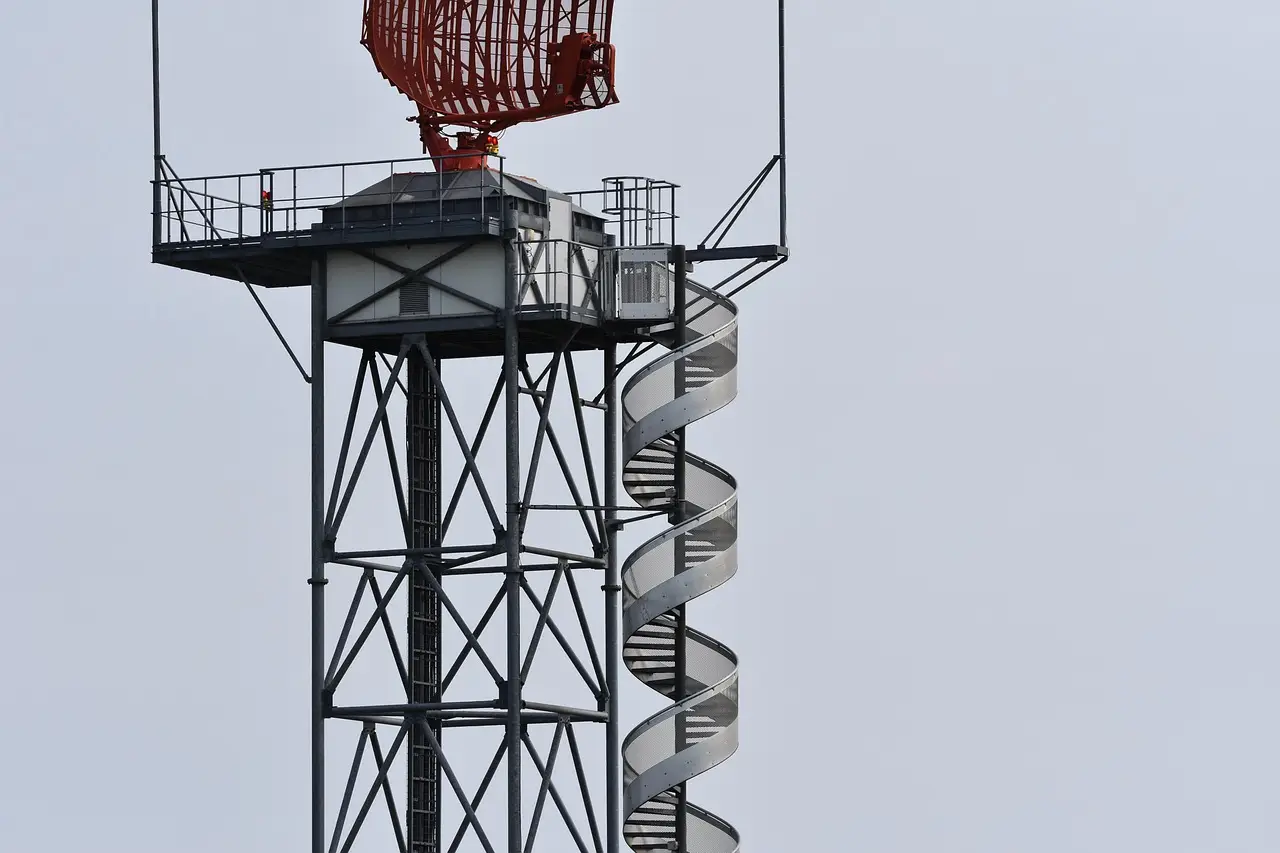
More than 14,000 flights were canceled over two days, and the FAA has now stopped installing the new routers tied to the November 13 nationwide ground stop. The agency has also switched off the Juniper Networks units already running, returning the U.S. air traffic system to Cisco routers installed roughly 25 years ago. The agency still has not said what broke.
An FAA spokesperson confirmed the installation halt to ABC News on Tuesday, saying the agency "has not yet determined the root cause of Friday's issue." The Associated Press reported that the FAA powered down the installed Juniper units and is leaning on the older Cisco equipment while it investigates.
What does the hardware retreat signal?
Friday's ground stop ran more than four hours — the longest nationwide halt since the September 11 attacks. Radar feeds and aircraft communications failed at 17 of the FAA's 22 Air Route Traffic Control Centers. The agency said "excessive data" flooded its telecommunications network at a rate of 1,000 connection attempts every 4-to-5 seconds, overwhelming legacy equipment. The initial investigation pointed to a radar site in Amarillo, Texas, and a radio site in El Dorado, Arkansas.
The work at those two sites was the modernization itself. L3Harris, whose predecessor Harris Corp. won the FAA's telecommunications infrastructure contract in 2002, has been replacing copper wire with fiber-optic lines and old routers with Juniper devices. Transportation Secretary Sean Duffy said Friday the cause was either "contractor error or a faulty piece of equipment."
The numbers behind the rollout are modest. According to a Senate letter citing L3Harris, 3,648 routers are slated for conversion to Juniper devices. About 400 have been installed. Only 69 are operational.
Why did a cabinet secretary mention superintelligence?
The FAA's hardware move came a day after the administration floated a very different theory. Homeland Security Secretary Markwayne Mullin told Sean Hannity on Fox News Monday night: "I believe that it's the SI." He meant superintelligence — relaying a theory from an unnamed tech-industry contact that self-coding, self-fixing programs could overwhelm systems that cannot keep pace, explaining a five-day run of breakdowns that hit Microsoft, the FAA and JPMorgan Chase.
Mullin added he could tell Americans "with 98% certainty, we're not seeing a cyber attack." The FBI said Tuesday it is working with the Transportation Department, the FAA and L3Harris, but has not taken possession of any equipment, Reuters reported.
The FAA's own leadership rejects the AI angle. Administrator Bryan Bedford said at a Saturday press conference: "We see zero evidence of anything nefarious, and zero evidence of anything AI-related." Duffy has also said the FAA's new AI air-traffic tool, SMART, played no role. The $875 million system was expanded to all 22 centers' airspace on November 10 — three days before the outage.
Delta CEO Ed Bastian, speaking at the Fortune 500 Innovation Forum in Detroit on Monday, attributed the ground stop to "a combination of faulty equipment, coupled with human error." He said: "There's no evidence that there's [an] AI trigger. There's no evidence that there's cyber at play."
What are lawmakers demanding?
Pulling the plug on the routers does not close the case. Thirteen Democrats on the Senate Commerce Committee, including ranking member Maria Cantwell of Washington and Sen. Ben Ray Luján of New Mexico, asked Duffy in a letter released Tuesday to keep the pause in place until the root cause is found.
"Identifying the device that failed does not establish why it failed," they wrote. Nobody has said publicly what generated those 1,000 connection attempts every few seconds. That gap is where the superintelligence theory lives. Gary Marcus, NYU professor emeritus and AI critic, told Fortune on Monday he had "the same intuition as Mullin's contact," but on the actual cause: "We don't really know yet."
An older explanation requires no AI at all. Yale sociologist Charles Perrow argued in his 1984 book Normal Accidents that tightly coupled, complex systems fail in ways nobody designed for — and fixes often add the complexity behind the next failure. Honeywell Technologies CEO Vimal Kapur made a version of that point at the Detroit forum, saying plant and hospital automation has grown too complex for its human overseers and that "what happened in the last two weeks is an example of complexity." Mullin put it plainly: "When you change one thing in a house, everything else starts changing."
What happens to the money?
The funding question is still open. The administration this week raised its request to Congress to $50.1 billion for air traffic control infrastructure, on top of the $12.5 billion lawmakers approved last year. That money was meant in part to replace copper wire, floppy disks and 1980s-era radar, though much of it also goes to runways and other construction, per the AP.
"We can't even get $50 billion to fix our skies," Bastian said, noting "hundreds of billions, if not trillions of dollars" are flowing into AI and data centers.
For now, the fix for a failed upgrade is the 25-year-old equipment it was meant to replace. The next test is the root-cause report. Until it lands, no more new routers go in.
Audit trail
- The Nov. 13 ground stop lasted over four hours, the longest since 9/11, canceling more than 14,000 flights Friday and Saturday.
- The FAA halted Juniper router installations and switched off installed units, reverting to ~25-year-old Cisco routers.
- Only 69 of 3,648 planned Juniper routers are operational; about 400 are installed.
- The administration raised its infrastructure request to Congress to $50.1 billion, on top of $12.5 billion approved last year.
- The FAA's $875 million SMART AI tool was expanded to all 22 centers on Nov. 10, three days before the outage; officials say it played no role.
via fortune.com/feed/ (Source)
More from Amara Osei
Show full bio
Senior reporter covering companies, deals and strategy in corporate finance and the leaders who run it at CFO Observer.
297 articles
Cross-references
- FEMA Officials Pull Extra Cash as Outage Wave Rattles Agencies
- FAA Ground Stop Canceled 17,850 Flights and the Bill Is Coming
- 6.4 Million U.S. Outage Reports in One Week: Microsoft, FAA, Chase, Apple All Wobbled
- FAA Ground Stop Probe Focuses on Router Flood, Not Hack, Duffy Says
- 100,000 CVEs and Four U.S. Outages: The 'Vulnpocalypse' Math CFOs Cannot Ignore