Entered
Figures5 min · 902 words
Working paper
Honeywell CEO: 50 Years of Automation Have Outgrown Their Operators
Honeywell CEO Vimal Kapur says 50 years of automation have left facilities 95% self-running and humans unable to handle the exceptions. His fix: physical AI.
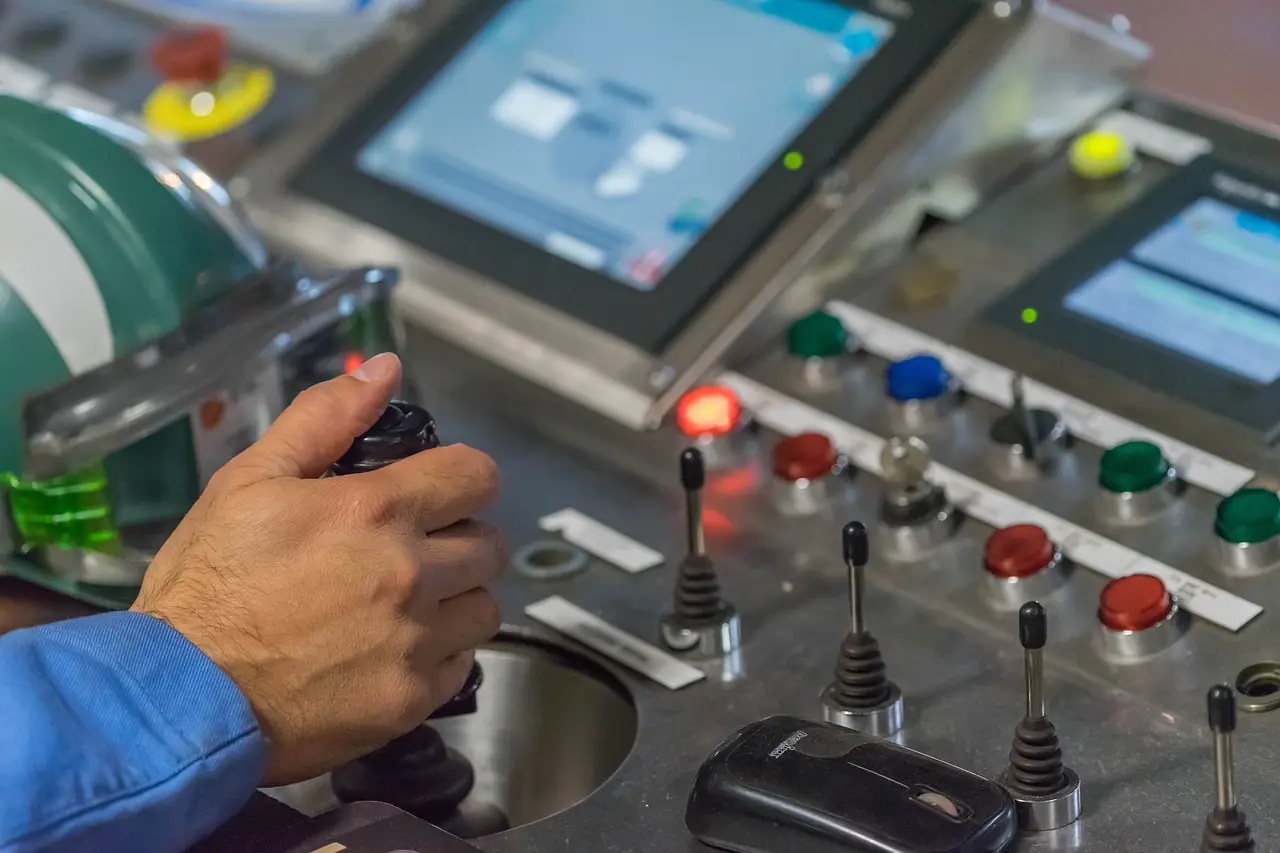
Ninety-five percent is the figure Honeywell Technologies chairman and CEO Vimal Kapur puts on how much of today's hospitals, data centers and refineries already run themselves. The remaining five percent, the exceptions left to human operators, has become the problem. Speaking at the Fortune 500 Innovation Forum in Detroit on Monday, Kapur argued that fifty years of accumulated automation has outgrown the people who supervise it.
"Over the last 50 years since this got created, the systems have become highly complex because we kept adding more and more software and physical infrastructure to it," Kapur said. "So human cannot keep up with that at this point of time."
What recent failures illustrate?
Kapur pointed to the past fortnight as evidence, calling it "an example of complexity" where "humans are not able to keep up with it," producing an "undesired incident." He declined to name one. The candidates are plentiful.
On Nov. 13, the FAA ordered a nationwide ground stop. Transportation Secretary Sean Duffy said the agency was examining a copper-to-fiber upgrade by contractor L3Harris in El Dorado, Ark., which flooded routers with connection attempts and disrupted some radar feeds, while conceding, "we don't actually have the root cause." On Nov. 12, Microsoft 365 began an outage lasting more than a day. As of press time, many Americans were unable to access their bank accounts.
What is Honeywell's answer?
Kapur's remedy is what the industry calls "physical AI" — a layer of learning systems built on top of existing automation inside "every large asset which exists: hospital, data center, life sciences facilities, refineries." Humanoid robots, he noted, are a "very small portion" of it. "Physical AI is not about job replacement; it's about making humans more productive," he said on stage.
The obstacle is data, not algorithms. "We assume that data is available abundantly on the internet," Kapur said. "But when you look at a physical system, the data is in some system which is in this building or in this hospital. Those data are not in public domain." He called data access "the first friction" in an April talk at Goldman Sachs, adding there that "we'll likely build systems which are more augmented and less autonomous."
The commercial machinery is already moving. Honeywell spun off its aerospace business on June 29, completing a three-way split, and declared itself positioned to lead "the industrial sector's transition from automation to autonomy." In October it launched Forge Cognition, an AI platform built with Nvidia and Dell that can run buildings in an autonomous mode — not yet fully switched on, its CTO told Fortune at the time.
What does the back-office version look like?
Dave Bozeman, CEO of freight broker C.H. Robinson, shared the stage and described the same problem from the paperwork side. "Variability is now structural," he said, with supply chains that "continue to be super complex." His company deploys what it calls "Lean AI": agents built for "bespoke, very specific tasks," with "orchestrating type of agents" above them. The first target is order-to-cash, "a very manual process. Millions of transactions."
The numbers deserve scrutiny. Bozeman cited "over 60% productivity gains since the end of 2022." The company's Oct. 28 earnings release measures this as shipments per person, per day in its North American Surface Transportation unit, up more than 65% over the same period. The denominator, however, has shrunk: C.H. Robinson had about 17,400 employees at the end of 2022 and about 11,900 at the end of 2025, a drop of nearly a third that FreightWaves tied to automation and AI. "That doesn't mean that it won't be hard from a change perspective," Bozeman said.
Was this predicted?
Entirely, and in 1983. Lisanne Bainbridge, a psychologist at University College London, published "Ironies of Automation" in the journal Automatica, arguing that designers automate what they can and leave the operator "to do the tasks which the designer cannot think how to automate" — chiefly, taking over when conditions turn abnormal. Her central irony: "the more advanced a control system is, so the more crucial may be the contribution of the human operator." She also warned that "physical skills deteriorate when they are not used" and that "the human monitor has been given an impossible task." An AI layer added to the stack faces precisely that test.
Why the urgency now?
Kapur framed the skilled-labor shortage as the driver. "The skill shortage is the biggest problem we all face," he said. "Anywhere there's a touch labor where the humans need to work with hand, those workforce is becoming less and less available." In the Goldman talk, he blamed retirement in part.
A 2024 study by Deloitte and the Manufacturing Institute quantifies the gap: U.S. manufacturers could need as many as 3.8 million additional workers between 2024 and 2033, and 1.9 million of those jobs could go unfilled if workforce problems are not addressed. Sixty-five percent of manufacturers surveyed called attracting and retaining talent their primary business challenge.
Kapur set his own clock considerably shorter than fifty years. Honeywell Technologies employs more than 50,000 people, and the CEO said he personally took training on Copilot. "Next 18 to 24 months, we all have to reskill ourselves," he said. The verdict, presumably, is that the machines will wait for no one.
Audit trail
- Kapur says facilities such as hospitals and refineries run themselves 'maybe 95%' of the time, leaving humans only the exceptions.
- Honeywell launched Forge Cognition, an AI platform with Nvidia and Dell, in October after completing its three-way split on June 29.
- C.H. Robinson's headcount fell from about 17,400 (end-2022) to about 11,900 (end-2025) while shipments per person rose over 65%.
- Deloitte and the Manufacturing Institute project U.S. manufacturers may need 3.8 million workers by 2033, with 1.9 million jobs at risk of going unfilled.
- Kapur set an 18-to-24-month deadline for reskilling Honeywell's more than 50,000 employees.
via fortune.com/feed/ (Source)
More from Sophie Lindqvist
Show full bio
Market editor covering technology and product news in corporate finance and the leaders who run it at CFO Observer.
261 articles
Cross-references
- Delta chief blames human error and faulty gear for FAA halt
- FAA Ground Stop Probe Focuses on Router Flood, Not Hack, Duffy Says
- FEMA Officials Pull Extra Cash as Outage Wave Rattles Agencies
- 100,000 CVEs and Four U.S. Outages: The 'Vulnpocalypse' Math CFOs Cannot Ignore
- C.H. Robinson Reports 60% Productivity Gains From AI as Honeywell Orders Reskilling