Entered
Figures3 min · 637 words
Working paper
Indonesia Signs $71.8 Billion China Investment Pledges
Indonesia and China signed four pledges worth $71.8 billion, nearly $20 billion above last year’s FDI, with Danantara leading plans for 10 smart cities.
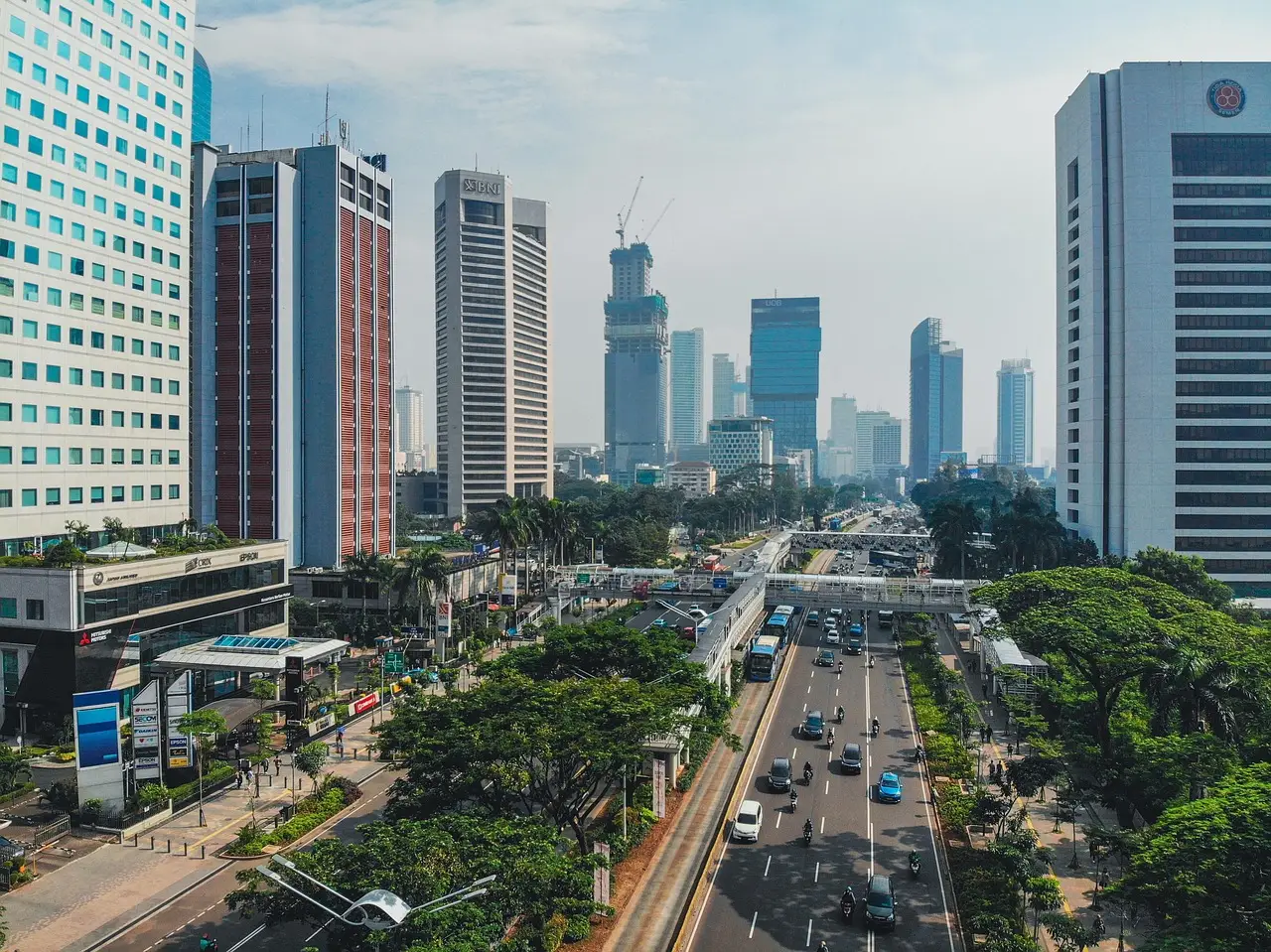
Indonesia and China signed four strategic investment partnerships worth an estimated $71.8 billion on Wednesday, nearly $20 billion above the amount Indonesia received in foreign direct investment (FDI) last year. Signed in Shenzhen, China, during the Asia-Pacific Economic Cooperation (APEC) summit, the pledges would, if fulfilled, exceed last year’s $53.4 billion FDI total excluding finance and oil and gas.
Which projects anchor the $71.8 billion package?
Three agreements center on Danantara, Indonesia’s sovereign wealth fund (a state-backed pool of long-term assets). President Prabowo Subianto launched Danantara in February 2025 to consolidate the country’s state-owned enterprises under one organization, with an estimated $1 trillion in state assets under its umbrella. The structure puts a single investment platform behind the package’s biggest commitments.
The largest partnership, valued at approximately $50 billion, links a Danantara arm with a consortium led by China’s Shaanxi Construction Engineering Group. It seeks to foster 10 “future smart cities.” Danantara said earlier this month that it plans to develop a dozen smart cities, envisioned as integrated urban areas combining residential communities, universities, hospitals, shopping centers and infrastructure.
What does the smart-city pledge change for execution?
Rosan Roeslani, Indonesia’s minister of investment and downstream industry and Danantara’s chief executive officer, said: “That will become a historic project to be implemented next year.” He added that the investments will “have a positive impact on job creation and will also facilitate technology transfer.” His timetable makes mobilization the first checkpoint for counterparties.
What do the other three agreements cover?
- $10 billion — technology and appliances: Danantara and Hisense, the Chinese appliance maker, agreed to invest in technology and manufacturing. The scope includes new research laboratories and manufacturing facilities for household appliances.
- $10 billion — infrastructure finance: A proposed partnership would strengthen the “infrastructure financing partnership” between Danantara and a consortium led by China’s State Development and Investment Corporation.
- $1.8 billion — coal-to-ethanol: The partnership joins Indonesia’s Ministry of Education, Science, and Technology, state energy company Pertamina and Beijing Petrochemical Engineering Co. It covers coal-to-ethanol technology (producing ethanol from coal).
The four announced values total $71.8 billion: approximately $50 billion, $10 billion, $10 billion and $1.8 billion. The largest agreement accounts for most of the package, while the two $10 billion agreements focus on appliance technology and infrastructure finance.
What does Danantara bring to the partnerships?
Danantara has also been pursuing technology through overseas investments. In October, the fund invested $250 million in HighPeak Energy, a Texas-based oil and gas producer. Chief investment officer Pandu Sjahrir described the transaction to Fortune last month as an opportunity to learn more about shale oil extraction.
That transaction shows Danantara using an overseas investment to gain technical knowledge, a rationale that also sits behind the new agreements. For lenders, suppliers and government counterparts, the practical test is whether the pledges produce funded facilities rather than remaining signed commitments.
How significant are the China ties?
China is Indonesia’s largest trading partner, with bilateral trade totaling $135 billion in 2024. During Prabowo’s state visit to China in November 2024, the two countries announced investment commitments totaling about $10 billion, spanning food security, energy and technology.
The new package extends that agenda into urban infrastructure, household-appliance manufacturing and coal conversion, while presenting a much larger proposed pipeline. These agreements shift the practical focus from bilateral trade volume to project delivery.
The next-year smart-city timetable and the planned 12-city program provide the clearest execution checkpoints. The $50 billion urban agreement carries the largest delivery burden, while the $10 billion appliance and infrastructure-finance proposals require financing, partner coordination and implementation. Until the pledges become funded projects, the $71.8 billion represents a potential investment pipeline, not realized FDI.
Audit trail
- Four partnerships worth an estimated $71.8 billion were signed Wednesday at the APEC summit in Shenzhen.
- The pledges are nearly $20 billion above last year’s FDI and exceed $53.4 billion excluding finance and oil and gas.
- A roughly $50 billion Danantara-linked partnership targets 10 future smart cities.
- Danantara and Hisense agreed $10 billion for technology, research laboratories and household-appliance manufacturing.
- A separate $10 billion proposal covers infrastructure finance, while a $1.8 billion partnership covers coal-to-ethanol technology.
via fortune.com/feed/ (Source)
More from Marcus Bennett
Show full bio
Correspondent covering people, launches and day-to-day practice in corporate finance and the leaders who run it at CFO Observer.
277 articles
Cross-references
- COP31 Faces a $1.3 Trillion Annual Climate Finance Gap
- Indonesia's 8% Growth Target Hinges on Contract Certainty, US Investors Say
- SpaceX’s $74 Billion AI Build Faces a 6,000 MW Grid Test
- China’s AI bust: STAR 50 down 44% as Xi faces a moment of danger
- Standard Chartered Posts 46% Profit Jump as Fragmentation Pays