Entered
Figures4 min · 892 words
Working paper
Neuralink's 26 Implanted Patients Set the Pace in the $9.7 Billion Brain-Implant Race
Neuralink has implanted 26 patients and raised $1.3 billion, yet no brain-computer interface has FDA approval. Synchron, China, and Unesco's 194-country ethics pact shape the stakes.
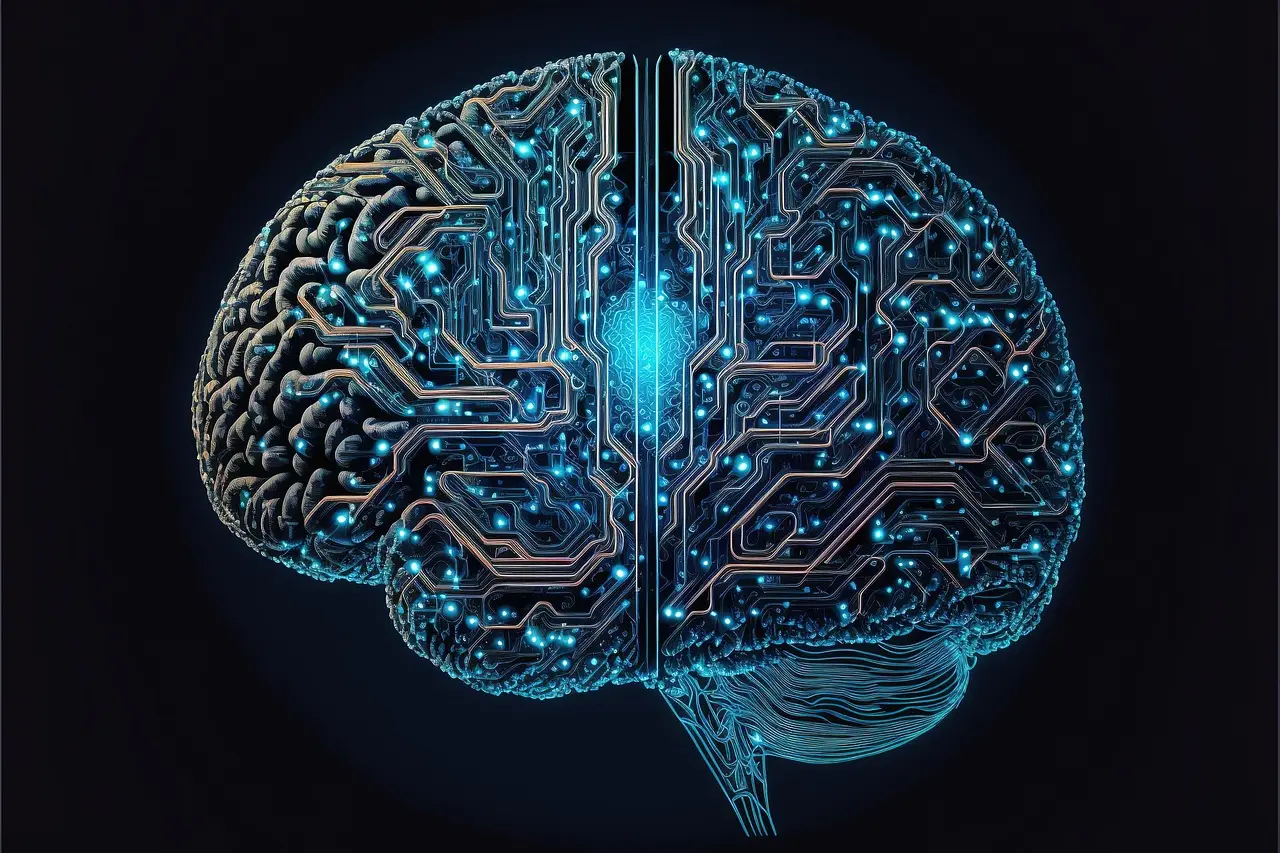
Neuralink counts 26 patients with its N1 implant in testing, up from seven a year ago, and carries a valuation of roughly $9.7 billion — yet no brain-computer interface has won FDA approval for public sale in the United States. That approval, expected by some executives within three to four years, will open a market built on devices and, more consequentially, on the neural data they collect.
The N1 demands a robotic drill and a quarter-size device placed on brain tissue, with 64 wires thinner than human hair. Patients with severe disabilities text, post, and play video games without lifting a finger. Elon Musk founded the company in 2016 and argued in 2017 that humans must link their brains to machines to avoid "being left behind and being effectively useless, or like a pet." Broad adoption, not assistive use alone, has always been the goal. The promise is enormous; the regulatory gate remains shut.
Who is racing, and with how much money?
Neuralink has raised $1.3 billion, more than double the next-best-funded implant company. The field includes Paradromics, pursuing speech restoration, and Precision Neuroscience, targeting paralysis. Synchron, valued at nearly $1 billion in its latest round, runs neck-and-neck with Neuralink in the FDA process — and may reach market first, because its Stentrode requires no craniotomy.
Thomas Oxley, Synchron's founder, CEO and a neurosurgeon, told Fortune his company has implanted the Stentrode in 15 people, five more since last year. "They're going fast," he said of Neuralink. Chad Bouton, CEO of Neuvotion, which sells an AI-guided wearable for stroke and spinal-cord injury patients, put the timeline plainly: "I think in the next three or four years we might see an FDA clearance." That is a forecast, not a filing date; the FDA has approved nothing yet.
The path runs from animal testing through early feasibility studies to a pivotal study, after which design freezes and manufacturing locks in. "That's a huge investment," Oxley said. Approval, when it comes, covers patients with clearly defined medical conditions, with insurance likely paying part of the cost.
What can the devices actually do?
Neuralink's first patient, Noland Arbaugh, paralyzed after a diving accident, received his implant in January 2024. He has played Civilization, is writing a book with a partner writer, and travels for speaking engagements. "It has absolutely changed my outlook on life and what I'm able to accomplish," he said in a 2025 interview. "It has given me a lot of hope for myself." Even so, he posted that "being paralyzed still sucks."
The Stentrode inserts through a blood vessel via catheter in a two-hour surgery, like a heart stent, and transmits signals to a coin-size receiver embedded in the chest. Patients activate commands by thinking, for example, "Move my foot," which software translates to "Press select." Synchron integrated first with Apple's standardized Bluetooth BCI connection in 2025. The trade-off: the Stentrode is less powerful than the N1. Synchron is building a successor that reads more of the brain and skips the craniotomy. "Everyone in the field agrees that the holy grail of BCI is whole-brain sensing," Oxley said, framing it as a "cognitive copilot" for aging-related decline and dementia.
Neuralink, for its part, announced in June 2026 its first procedure that did not break the dura, the brain's protective layer. "That's a kind of technical tour de force," said Adam Marblestone, cofounder of Convergent Research and a former Google DeepMind scientist.
What about privacy, employers, and China?
AI sharpens the stakes. Matt Angle, CEO of Paradromics, said implants could move "cognitively upstream from language," knowing desires before the user does — deducing hunger and ordering food before the person decides to. "It'll come sooner than a lot of people are expecting," he said.
Nita Farahany, a Duke professor and author of a book on freedom of thought, warns of what the data costs. "What you're thinking and feeling is your last space of true privacy," she said. "Companies [could] know what products we want before we do." She suspects punitive workplace brain surveillance would not gain public tolerance, though workers already accept badge tracking, meeting transcription, and application monitoring. Her caveat applies to every promise of benefit.
Sam Altman, who wrote in a 2017 post titled "The Merge" that "our phones control us," cofounded BCI company Merge Labs in 2025; OpenAI invested in early 2026. A spokesperson declined to describe the product but promised news within "a couple months." A 2025 OpenAI analysis of 1.5 million ChatGPT conversations found roughly three-quarters concerned practical guidance, information, or writing.
China approved the world's first commercially available BCI in March. Asked whether that pace worries him, Oxley answered: "Yes." Europe hosts about five BCI companies, including Spain's InBrain, targeting Parkinson's. Science Corporation, led by Neuralink cofounder Max Hodak, won European approval for a vision-restoring device in July 2026 and implanted its first patient in October. In 2025, Unesco published a neurotechnology ethics recommendation signed by 194 countries; Farahany served as the U.S. State Department delegate and is building a voluntary neurotech "trust index." "The concerns are profound and large," she said. "It's the ultimate merger. Where does the AI end, and where does the human begin?"
Audit trail
- Neuralink has implanted its N1 device in 26 patients, up from seven a year earlier, and carries a $9.7 billion valuation.
- Synchron has implanted 15 patients and may reach the U.S. market first; no BCI has yet won FDA approval.
- China approved the world's first commercially available brain-computer interface in March.
- Unesco's 2025 neurotechnology ethics recommendation has been signed by 194 countries.
- Neuralink announced its first procedure avoiding a breach of the dura in June 2026.
via fortune.com/feed/ (Source)
More from Tom Whitfield
Show full bio
News editor covering companies, deals and strategy in corporate finance and the leaders who run it at CFO Observer.
286 articles
Cross-references
- Carlsmed lifts 2026 outlook as spine surgery sales surge 65%
- Senseonics Revenue Jumps 140% to $19.6 Million, Raises 2026 Outlook Again
- Axsome Crosses $1 Billion Run Rate as Quarterly Revenue Rises 52%
- Palladyne AI Triples Guidance Floor After Record $8.6 Million Quarter
- Scholar Rock Books $0.6M ISEMBYLD Revenue, Sees 2027 Infusion Ramp