RefE-223
Entered
Figures4 min · 803 words
Working paper
Rocket Lab Posts 73% Revenue Growth and $3.57 Billion Backlog
Revenue rose 73% to $267.8 million with backlog at $3.57 billion, though Neutron's debut slipped to 2027 and quarterly losses widened to $0.12 per share.
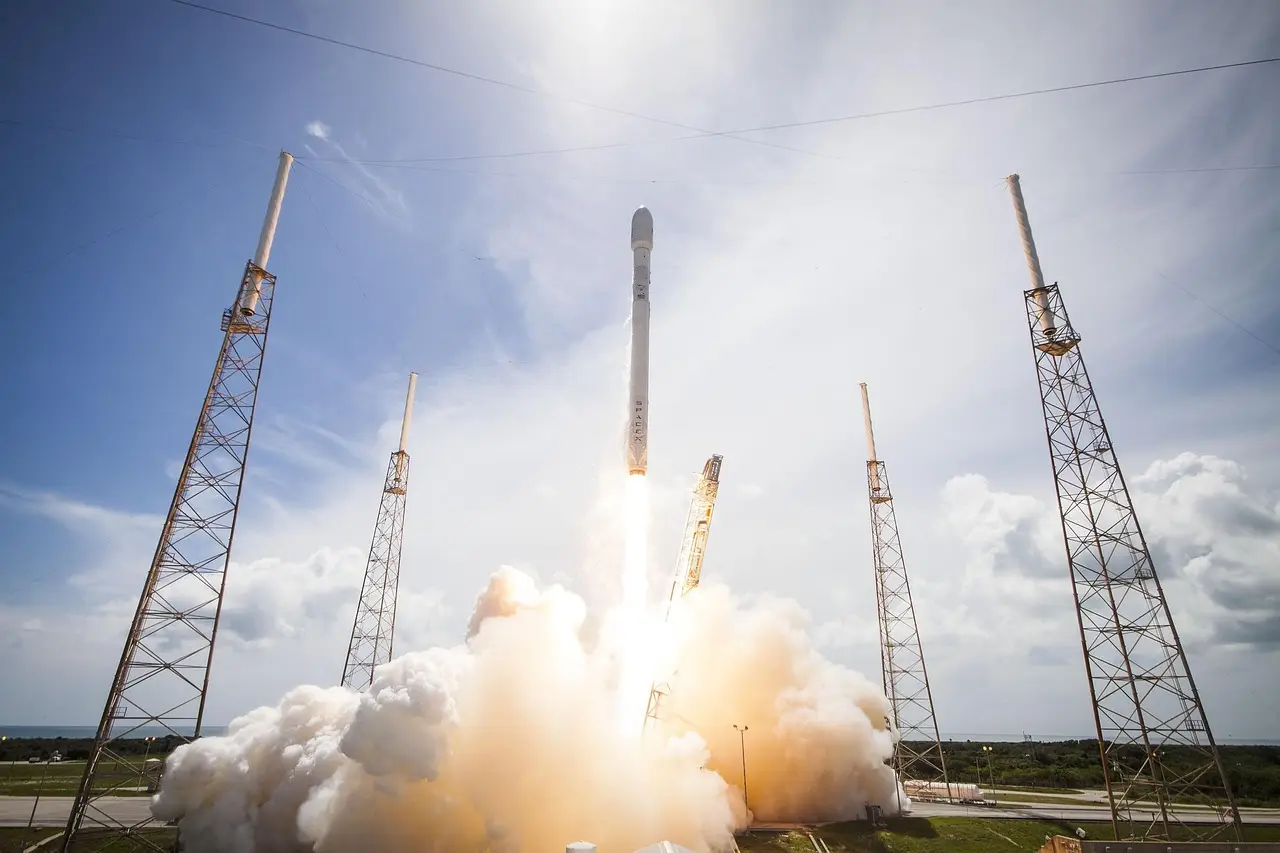
Rocket Lab grew third-quarter revenue 73% year on year to $267.8 million, beating its own guidance of $250 million to $265 million and closing the period with a record $3.57 billion backlog, up 52% from the prior quarter. The company, listed on NASDAQ as RKLB, forecast fourth-quarter revenue of $270 million to $290 million. Not a bad quarter, defects notwithstanding.
The defects belong to Neutron, the company's next-generation rocket, whose first launch has shifted to 2027 after flaws emerged in a propellant tank component. Founder and Chief Executive Officer Peter Beck said a replacement forward dome has been manufactured, though the company has not set a more precise launch date. The delay, evidently, has not frightened the customers.
What is driving the revenue?
Space systems generated $214.8 million in third-quarter revenue, up 13.3% sequentially, according to Chief Financial Officer Adam Spice. He attributed the increase primarily to growth in satellite platforms and a full quarter of contributions from the laser communications and robotics acquisitions.
Launch services contributed $53.1 million, up 19% from the second quarter, helped by two additional Electron missions whose revenue was recognized at launch. GAAP gross margin (the profitability measure under standard accounting rules) reached 33.6%, above guidance of 29% to 31%. Non-GAAP gross margin came in at 38.4%, also above guidance.
Both margin measures declined sequentially, partly because of the first full-quarter contribution from laser communications acquisition Mynaric and the absence of tariff refunds that had benefited the second quarter, Spice said. The GAAP loss widened to $0.12 per share from $0.08 per share in the second quarter, a shift Spice tied to acquisition-related transaction costs and higher Neutron development spending.
Operating cash flow turned positive at $7.2 million, compared with a cash use of $84.1 million in the prior quarter. Spice credited larger milestone payments on satellite programs, while cautioning that such payments can be uneven. Non-GAAP free cash flow (cash generated after capital expenditure) remained negative at $23.9 million.
Why is the backlog climbing despite the delay?
Rocket Lab signed 54 launch contracts during the quarter, including eight Neutron missions worth roughly $515 million. Multiple Neutron flights were booked at an elevated base price of $70 million per launch, Beck said. The first 16 Neutron launches are now booked, with the next available slots in the 2030s. Patience, it turns out, is a purchasable commodity.
Spice said Rocket Lab could have booked more Neutron missions in the quarter but chose higher prices over greater volume. He expects pricing to rise across Electron and HASTE as well, while cautioning that launch growth depends on both rocket production and customers having payloads ready.
Beck said the company is working to accelerate Neutron production and testing but is not yet ready to revise its previously discussed launch-rate targets. He added that Rocket Lab expects to reserve roughly half of Neutron's capacity for its own uses over the long term, although customer missions will account for a much larger share initially.
Electron, the company's small orbital rocket, stood at 99 completed launches at the time of the call, with the 100th expected within about a week, Beck said. He put the vehicle's reliability rate at 96% across those missions.
What about the Iridium deal and the cash position?
The pending acquisition of Iridium Communications is fully financed and requires no additional capital to close, Beck said. Iridium shareholders have approved the transaction; regulatory approvals remain outstanding.
Rocket Lab ended the quarter with approximately $4.7 billion in cash equivalents, restricted cash and marketable securities. An at-the-market equity offering (a program selling shares into the open market over time) generated about $2.4 billion in gross proceeds through the issuance of 36.8 million shares and was completed in September, Spice said.
For the fourth quarter, the company projected GAAP gross margin of 34% to 36% and an adjusted EBITDA (earnings before interest, taxes, depreciation and amortization) loss of $14 million to $20 million. It also expects negative non-GAAP free cash flow to remain elevated as it invests in Neutron development and production.
During the question-and-answer session, Spice corrected an earlier comment about the timing of cash-flow profitability. He now expects adjusted EBITDA to turn positive within six months of Neutron's first successful test flight, with positive cash flow following later, depending in part on investment in the Neutron fleet.
Rocket Lab, founded in 2006 by Peter Beck and headquartered in Long Beach, California, provides launch services and spacecraft systems for commercial, civil and national security customers, with launch operations in New Zealand and the United States. Its fleet includes Electron and HASTE, a suborbital vehicle for hypersonic test missions.
Audit trail
- Third-quarter revenue rose 73% year on year to $267.8 million, above guidance of $250-265 million.
- Backlog reached a record $3.57 billion, up 52% from the prior quarter.
- Neutron's first launch shifted to 2027 after a propellant tank component defect.
- Eight Neutron missions worth roughly $515 million were booked, some at $70 million per launch.
- The company holds about $4.7 billion in cash, restricted cash and marketable securities.
via dailypolitical.com (Source)
More from Sophie Lindqvist
Show full bio
Market editor covering technology and product news in corporate finance and the leaders who run it at CFO Observer.
93 articles
Cross-references
- MACOM's Q4 Revenue Jumps 62.7% to $424.8M on Data Center Demand
- SpaceX Turns a Profit as Revenue Doubles, WSJ Reports
- AMD beats Q3 forecasts and guides Q4 revenue to $17 billion
- Quantum Computing Posts $9.5 Million Quarter, Widens Loss to $15.1 Million
- Serve Robotics raises 2026 revenue outlook to $12 million