Entered
Figures4 min · 835 words
Working paper
Six Days, Three Sectors, One Repriced Congress: The Post-Midterm Ledger
Six days after November 3, investors had repriced insurers, banks mapped new oversight risk and permitting odds fell from 40% to 25% — before any law changed.
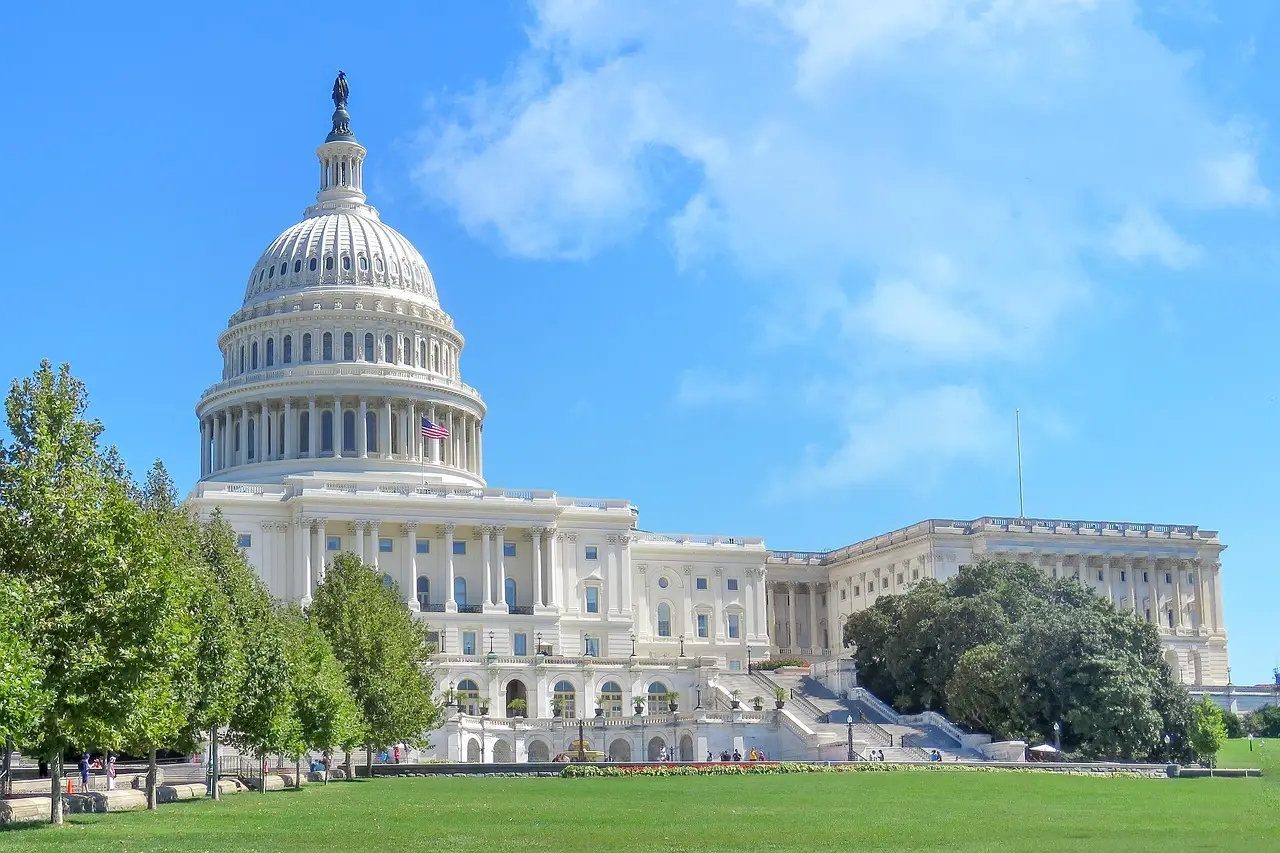
Within six days of the November 3 midterm election, investors had repriced healthcare companies, banks had begun mapping new oversight risks, and analysts had cut the odds of a major energy-permitting bill. No new Congress had convened. No banking law rewritten. No healthcare funding compromise enacted. Centene closed up 12.6% and Molina Healthcare gained 8.9% on November 4, according to Becker's post-election market review — moves built on expectations, not enacted reimbursements.
The Associated Press confirmed Democratic control of both chambers, with new majorities taking office in January 2027. A change in law was not required for the economics of business decisions to change; investors, counterparties and management teams revised expectations as outcome probabilities shifted, and those expectations shaped choices made now.
What did the six days actually change?
The clocks move at different speeds. Investors reprice within hours; policy and operational responses unfold over months.
- Banking: Reuters reported on November 5 that financial institutions were examining exposure to investigations involving consumer fees, lending, fraud and regulatory relief. No capital rules had been reversed. The anticipated change was in oversight, political leverage and the cost of being unprepared.
- Energy: On November 9, Reuters reported that TD Cowen cut its estimated chance of passage for an energy permitting bill from 40% before the election to 25% after — a revision that mattered directly to electricity infrastructure and data-center investment plans.
- Insurance: Industry representatives interviewed after the election emphasized bipartisan priorities, underscoring that risk exposure does not follow a simple partisan forecast.
Continuing to use old assumptions until new rules are final is itself a decision. In capital-intensive businesses, that decision can become costly.
How do four sectors absorb the exposure?
Banking: oversight before legislation. Committee investigations, hearings, consumer-fee scrutiny and digital-asset debate can redirect legal, compliance and management capacity before any statute changes. A CFO may need to revisit consumer-product economics or a pending acquisition; a COO may need to reclaim risk, technology and operations teams already committed to modernization.
Insurance: coverage economics and affordability. Health insurers must plan for divergent enrollment, subsidy and Medicaid pathways while updating provider contracts and network capacity. Property and casualty carriers face political attention to premium affordability, disaster resilience and federal flood programs.
Healthcare: cash-flow consequences. KFF's November 6 analysis found finalized benchmark marketplace premiums for 2027 up an average of 13%, with prior subsidy expirations already affecting enrollment. The executive task is to separate conditions already embedded in the forecast from policy alternatives that could change it.
Pharmaceuticals: pricing and capital allocation. PwC's post-election assessment identifies drug-pricing pressure, trade policy, development modernization and supply-chain exposure as interacting forces. A favorable legislative outcome in one area would not eliminate risks in another.
The common thread: how quickly a policy expectation becomes an operating constraint. A hospital anticipating lower reimbursement may defer capital spending, delaying a technology investment or altering staffing plans. Each decision may be defensible alone while the combined result weakens the organization.
Why are most organizations unprepared?
PwC's November 4 assessment cautions that political control does not remove uncertainty for business. McKinsey's 2026 survey of 202 executives found 53% said strategic foresight approaches would materially strengthen geopolitical resilience, yet fewer than 30% reported using them to guide decisions. Just 5% had run simulations of geopolitical exposure and response. Few organizations have made testing response options routine management practice — a significant weakness when one event can change the assumptions behind several major investments at once.
An October 2026 McKinsey analysis of the strategic judgment bottleneck warns that faster AI analysis does not automatically produce faster, better decisions. Trust in assumptions, the ability to challenge outputs and willingness to reallocate people and capital remain decisive.
What should executives do now?
- Define triggers rather than wait for certainty. A proposed Medicaid revision, a supervisory hearing, a drug-pricing rule or a permitting delay should activate a predetermined review — not an improvised search for ownership.
- Model enterprise effects, not isolated exposures. The CFO needs cash-flow, capital and return impacts; the COO needs effects on service continuity, supply chains and shared capacity; the CEO needs to know which commitments to protect, revise or abandon — all compared on common assumptions.
- Establish decision rights and preserve the audit trail. Scenario analysis should show what was known, what was assumed, which alternatives were considered and why leadership acted.
The first six days after November 3 did not determine U.S. policy direction. They showed how fast assumptions move before legislation begins. The next phase unfolds on several tracks: funding negotiations, congressional oversight, agency action and state initiatives. Some forecasts will be wrong. The executive challenge is bringing the CEO's strategic exposure, the CFO's economics and the COO's delivery capacity into the same conversation while there is still room to change course. When those practices are ordinary management, the organization does not rebuild its decision process with every new shock. That is a practical definition of resilience.
Audit trail
- Centene closed up 12.6% and Molina gained 8.9% on November 4, per Becker's review.
- TD Cowen cut the energy permitting bill's passage odds from 40% to 25% after the election.
- KFF found 2027 benchmark marketplace premiums up an average of 13%.
- McKinsey's 2026 survey: only 5% of 202 executives had run geopolitical exposure simulations.
- AP confirmed Democratic control of both chambers, with majorities seated January 2027.
via cio.com (Source)
More from Amara Osei
Show full bio
Senior reporter covering companies, deals and strategy in corporate finance and the leaders who run it at CFO Observer.
298 articles
Cross-references
- Centene Announces Planned Chief Financial Officer Transition
- Congress Flips, Subpoenas Follow: CFOs Get a Two-Word Warning
- AADX Beats EPS by $0.09, Cuts 2026 Guidance; Shares Fall 14.6%
- UnitedHealth Posts $4.1 Billion Q3 Profit, Tops Estimates
- Wall Street Bank Earnings Surge on Trading and Deal-Making Strength