Entered
Figures4 min · 760 words
Working paper
Two of Every Three Stryker Knee Replacements Now Robotic
Two of three Stryker knee replacements are robotic; CEO Kevin Lobo refuses China production, citing IP theft and $400m CMR bet.
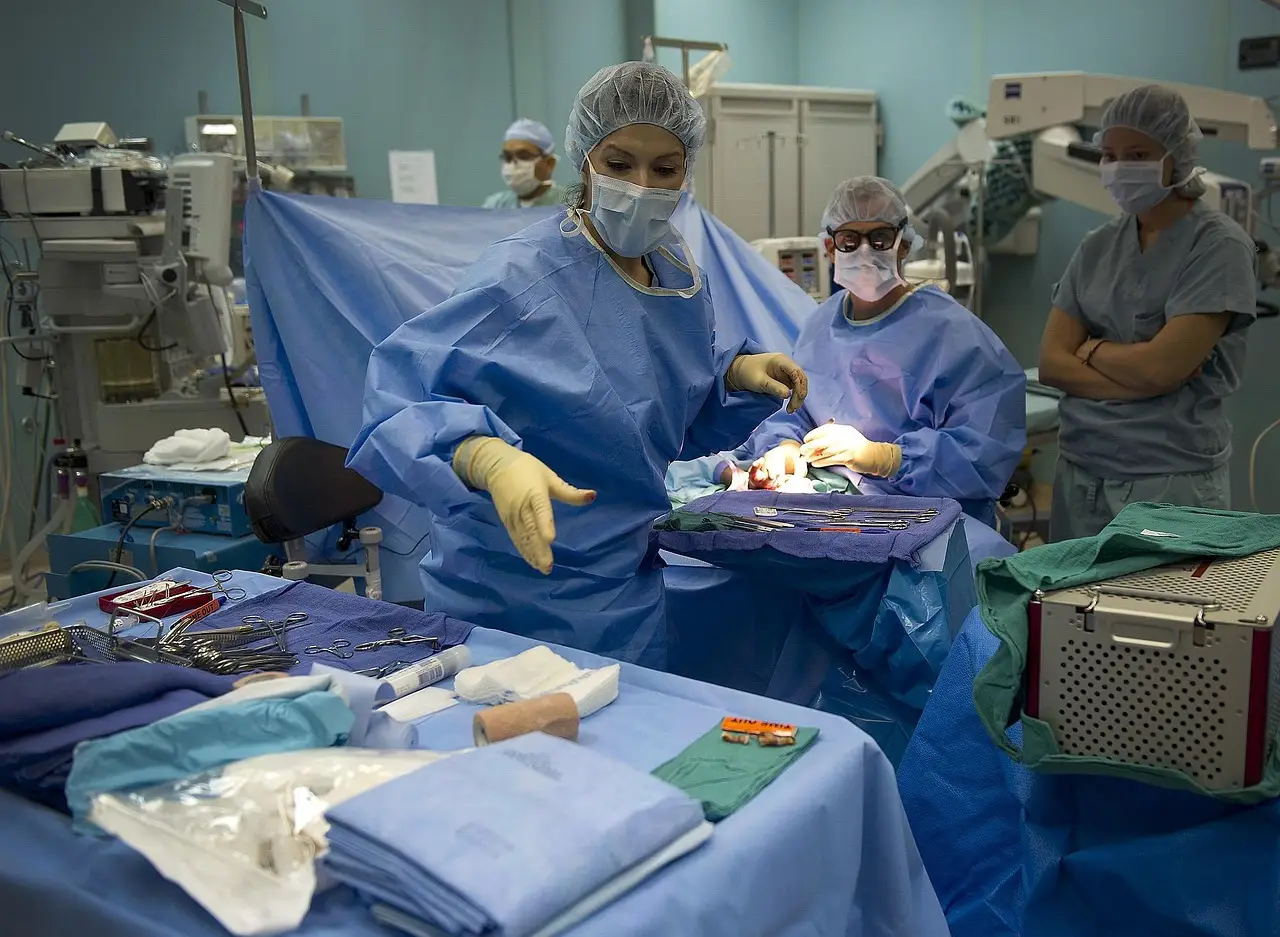
Two of every three Stryker knee replacements are now performed robotically, and CEO Kevin Lobo has no intention of building those robots anywhere but the United States. The reason, he says, is China.
"We have no plans to make any robots in China. The IP is a massive worry," Lobo said Monday at the Fortune 500 Innovation Forum in Detroit. "They are knocking off a lot of the other robots."
How big is the robot business for Stryker?
The numbers explain the chief executive's caution. Stryker's Mako system, the robotic arm used in joint replacement, has supported 2.5 million procedures across 47 countries. That installed base makes the machine's intellectual property a core part of what Stryker sells to hospitals.
Chinese competitors are scaling quickly. MicroPort MedBot, a Shanghai company that makes the Toumai soft-tissue surgical robot, said in June it had passed 300 global orders, was installed in more than 60 countries, and could build up to 500 robots a year.
Lobo, who serves as Stryker's chair as well as CEO, added that one of Stryker's "major competitors" had bought into a Chinese robotics company. He declined to name the party.
Is China an imminent threat?
Not in his assessment. Stryker is "scouring the market" to see whether Chinese companies can develop new robots for other parts of the anatomy. But engineering talent alone does not win in surgery, he argued. "They can have the best engineers. If they don't have the domain experience clinically, it's not going to be so easy," Lobo said. "So we don't see them as kind of an imminent threat to our businesses."
Stryker views Chinese companies "more opportunistically," he said, "and we're being very thoughtful about not making anything there that can be taken from."
What makes Mako the standard?
Precision, in Lobo's telling. The surgeon stays in the room, but the Mako arm makes the cuts, following a plan built from a CT scan, with haptic boundary controls (sensors that stop the instrument at preset limits) delivering one-millimeter precision. If a surgeon tries to cut outside those boundaries, "the robot won't let them." One surgeon recently told Lobo he felt almost as if he were cheating.
Robotic assistance is becoming the standard of care. Orthopedic residents choosing where to train now ask one question first: "What robots do you have?"
Stryker also keeps the data. All data the robot captures belongs to Stryker, subject to HIPAA (the U.S. health-privacy law) and other rules, and customer contracts let Stryker use it to tell hospitals, for example, why one surgeon takes longer than another.
Why the $400 million soft-tissue bet?
In October, Stryker agreed to a roughly $400 million preferred-equity investment in CMR Surgical, the London maker of the Versius soft-tissue robot. Stryker becomes the exclusive U.S. sales agent for Versius and gains an exclusive option to buy all of CMR later, according to the company.
Lobo pitched Versius as a smaller, cheaper alternative in a market he said has "only one big company," Intuitive Surgical, whose robot is "extremely expensive and it's a giant robot." CMR's system is about half the footprint and suits surgery centers doing gallbladder removals and hernia repairs. CMR spent ten years reaching this point but needs Stryker's resources, "because small companies, it just takes too long."
He described the U.S. FDA as "very friendly for innovation, much more friendly in the United States than we're seeing in other countries around the world."
What about the slowing joint business?
The bet lands as the hips-and-knees franchise cools. Last month Stryker cut its 2026 organic sales growth forecast to 6.5% to 7%, from 8.3% to 9.3% in July. "In addition to the softer market, we have not been winning at our historical rate," Lobo told analysts, though Mako sales "have been strong again this year."
Wendy Tan White, CEO of Intrinsic, a robotics-software company Alphabet moved into Google in February, shared the Detroit stage and argued cheaper hardware plus real-time AI lets small U.S. manufacturers afford robots. One customer, a machine shop tending a CNC mill with a robot, "can run an extra run overnight," competing on cost "rather than in Vietnam or somewhere else."
Lobo said the soft-tissue robots surgeons have awaited are close. "Trust me, it's coming, and it's going to come pretty fast." The CMR deal remains subject to regulatory approvals.
Audit trail
- Two of every three Stryker knee replacements are now robotic; Mako has supported 2.5 million procedures in 47 countries.
- Stryker cut its 2026 organic sales growth forecast to 6.5%-7% from 8.3%-9.3% in July.
- Stryker agreed a roughly $400 million preferred-equity investment in CMR Surgical in October, with an option to buy the whole company.
- MicroPort MedBot said in June it passed 300 global orders for Toumai and can build up to 500 robots a year.
- Lobo cited one-millimeter precision from Mako's haptic boundary controls.
via fortune.com/feed/ (Source)
More from Sophie Lindqvist
Show full bio
Market editor covering technology and product news in corporate finance and the leaders who run it at CFO Observer.
265 articles
Cross-references
- US Chips in Foreign Data Centers Now Serve Chinese AI Models
- China Made 7 Million Cars in Q1 2026 — Nearly Double the EU and UK Combined
- Castelion at $13 billion as China leads the hypersonic race
- Five Countries Face U.S. AI Chip Licensing Rules After Nvidia Scandal
- Alibaba and Tencent Bet on Chinese Chips as U.S. Curbs Bite