Entered
Figures4 min · 820 words
Working paper
Brazil Imports 90% of Its Fertilizer, and the World's Dinner Depends on It
Brazil feeds 800 million people yet imports 90% of its fertilizer, running a US$4.3 billion nitrogen trade deficit on suppliers few in number.
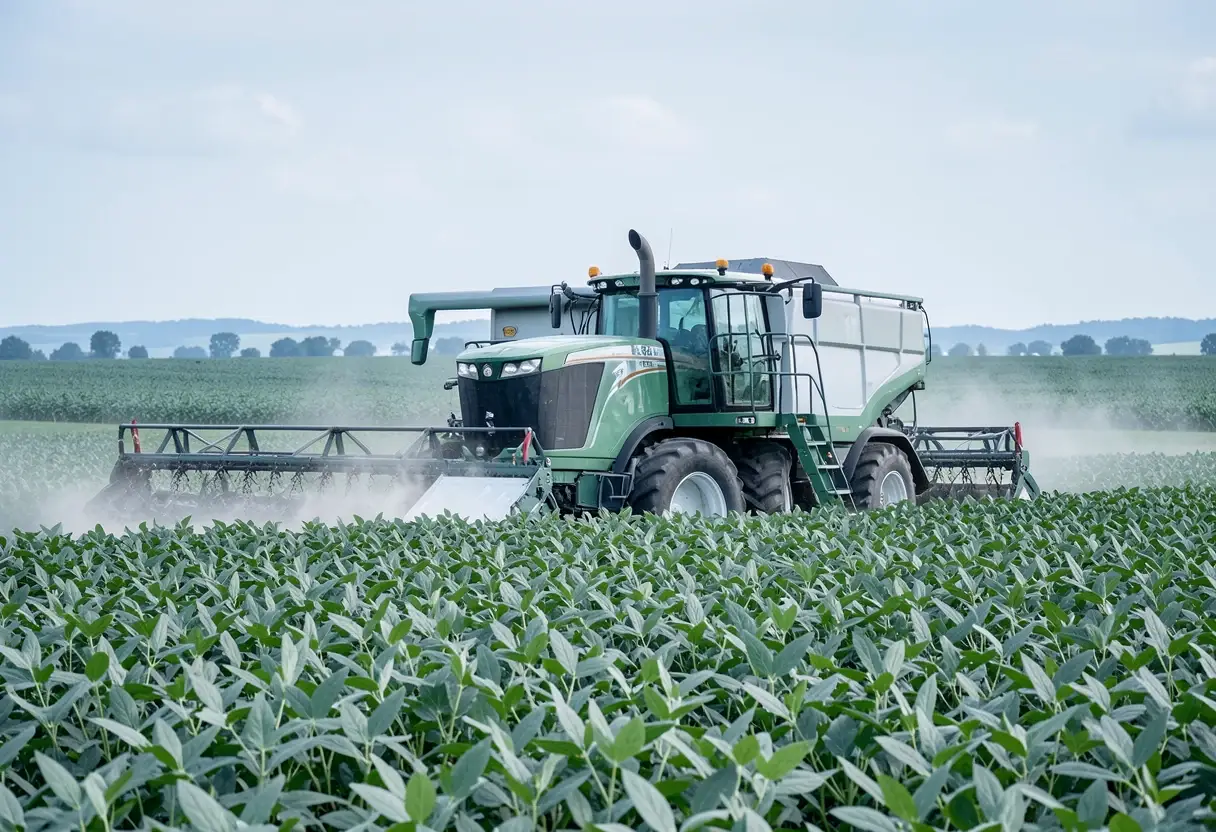
Brazil imports roughly 90% of the fertilizer its farms use, according to 2024 UN Food and Agriculture Organization data, even as it feeds about 800 million people — some 10% of the world's population. That gap sits at the center of a food-security question now moving onto government and development-bank agendas.
In 2024, World Trade Organization figures show Brazil exported US$144.4 billion in agricultural products against imports of just US$15.4 billion — a net surplus of roughly US$129 billion, more than four times Argentina's, the next-largest net exporter. Brazil is the world's largest exporter of soybeans, beef, poultry, coffee, sugar and orange juice, and a top-three producer and exporter of corn. It alone supplies more than half of global soybean trade.
Yet Brazilian farms use more than a tenth of the world's fertilizer while the country produces barely 1% of it, and imports nearly a fifth of all fertilizer traded internationally.
How deep does the import dependence run?
By nutrient, the dependence is stark:
- Nitrogen: about 99% imported. Brazil runs the largest nitrogen-fertilizer trade deficit of any country, at US$4.3 billion in 2024, with most supply coming from China, Russia, Nigeria and Oman.
- Phosphate: about 70% imported, mostly from Morocco and Russia, despite partial domestic mining.
- Potash: about 98% imported, almost all from Canada, Russia and Belarus. A country using nearly a quarter of the world's potash relies on three suppliers for almost all of it.
Global potash output is concentrated in just four countries — Canada, Russia, Belarus and China — and potassium has no substitute as a plant nutrient.
Because nitrogen fertilizer is made mostly from natural gas, every energy crisis becomes a farm crisis. When prices spike, sanctions bite or shipping lanes close, the cost lands directly on Brazilian farms. Farmers who cannot afford or obtain fertilizer apply less, and yields fall. The shock does not stay industrial; it becomes systemic risk for every country buying Brazilian soy, corn or meat. Energy security, fertilizer security and food security are links in the same chain.
The shocks of recent years — the price spike after Russia's invasion of Ukraine, and this year's disruption in the Strait of Hormuz — have moved fertilizer from a niche commodity concern to a policy priority.
What are governments and banks doing?
- The Trump administration has committed more than US$1.3 billion across eight projects to expand domestic US fertilizer manufacturing.
- Multilateral development banks issued a joint statement in August 2026 pledging to strengthen fertilizer supply chains worldwide.
- Brazil's National Fertilizer Plan targets domestic potash production of 6.3 million metric tons of potassium oxide (K₂O) by 2030 and 14.6 million metric tons by 2050, within a broader goal of cutting imports to about 45% of fertilizer used by 2050.
- The Profert law, signed in September 2026, authorizes up to R$10 billion (about US$2 billion) in tax credits and incentives for domestic fertilizer plants.
Together, these moves signal that fertilizer is being treated as a matter of food security — and, increasingly, national security.
Can Brazil build its way out?
Two complementary paths exist. The first is large-scale and centralized: mines and industrial complexes on Brazil's own mineral and energy base. The country holds substantial, largely undeveloped potash reserves, including deposits in Amazonas state that companies such as Brazil Potash are seeking to develop; Brazil Potash, which funded this research, is developing one of those deposits. Petrobras has signaled plans to restart two idled ammonia and urea plants and build two new ones. Such projects take years and millions of dollars, but once running they deliver volume and low cost per metric ton that only scale provides.
The second path is small-scale and decentralized: modular nitrogen units running on renewable power or agricultural waste, sited close to the farms they serve. They can be built faster, added step by step, and spread risk across many sites instead of concentrating it in a few. For potassium, recovery systems can capture the nutrient from manure, crop residues and food-processing waste, creating regional supply alongside mined potash.
Brazil need not choose. Potash and phosphate are geological, favoring centralized operations where reserves exist. Nitrogen is an energy problem, and can draw on both large plants and decentralized, renewable-powered production built on Brazil's abundant hydropower.
What happens next?
The six development banks behind the August statement, including the World Bank and the Inter-American Development Bank, are preparing a joint roadmap to finance fertilizer production, storage and transport — an effort the G20 has welcomed. Brazil, the argument runs, should be first in line.
The next disruption to potash or nitrogen supply will not ask Brazil's farmers for a grace period. The time to build resilience is before the shock, not after. When Brazil's fields falter, the whole world's food supply feels it.
Audit trail
- Brazil imports roughly 90% of its fertilizer; nitrogen dependence is about 99% and potash about 98%.
- Brazil's 2024 agricultural trade surplus was roughly US$129 billion, the largest of any country.
- Brazil runs the world's largest nitrogen-fertilizer trade deficit, at US$4.3 billion in 2024.
- Brazil's National Fertilizer Plan targets 6.3 million tonnes of K₂O output by 2030 and 14.6 million by 2050.
- The Profert law, signed September 2026, authorizes up to R$10 billion (about US$2 billion) in tax credits for fertilizer plants.
via fortune.com/feed/ (Source)
More from Amara Osei
Show full bio
Senior reporter covering companies, deals and strategy in corporate finance and the leaders who run it at CFO Observer.
297 articles
Cross-references
- Mombasa Becomes Gulf Capital's African Bet as DP World Signs Industrial Park Deal
- Trade’s $4 Trillion Achilles’ Heel Draws New Capital
- Itafos posts 5% revenue gain as sulfur and downtime pressure margins
- BrasilAgro Posts BRL 81 Million Net Income on Farm Sale, Cuts Debt
- Ratings reshape the 2026 safest emerging-market bank ranking