Entered
Figures5 min · 907 words
Working paper
Trade’s $4 Trillion Achilles’ Heel Draws New Capital
More than $4 trillion of imports face concentrated supply risks. McKinsey says chips, batteries and energy will draw capital, but a 40%–50% semiconductor cost gap tests the business case.
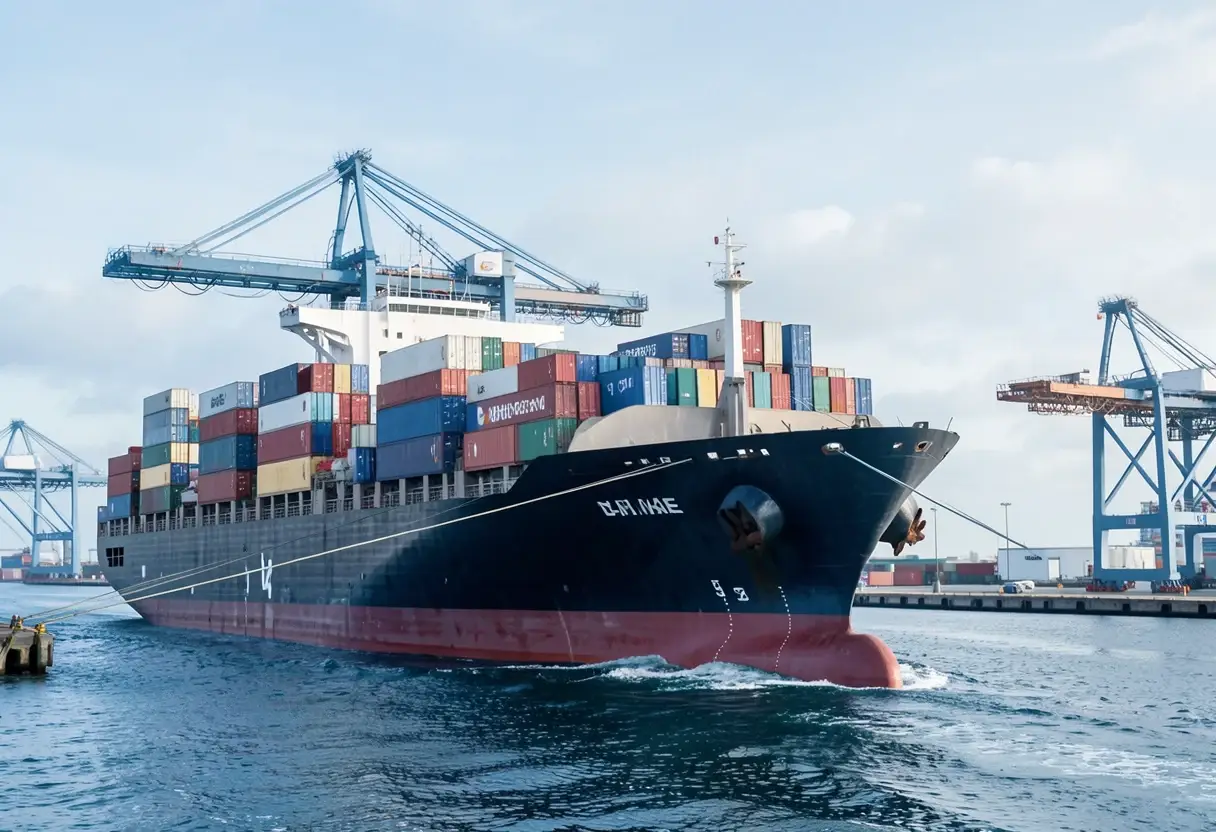
More than $4 trillion of global imports—nearly one-quarter of the total—meet at least two of three vulnerabilities in the McKinsey Global Institute’s framework. The concentration can redirect capital and demand, but it does not prove that replacement supply can earn an adequate return.
McKinsey’s test covers imports that:
- are critical to economic activity;
- come from a handful of suppliers; or
- come from geopolitically distant partners.
On Nov. 6, the U.S. Defense Logistics Agency announced up to $2 billion to buy strategic and critical materials for the National Defense Stockpile. The agency aims to create targeted demand signals that enable domestic production.
Yet the United States produces only a small fraction of many critical minerals it uses, including less than 1% of the most common type of rare-earth magnet. That gap turns supplier availability into a financial risk rather than a simple procurement issue.
McKinsey Global Institute says: “The next era of globalization is not about retreat; it is about reconfiguration.”
Trade is reorienting rather than retreating. In 2025, U.S.–China goods trade fell nearly 30%, yet total U.S. imports and Chinese exports reached new highs. Trade now travels shorter geopolitical distances as economies shift toward more closely aligned partners.
Companies are responding on several fronts:
- seeking rare-earth sources outside China;
- pooling purchasing commitments for generic drugs; and
- selling software that reveals supplier dependencies several tiers upstream.
Where does the $4 trillion sit?
Electronics carries the largest exposure: 43% of electronics imports face two or more vulnerabilities. Five products within the sector account for about one-fifth of its global imports, and the named examples include:
- smartphones;
- high-bandwidth memory chips that power AI; and
- lithium-ion batteries.
Less visible dependencies include:
- rare earths and rare gases;
- marine engines for large ships; and
- transformers and copper cables that deliver power to laptops and other equipment.
Delivery routes compound the exposure. Roughly 80% of maritime trade, worth about $10 trillion, passes through at least one chokepoint. The 2021 Suez blockage held up an estimated $10 billion of trade a day. In 2026, Strait of Hormuz closures cut transits by as much as 95% at their peak, and commodity prices from oil to urea spiked.
Takeaway: Chokepoint risk and concentrated inputs create demand for alternatives, but the size of the exposure does not determine the return on replacing them.
Where is capital moving?
Since 2022, three-quarters of cross-border investment announcements have gone to:
- semiconductors and batteries;
- AI infrastructure; and
- energy and mining.
That share compares with about half before 2020.
An analysis by McKinsey Global Institute of greenfield foreign direct investment announcements through June 2026 found that, since 2017, average geopolitical distance had contracted roughly twice as fast as trade.
Against pre-pandemic averages, investment by advanced economies in China fell from 10% to 2% of total FDI announcements by value, while flows among advanced economies rose from 35% to 50%.
Industrial policy is accelerating these shifts. Japan’s support for TSMC’s first Kumamoto plant later unlocked more than $20 billion of investment in its semiconductor ecosystem. Efforts to diversify rare-earth magnet supply are drawing public and private capital through direct investment, long-term offtake agreements, and price guarantees.
That does not mean one-quarter of trade will relocate. The research instead points to greater customer and government value for alternatives in exposed sectors, without claiming a wholesale shift.
Takeaway: Policy is concentrating investment in exposed industries, but relocation will remain selective rather than wholesale.
How can vulnerability become revenue?
New capacity. Long-term purchasing commitments can make alternative production investable by underwriting supplier revenue. Such capacity also builds resilience for companies and their customers.
Alternative capacity would create demand for equipment, infrastructure, logistics, financing, and insurance. A company need not own a semiconductor factory to benefit from the surrounding ecosystem.
Upstream exposure is material: 38% of smartphones’ first- and second-tier inputs meet the Achilles’ heel test. Suppliers should ask not only where to build the next assembly plant, but which inputs that plant and its customers may still struggle to source.
Product design. In a more geopolitically contested economy, economic security should shape what companies make. Suppliers can offer automakers electric-vehicle motors that eliminate heavy rare earths such as dysprosium and terbium, combining alternative supply with alternative technology.
Takeaway: The market spans factories, suppliers and product engineering, but each route must cover its added cost and risk.
Does resilience make competitive sense?
A vulnerability is not automatically a business opportunity. By McKinsey estimates, advanced semiconductor production in Germany or the United States costs about 40% to 50% more than in Taiwan or mainland China. Productivity gains, execution, customer access, or targeted policy support would need to narrow that gap.
The report argues for selectivity: prioritize opportunities close to existing capabilities, rather than assume every vulnerable product can be made, and distinguish lasting demand for resilience from a temporary response to disruption.
Management teams should examine their own vulnerabilities alongside those of customers. They need to identify dependencies that could interrupt operations, determine which they can help customers solve, and locate the edge provided by technology, skills, or supplier relationships.
With more than $4 trillion of imports at stake, resilience belongs on both the growth and risk agendas. McKinsey Global Institute poses the operating question: “Whose Achilles’ heel could we help solve?”
Takeaway: Solve a costly dependency without surrendering cost, execution or customer access.
Audit trail
- More than $4 trillion, nearly one-quarter of global imports, meet at least two supply-chain vulnerability tests.
- On Nov. 6, the Defense Logistics Agency announced up to $2 billion, while U.S. output of the most common rare-earth magnet type used remains below 1%.
- 43% of electronics imports face two or more vulnerabilities, with five products representing about one-fifth of sector imports.
- About 80% of roughly $10 trillion in maritime trade passes through at least one chokepoint.
- Advanced semiconductor production in Germany or the United States costs 40%–50% more than in Taiwan or mainland China.
via fortune.com/feed/ (Source)
More from Tom Whitfield
Show full bio
News editor covering companies, deals and strategy in corporate finance and the leaders who run it at CFO Observer.
286 articles
Cross-references
- The Death of Cheap Supply Chains: What CFOs Now Pay for Resilience
- Ratings reshape the 2026 safest emerging-market bank ranking
- Pentagon's $1.5 Trillion Budget Hits a Wall as Global Defense Spend Nears $8 Trillion
- Roy Blunt: Treasury China biotech curbs could weaken U.S. lead
- MP Materials Qualifies GM Magnets, Lines Up Apple for 2026