RefE-324
Entered
Figures4 min · 778 words
Working paper
Nextpower Holds 55% of the U.S. Solar Tracker Market
Nextpower holds 55% of the U.S. solar tracker market and about 30% globally, trades at a $15 billion market cap after a 12% year, and has bought its way into battery storage.
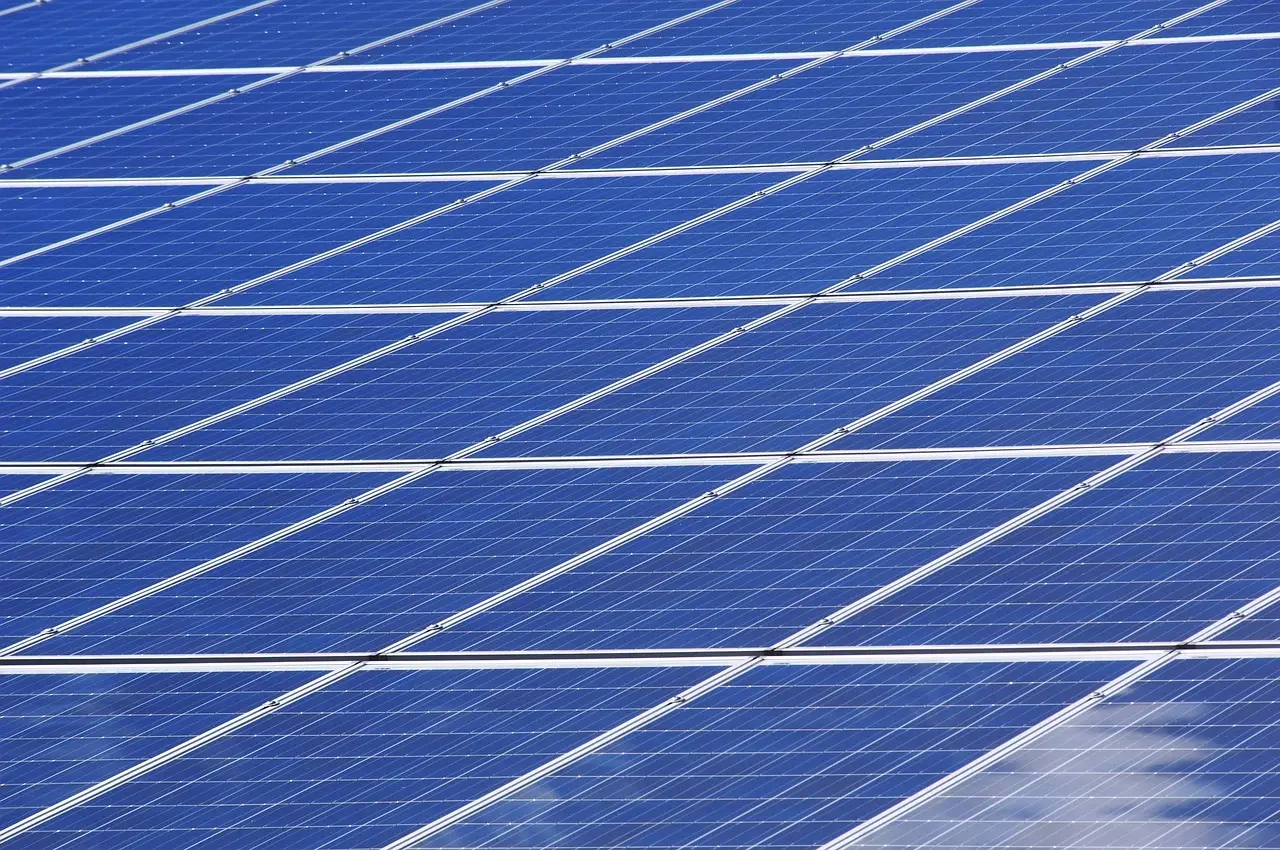
Nextpower controls 55% of the U.S. solar tracker market and about 30% of the global market. A 13-year-old manufacturer now sits at the structural centre of American solar, which is either an achievement or a warning, depending on how the policy cycle turns.
The shares are up 12% this year to a $15 billion market cap, and the company ranked 24th in Fortune's Fastest-Growing Companies list.
Co-founder and CEO Dan Shugar prefers botany to finance. "The trackers do what sunflowers have been doing for millions of years," he told Fortune. "They basically follow the sun during the day, and they can produce almost 30% more energy. It depends on the location and the project design."
A tracker — the mounting array that rotates panels to hold them toward the sun — therefore adds close to 30% output, with the gain varying by location and project design.
Nextpower renamed itself from Nextracker last year, and the new name tracks a deliberate move beyond a single product. "We moved from a pure-play tracker company, and we developed a platform strategy to do everything in solar except make the solar cells," Shugar said. "And we're doing everything in batteries except make the battery cells."
Jefferies energy analyst Julien Dumoulin-Smith named the stock the firm's "franchise pick" in power and utilities, calling it "a bet on the highest quality in a totally disregarded sector." He added that the clean-energy sector bottomed out during the first two years of the Trump administration and should rebound after Democrats take control in January following the midterm elections. Nextpower now offers exposure to battery storage as well as solar, and he called that diversification a big bonus.
What is behind the acquisition spree?
Five deals since last year have widened the portfolio from trackers into storage, inverters and mounting hardware:
- Prevalon Energy battery storage business, up to $365 million, in July
- Zigor, a Spain-based power inverter business, and its U.S. subsidiary Apex Power, $80.5 million, in July
- Zimmermann PV-Steel Group of Germany, $378 million, completed in October
- Bentek, solar electrical components and hardware, $78 million, last year
- Origami Solar and its solar panel frame business, $53 million, last year
Shugar counted 13 acquisitions in five years. Early in the pandemic, Nextpower opened or acquired U.S. factories to onshore equipment manufacturing, which he said leaves last year's tariff increases and this year's diesel price spike relatively muted.
Why storage matters to the AI build-out
About 80% of new U.S. solar projects now include battery storage, because storage lets solar run closer to baseload output (continuous, dispatchable power) by releasing stored electricity after dark.
Storage also makes Nextpower more attractive to AI and robotics customers as hyperscalers — the largest cloud operators, whose data centers consume heavy power loads — expand capacity, Shugar argued.
Solar remains the fastest-growing source of U.S. power. "It's the dominant form of new power being installed," Shugar said. Texas and California are now neck-and-neck for the country's largest utility-scale solar capacity, with over 15 gigawatts each. One gigawatt is roughly enough to power 750,000 homes at full strength.
Improved tracker performance also widens the addressable geography, since better solar productivity can make solar economic on constrained land and harsh terrain, not only on flat and barren sites.
What does the policy reversal mean for the backlog?
The largest long-term headwind is the Trump administration's elimination of solar and wind tax credits last year. Most projects already in the works keep their tax break if completed by 2030.
The order book reflects that runway. "We've had our project backlog triple since we went public four years ago," Shugar said. "Our backlog was $2 billion. Today, it's over $6 billion."
Congress is now weighing infrastructure permitting reform that would speed transmission and solar farm construction. Energy research firm Enverus estimated new solar contracts would need to rise about 49% to offset the loss of tax credits. A president taking office in 2029 could work with Congress to restore renewable credits.
Shugar noted that nuclear and fossil fuel plants still receive federal subsidies in other forms. Either those should end, he said, or renewable tax breaks should be restored. "If more power is a national imperative, then everything should be incentivized to come online," he said. "But we don't want to see the government picking winners and losers."
For now, the arithmetic works: a 30% output gain, a $6 billion backlog and a 2030 tax-credit deadline. Trackers follow the sun; Washington remains the harder tracking problem.
Audit trail
- Nextpower holds 55% of the U.S. solar tracker market and about 30% of the global market
- Shares up 12% this year to a $15 billion market cap; ranked 24th in Fortune's Fastest-Growing Companies
- Backlog grew from $2 billion at the 2022-era IPO to over $6 billion in four years
- Five acquisitions since last year, including Prevalon Energy for up to $365 million and Zimmermann PV-Steel for $378 million
- Enverus estimates new solar contracts must rise about 49% to offset the loss of federal tax credits
via fortune.com/feed/ (Source)
More from Sophie Lindqvist
Show full bio
Market editor covering technology and product news in corporate finance and the leaders who run it at CFO Observer.
203 articles
Cross-references
- Constellation Energy Lifts 2026 Outlook as Q3 Adjusted EPS Jumps 66%
- T1 Energy Shares Gap Down 13.6% After $0.14 Loss Misses Estimates
- SOLV Energy raises 2026 outlook as backlog reaches $9.2 billion
- Machina Capital Buys $990,000 First Solar Stake as Targets Fall
- Watts Water Lifts 2026 Outlook as Data Centers Drive 19% Sales Jump