Entered
Figures4 min · 719 words
Working paper
California Calls Waymo Robotaxis an 'Imminent Hazard,' Pulls Them From Freeways
California's DMV barred Waymo from freeways on Nov. 11, calling its operations an 'imminent hazard' — the second shutdown this year despite strong crash statistics across 270 million miles.
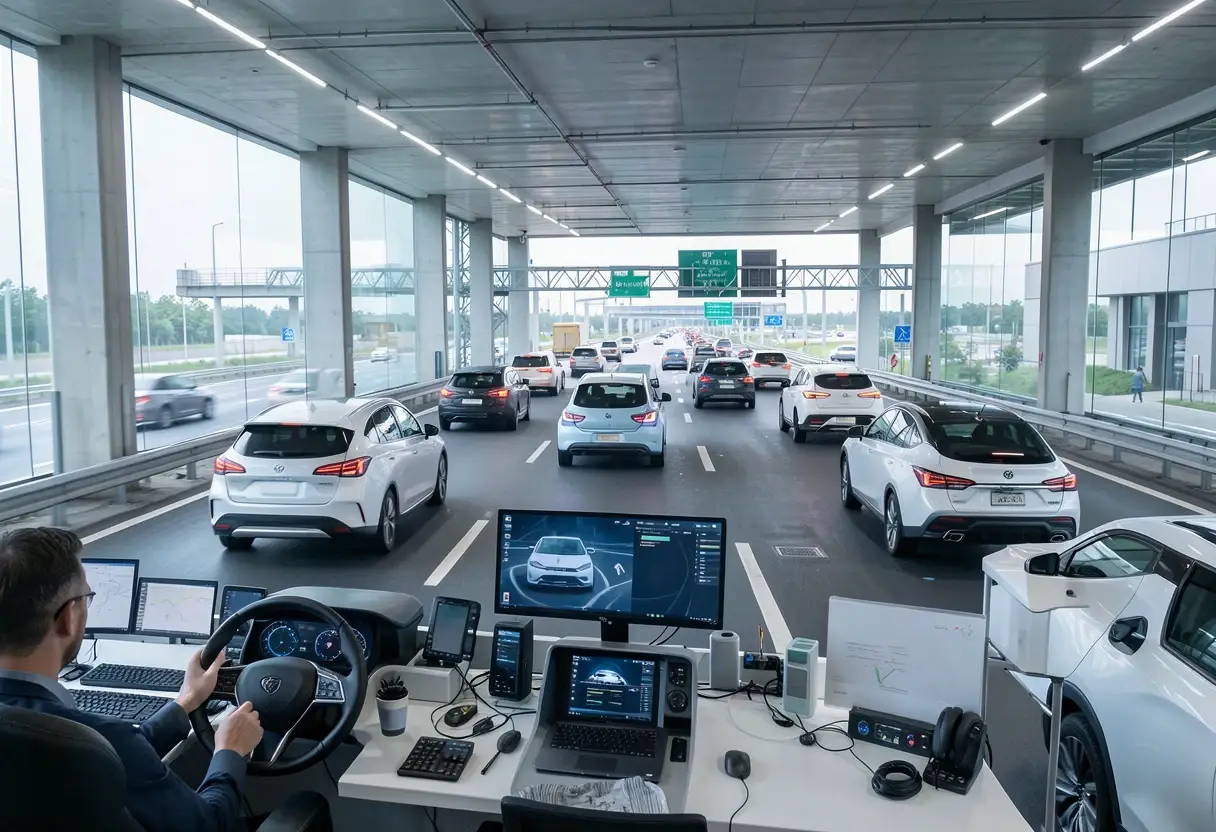
On Nov. 11, the California Department of Motor Vehicles barred Waymo from operating or testing driverless vehicles on freeways, declaring the company's freeway operations an "imminent hazard to public safety." The order follows two incidents in early November and marks the second time this year Waymo's freeway service has gone dark in the state.
The regulatory trigger came in two parts. On Nov. 5, three Waymo vehicles entered an active construction closure on U.S. Route 101 near Burlingame. Separately, a Waymo vehicle attempted to maneuver around California Highway Patrol cars running a traffic break in San Francisco. Those events compounded earlier problems: similar incidents in May prompted a first restriction and corrective actions, yet the DMV said Waymo vehicles continued entering active construction zones despite the fixes.
Waymo has since paused driverless freeway rides across all of its markets, including Phoenix, Miami and Austin — roughly the same footprint it withdrew nationwide in May before bringing rides back gradually starting in late July. The company continues testing on freeways with safety specialists behind the wheel, and its robotaxis still operate on surface streets, where Waymo says it provides more than half a million rides each week. California freeway trips for passengers began only in November 2025, after years of autonomous freeway driving.
"Safety is at the foundation of everything we do," a Waymo spokesperson said, adding that the recent incidents produced no injuries or collisions. The DMV's restrictions will remain until Waymo can demonstrate that its vehicles reliably detect and respond to construction zones, emergency vehicles and other roadway hazards.
What does the safety data actually show?
The company carries strong numbers into the dispute. Across more than 270 million fully autonomous miles through June, Waymo says its cars recorded 82% fewer injury-causing crashes and 95% fewer crashes causing serious injuries or worse than statistically comparable human drivers. The company also reports 93% fewer injury-causing crashes involving pedestrians.
Those figures face scrutiny from researchers. Bryan Reimer, a research scientist at MIT's AgeLab who studies automated vehicles, cautioned that Waymo's software and vehicles change constantly, making it difficult to draw definitive conclusions about a technology that may look different today than when many of those miles were recorded.
"Right now we're looking at this technology. You get in it, you expect it to work perfectly," Reimer said. "We shouldn't."
He sees human drivers as a reasonable baseline, but not the end state. As robotaxi fleets expand, the bar moves higher. "If you're going to expand, it's gotta be magnitudes safer," he said.
Why does perception matter more than the statistics?
The autonomous-vehicle sector has a precedent for how fast a single incident can unwind a business. In 2023, a Cruise robotaxi dragged a pedestrian who had been struck by another vehicle; California regulators suspended the company's driverless permits, and in December 2024 General Motors announced it would stop funding Cruise's robotaxi development, citing scaling costs and competition.
Reimer also argues the industry has framed the technology misleadingly. A Waymo may have an empty driver's seat, but remote support staff can intervene when vehicles encounter problems. "It is not autonomous driving," he said. "It is highly automated, but there is a lot of human components behind the scenes."
He believes companies would earn more trust by stating those limitations plainly rather than presenting an evolving system as a finished product. "We're much more accepting of technology when we have a better understanding of its limitations," Reimer said. "Under-promising and over-delivering always wins."
Given the number of vehicles and miles now in service, Reimer expects Waymo will eventually face a serious incident of its own. "It is a law of probabilities," he said. "Something will happen at some point."
The stakes extend beyond one operator. "We are talking about a technology that can revolutionarily change how we live and move, but can also suffer from a complete collapse of consumer trust overnight," Reimer said.
"Trust is the coveted commodity," he added. "And we are not looking at how to manage trust as effectively as we should." Waymo says it is working with officials to return to California freeways, but the path back runs through a regulator that has now acted twice in six months.
Audit trail
- California DMV barred Waymo from driverless freeway operations on Nov. 11, calling them an 'imminent hazard to public safety.'
- Waymo has paused driverless freeway rides nationwide, including Phoenix, Miami and Austin; surface-street service of over 500,000 weekly rides continues.
- Waymo reports 82% fewer injury crashes and 95% fewer serious-injury crashes than human drivers across 270+ million autonomous miles.
- Three Waymo vehicles entered an active construction closure on Route 101 near Burlingame on Nov. 5.
- This is the second freeway restriction in 2025; Cruise lost its permits in 2023 after a pedestrian-dragging incident.
via fortune.com/feed/ (Source)
More from Marcus Bennett
Show full bio
Correspondent covering people, launches and day-to-day practice in corporate finance and the leaders who run it at CFO Observer.
289 articles
Cross-references
- Tesla Pitches Self-Driving to Seniors as Regulators Probe Red-Light Crashes
- 100,000 CVEs and Four U.S. Outages: The 'Vulnpocalypse' Math CFOs Cannot Ignore
- Tesla’s Cybertruck Wind-Down Puts Cybercab in the Driver’s Seat
- FAA Pulls New Routers After Ground Stop, Reverts to 25-Year-Old Cisco Gear
- FAA Ground Stop Canceled 17,850 Flights and the Bill Is Coming