Entered
Figures4 min · 782 words
Working paper
NASA Opens $10 Billion Moon Contract Race With SpaceX in the Field
NASA selected eight firms including SpaceX to compete for up to $10 billion in lunar delivery contracts, as SpaceX's S-1 lays out moon-based AI satellite factories.
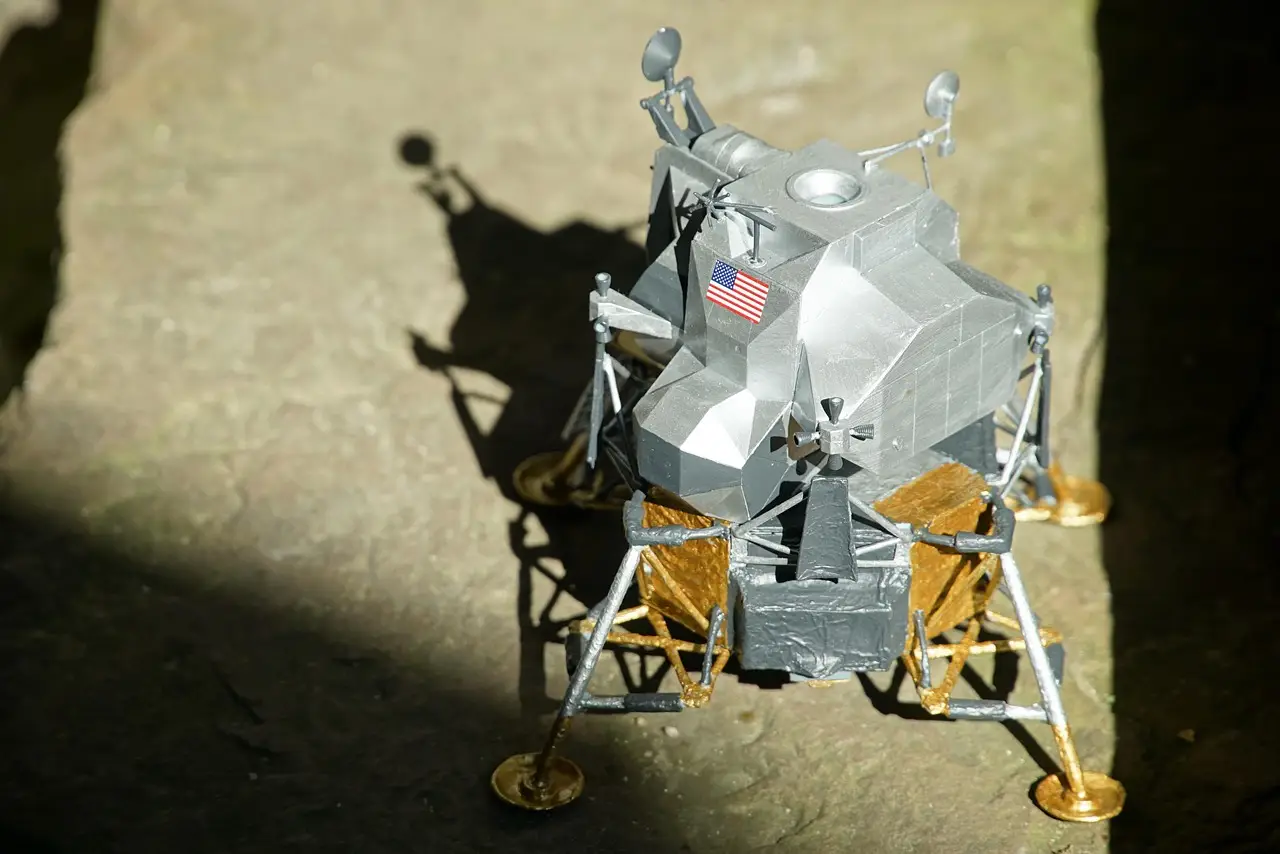
NASA has selected eight companies, including SpaceX, Blue Origin and Lockheed Martin Space, to compete for contracts worth up to $10 billion to transport equipment and infrastructure to the moon, the agency announced on Nov. 7. The award structure puts a freshly public SpaceX — valued at a record $1.77 trillion — directly inside the federal government's plan for a permanent lunar outpost.
For finance teams tracking the space sector, the significance is straightforward: a decade-long pipeline of delivery missions now sits alongside SpaceX's own industrial ambitions. The company's S-1 filing, filed ahead of its public debut, describes plans to build factories on the moon that manufacture AI satellites from moon-extracted raw materials, shipping chips from Earth.
What does the contract competition change?
NASA's stated goal is a permanent base where astronauts can live and work. Under the Commercial Lunar Payload Services program (a NASA procurement vehicle for private lunar delivery missions), the eight selected companies will compete for lunar delivery missions over the next decade. The winners will build and operate landers carrying scientific instruments, technology and other infrastructure.
"We are building the Moon Base mission by mission," NASA administrator Jared Isaacman said in the announcement. "When our astronauts return to the Moon, they will arrive with the first elements of the Moon Base already waiting for them on the surface."
The selection sits on top of NASA's existing lunar contracting activity. The agency separately awarded Blue Origin, Impulse Space and Arrow Science and Technology a combined $1.3 billion for mission tasks that include:
- Verifying communications systems between the moon and Earth
- Moving cargo between the two bodies
- Sending drones to survey the lunar surface before astronauts arrive
NASA also picked SpaceX to launch satellites aboard a Starship in 2028 to test technology keeping astronauts and mission controllers connected. Several companies, including Blue Origin-owned Honeybee Robotics, received awards to work on power generation and wireless power transfer for a planned Mini-Communications and Solar Tower, or miniCAST.
NASA declined to comment on the program beyond its release, and SpaceX did not respond to a request for comment.
How does NASA's moon timeline run?
The agency has laid out its Moon Base plan in three phases. First, robotic exploration of the lunar south pole in 2029 to identify promising sites for infrastructure.
Between 2029 and 2032, NASA plans to build power systems, cargo transportation and communications networks to support long-term operations on the surface. After 2032, the agency will focus on making the outpost livable for astronauts — enabling more ambitious research and what it calls future journeys deeper into the solar system.
What is SpaceX actually building toward?
The contract race matters to SpaceX less for delivery fees than for what a lunar supply chain enables. In its S-1, the company said it intends to operate factories on the moon using locally extracted raw materials to manufacture AI satellites, with semiconductors supplied from Earth.
SpaceX said using lunar materials and the moon's weaker gravity could "significantly reduce costs and terrestrial resource constraints." The filing also envisions a "lunar mass driver" — a system using electromagnetic acceleration to propel satellites into orbit without rockets.
The company also sees a mining business in the program. Its S-1 estimates the moon holds more than 1 million tons of "rare materials" that could feed into quantum computing systems and nuclear energy.
The end goal, according to the filing, is a constellation of satellites performing AI computing in space — expanding the company's computing capacity without relying on power-intensive and increasingly controversial data centers on Earth. Compared with a terrestrial data center, which draws local grid power and faces community pushback, an orbital constellation shifts the constraint to launch capacity and solar availability.
"This roadmap positions the Moon not only as a potential gateway to Mars and space exploration, but as the first space-based industrial economy at scale," the S-1 said. "Over time, this infrastructure has the potential to position the Moon as a strategic industrial and transportation node."
What should practitioners watch?
The $10 billion figure is a ceiling, not a guarantee — each delivery mission will be competed among the eight selected firms, so actual revenue allocation depends on future task orders. The dual-track structure is the real story: NASA is buying transportation and infrastructure while SpaceX, one of its suppliers, pursues its own manufacturing and mining economy on the same surface.
The 2028 Starship satellite launch is the nearest-term milestone, followed by the 2029 robotic south pole surveys. Both will test whether the logistics chain a lunar industrial economy requires can actually be built, mission by mission.
Audit trail
- NASA selected eight companies on Nov. 7 to compete for lunar delivery contracts worth up to $10 billion.
- SpaceX went public at a record $1.77 trillion valuation after detailing lunar factory plans in its S-1.
- NASA separately awarded $1.3 billion to Blue Origin, Impulse Space and Arrow Science and Technology.
- SpaceX will launch satellites aboard a Starship in 2028 to test lunar-Earth communications technology.
- SpaceX's S-1 estimates the moon holds over 1 million tons of rare materials for quantum computing and nuclear energy.
via fortune.com/feed/ (Source)
More from Marcus Bennett
Show full bio
Correspondent covering people, launches and day-to-day practice in corporate finance and the leaders who run it at CFO Observer.
277 articles